Waimea Canyon State Park: The Complete Visitor Guide
Everything you need to plan a trip to the Grand Canyon of the Pacific: getting there, fees, the lookouts, hikes, and how much time to give it.
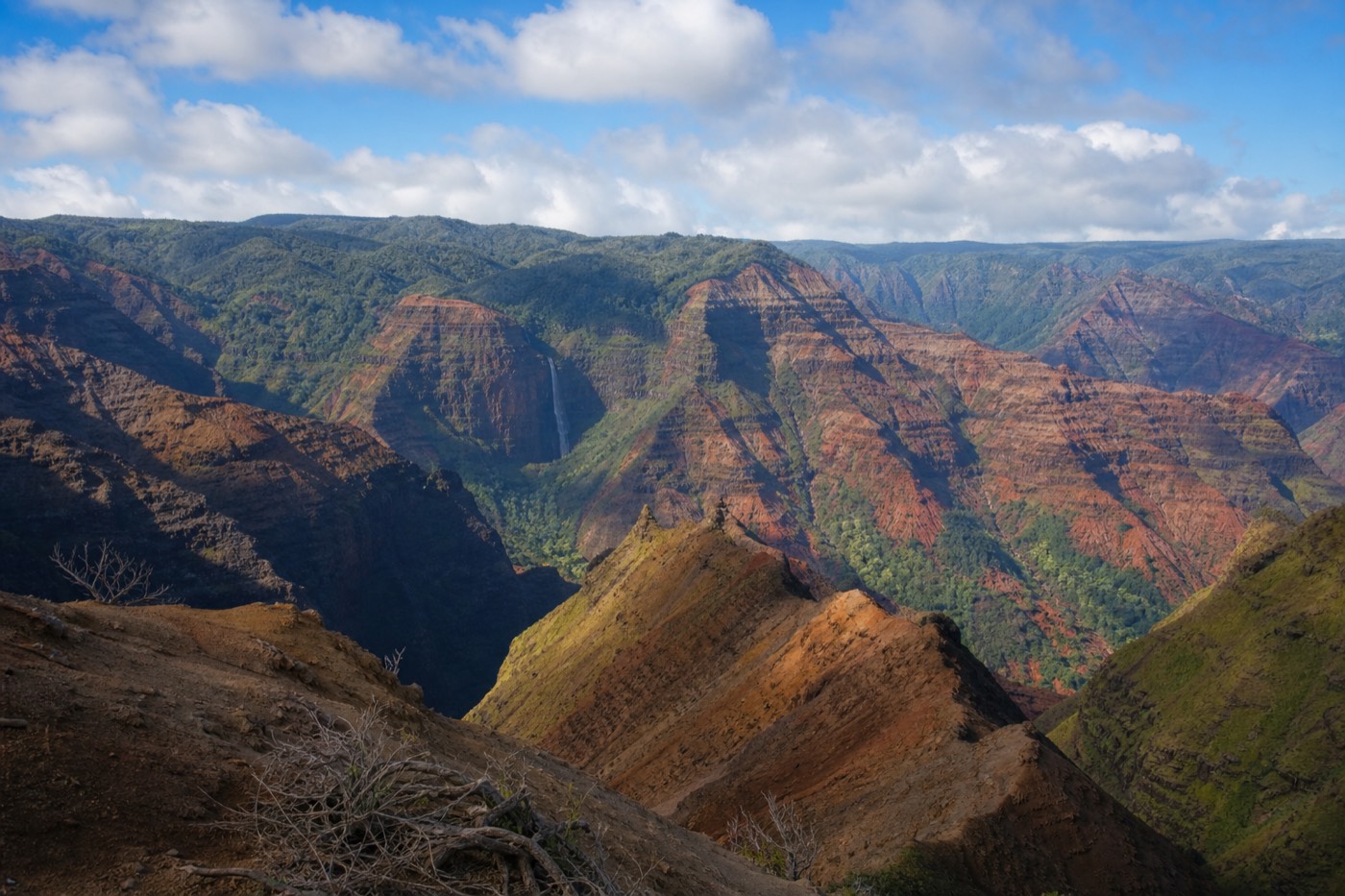
The red walls fall away almost a mile below the guardrail at Waimea Canyon Lookout, striped in rust, ochre, and deep green, with the thin silver thread of the Waimea River far down on the floor. This is the west side of Kauai, drier and quieter than the beach towns, and the gorge runs roughly 14 miles long and between 3,500 and 4,000 feet deep. Mark Twain is often credited with the nickname that stuck: the Grand Canyon of the Pacific. Seeing it well takes a little planning, because the good light, the cool air on the rim, and the clouds that pile in later all reward people who show up early and ready.
Booking choice: Explore canyon lookouts, Kalalau and the south shore with your own driver-guide. Explore Private Canyon & South Side Day
How Do You Visit Waimea Canyon?
Drive or ride up Highway 550 from Kauai's west side, arrive early before the clouds build, budget about $5 per person to enter plus around $10 to park, and give yourself at least a half day. One ticket also covers Kōkeʻe State Park next door. Pack layers, because the rim sits above 3,400 feet and runs much cooler than the coast.
There are two honest ways to see the canyon. You can rent a car and drive yourself up the winding road, stopping at pullouts and the four main lookouts at your own pace. Or you can join a guided trip with hotel or cruise-port pickup and let someone else handle the driving, the timing, and the stories behind the rock. Both work. The road is paved the whole way to the end, so a self-drive is not technically hard, but it is narrow, climbs fast, and has few services once you leave town.
Most first-timers underestimate one thing: this is a mountain, not a beach outing. The lookouts near the top can be 15 to 20 degrees cooler than Poʻipū, often breezy, and frequently wet with passing mist. If you only have a morning, you can still see the headline views. If you want the full experience, the canyon pairs naturally with the forest and Nā Pali views of Kōkeʻe just past the rim. Wondering about the clock? Our breakdown of how much time you need and our look at a guided tour versus driving yourself both help you shape the day.
Picture the shape of a visit. You climb out of the heat near sea level, gain a few thousand feet in about half an hour of switchbacks, and step out at the first big lookout into air that feels like a different island. From there the road threads north along the rim, each pullout a little higher and a little cooler, until it dead-ends at Puʻu o Kila with the Nā Pali Coast spread out below. You can do the whole thing in a couple of focused hours or stretch it across a full day. What you cannot do is rush the last stretch and still expect the coast views to be there, because that is exactly where the afternoon cloud settles first.
Where Is Waimea Canyon And How Do You Get There?
Waimea Canyon sits on Kauai's leeward west side, above the old sugar town of Waimea. You reach it by climbing Highway 550 (Waimea Canyon Drive) or Highway 552 (Kōkeʻe Road); the two roads join and continue as one paved route up to the lookouts and into Kōkeʻe. There is no road across the island's interior, so you always approach from the southwest.
From most visitor bases you drive south and west along the coast to Waimea town, then turn inland and up. Highway 550 is the more scenic climb with the best canyon pullouts; Highway 552 is a slightly gentler grade. Locals often suggest going up one and down the other. Either way you gain thousands of feet in a short distance, so expect switchbacks, slow RVs, and the occasional chicken on the shoulder. Our dedicated guide to the drive up covers the pullouts and mile markers in detail.
Plan your driving time from where you are staying. These are rough planning allowances for a relaxed pace, not a race down an empty road:
| Starting point | Approx. drive to the canyon lookouts | Notes |
|---|---|---|
| Waimea town | ~30 to 40 minutes | The closest launch point; last reliable fuel and food |
| Poʻipū / south shore | ~1 hour | Popular base; add time on busy resort mornings |
| Līhuʻe / airport | ~1 to 1.5 hours | Where most rental cars and cruise ships start |
| Kapaʻa / east side | ~1.5 hours | Traffic through Līhuʻe can add 20 to 30 minutes |
| Princeville / north shore | ~2 to 2.5 hours | A long haul; an early start matters even more |
Because the whole point is to beat the afternoon clouds, work backward from a target of being at the top by mid-morning. From the north shore that can mean leaving before sunrise.
A common local trick is to drive up Highway 550 for the canyon pullouts and come back down through Kōkeʻe Road, or the reverse, so you see slightly different country each way. Waimea town itself is worth a five-minute stop on the way in or out: it is the last place to fill the tank, grab a snack, and use a proper restroom before the long climb. Once you turn uphill, treat the drive as part of the attraction rather than a transfer, because some of the best surprise views come from unmarked pullouts between the main lookouts.
What Are The Park Fees And Hours?
Non-residents pay roughly $5 per person to enter plus about $10 to park, and a single ticket covers both Waimea Canyon and Kōkeʻe State Park on the same day. Hawaii residents with ID enter free. The parks are day-use areas; come during daylight, and always check the current rates before you go since the state adjusts them from time to time.
Fees are collected at the main lookout parking areas and are easy to miss if you are not looking for the pay station or app, so budget for them. If you join a guided trip, park admission is normally rolled into the price, which is one small reason the tour math is closer than it first looks. Here is the quick picture:
| Item | Approx. rate (check current) | What it covers |
|---|---|---|
| Per-person entry (non-resident) | around $5 | Both Waimea Canyon and Kōkeʻe, same day |
| Parking (non-resident) | around $10 per vehicle | Day-use at the lookout lots |
| Hawaii resident with ID | free | Entry and parking |
| Guided tour | fees usually included | Admission handled by the operator |
There is no gate that opens and closes on a strict clock the way a national park entrance does, but the lookouts are meant for daytime visits, and you want daylight anyway for the views and the winding drive back down.
One more practical note: pay stations and the parking app do not always have strong signal, so it helps to have payment sorted before you rely on a live connection at the lot. If you are visiting both the canyon and Kōkeʻe, keep your receipt or confirmation, since the same day-use payment is what covers you at the upper park. And because the state reviews these fees periodically, the numbers here are a planning guide rather than a promise; the official Hawaii State Parks pages carry the current figures.
When Is The Best Time To Go?
Go early. The single most important timing rule at Waimea Canyon is to reach the lookouts in the morning, because clouds and mist build over the canyon and the Kalalau and Nā Pali overlooks by late morning and afternoon and can hide the view entirely. A clear 8 a.m. can turn into a wall of white by 1 p.m.
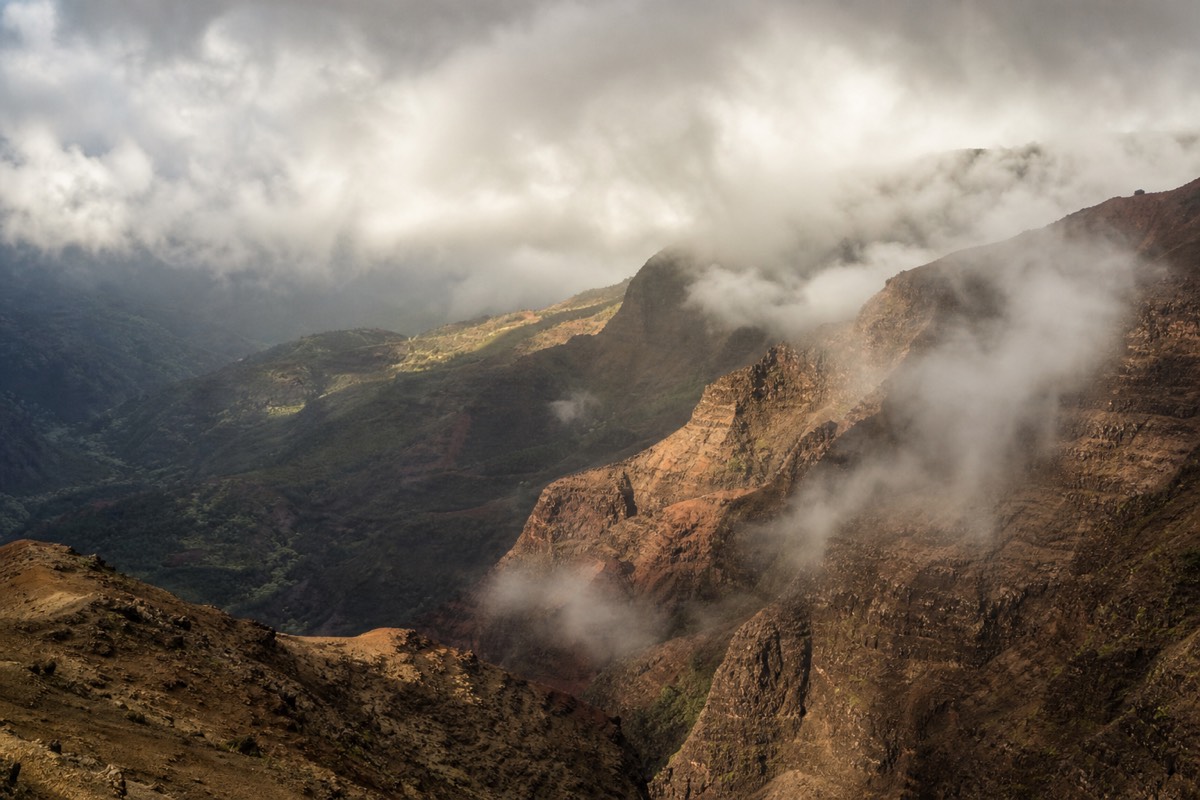
Season matters less than time of day, but it still shapes the trip. The west side is the dry side of Kauai, so summer months tend to bring clearer skies and busier lots, while the wetter winter half of the year brings greener walls, more active waterfalls, and, offshore, humpback whales. Whatever the month, mornings beat afternoons. For a full month-by-month view, see our best time to visit breakdown, and for the hour-by-hour version read what time of day is best.
Do not overthink the season for a first visit. If you can only go on a cloudy-forecast day, still go, and still go early, because west-side showers pass quickly and the canyon often clears between them. The forecast for Līhuʻe or the beaches tells you little about the rim anyway; the mountain makes its own weather. What consistently ruins the view is not the month, it is showing up at two in the afternoon.
What Are The Main Lookouts?
Four lookouts do most of the work, all off Highway 550: Waimea Canyon Lookout for the classic gorge view, Puʻu Hinahina for canyon plus the island of Niʻihau on clear days, Kalalau Lookout near 4,000 feet for the drop down Kalalau Valley to the Nā Pali Coast, and Puʻu o Kila at the very end of the road.
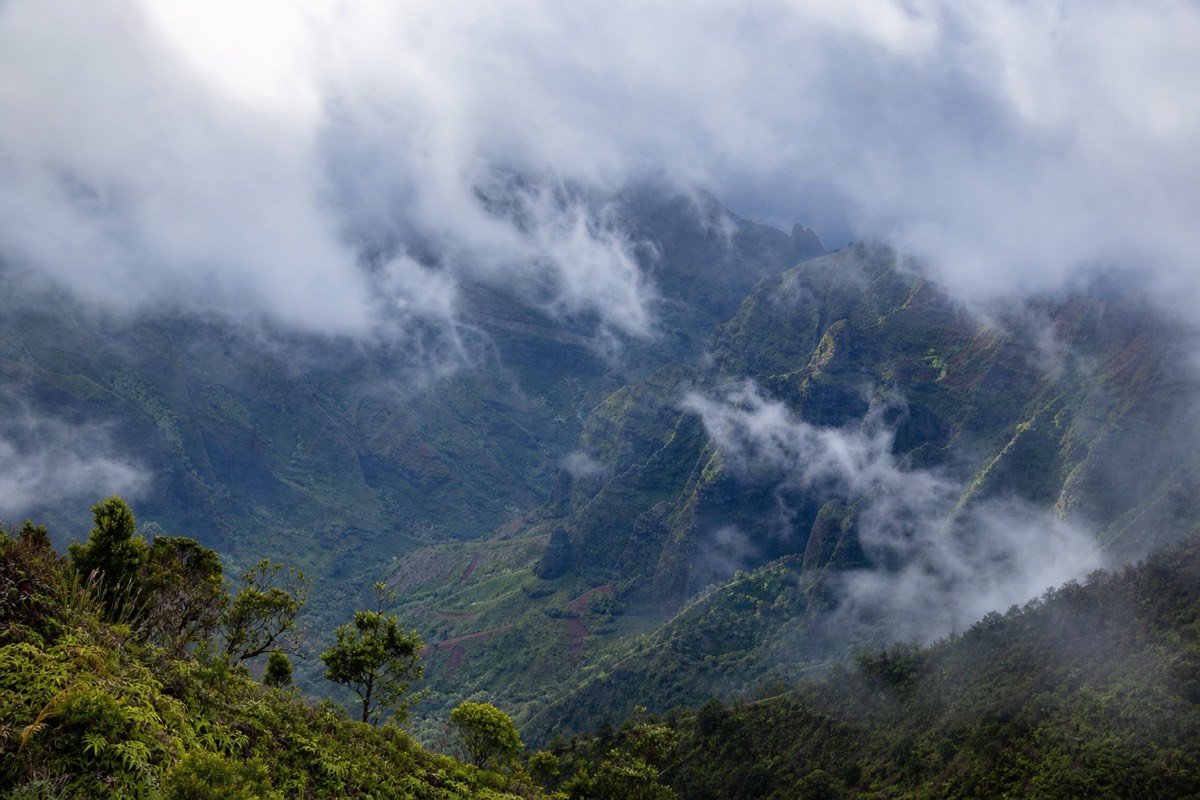
You could stop at every marked pullout, but if you are short on time these four are the ones that matter. The higher two, Kalalau and Puʻu o Kila, are the most weather-sensitive: they look out toward the coast, so they cloud over first. Hit them early. Our full lookout guide ranks every stop, and the Kalalau Lookout guide covers that headline valley view on its own.
| Lookout | Approx. elevation | What you see | Suggested stop |
|---|---|---|---|
| Waimea Canyon Lookout | ~3,400 ft | The classic canyon panorama with the river far below | 15 to 20 min |
| Puʻu Hinahina | ~3,600 ft | Deep canyon views, plus Niʻihau offshore on clear days | 10 to 15 min |
| Kalalau Lookout | ~4,000 ft | Down Kalalau Valley to the fluted Nā Pali cliffs | 20 to 30 min |
| Puʻu o Kila | ~4,100 ft (road's end) | More Nā Pali, the Alakaʻi plateau, trailheads | 15 to 20 min |
Each stop has its own character. Waimea Canyon Lookout is the postcard, wide and deep, and the easiest to reach; it is often your first jaw-drop of the day. Puʻu Hinahina adds a second angle on the gorge and, on a clear day, a look out to the private island of Niʻihau on the horizon. Kalalau is the emotional peak of the drive, a straight plunge down a green valley to the sea, and Puʻu o Kila, a short way further at the end of the pavement, gives you one more sweep of the coast and the trailheads onto the Alakaʻi plateau. If cloud is moving in, prioritize the last two and let the lower views wait.
Should You Take A Guided Tour Or Self-drive?
Self-drive if you have a rental car, like to set your own pace, and can get up early. Choose a guided Waimea Canyon Tour if you would rather not drive the winding road, you are coming off a cruise ship, or you want the geology and Hawaiian history explained. Guided canyon van and coach trips generally run around $149 to $195 per person for a 7 to 10 hour day with hotel pickup.
The cost gap is smaller than it looks once you add a rental car, fuel, and the park fees a tour already includes. What you really trade is flexibility for ease. A driver-guide times the stops for light, points out things you would drive right past, and lets everyone in the group actually look out the window. For a deeper comparison, including who should pick which, see our tour versus self-drive guide.
| Factor | Self-drive | Guided tour |
|---|---|---|
| Cost | Rental + fuel + ~$5/$10 fees | Around $149 to $195/person, check the live listing |
| Time | Flexible, often 3 to 5 hours | Set full day, 7 to 10 hours |
| Driving | You handle the switchbacks | Someone else drives |
| Commentary | None unless you read up | Guide shares geology and history |
| Best for | Independent, early-rising travelers | No rental, cruise days, story-lovers |
There is no single right answer, and plenty of people do both across a trip: a self-drive one morning for the canyon, an air or boat tour another day for the coast. Cruise passengers arriving at Nawiliwili are the clearest case for going guided, since a shore excursion is built around the ship's schedule. Families juggling car seats and independent travelers who love an early alarm tend to lean the other way.
What Is Kōkeʻe State Park Like Next Door?
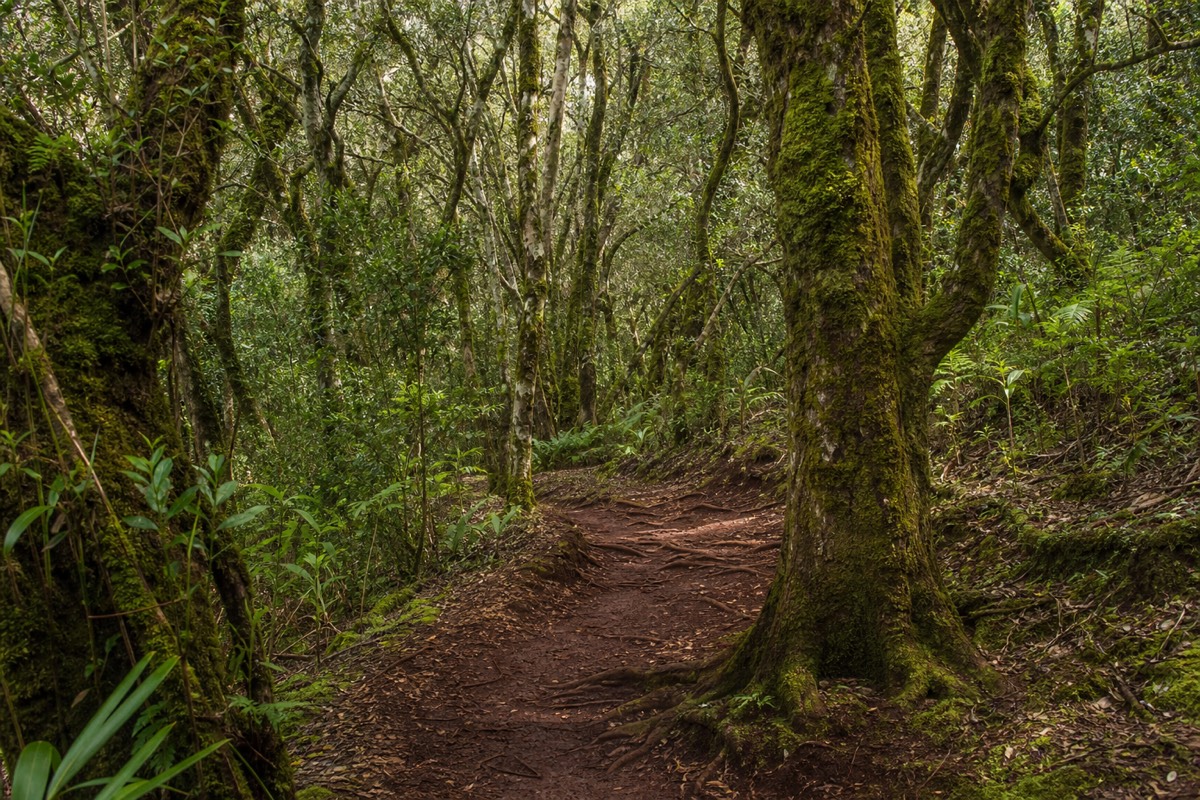
Kōkeʻe State Park begins just past the canyon rim, sitting between about 3,200 and 4,200 feet. It is cool native forest, roughly 45 miles of trails, and the jumping-off point for the Kalalau and Puʻu o Kila lookouts. A small natural history museum and a lodge sit near the meadow, and the same day-use ticket covers it.
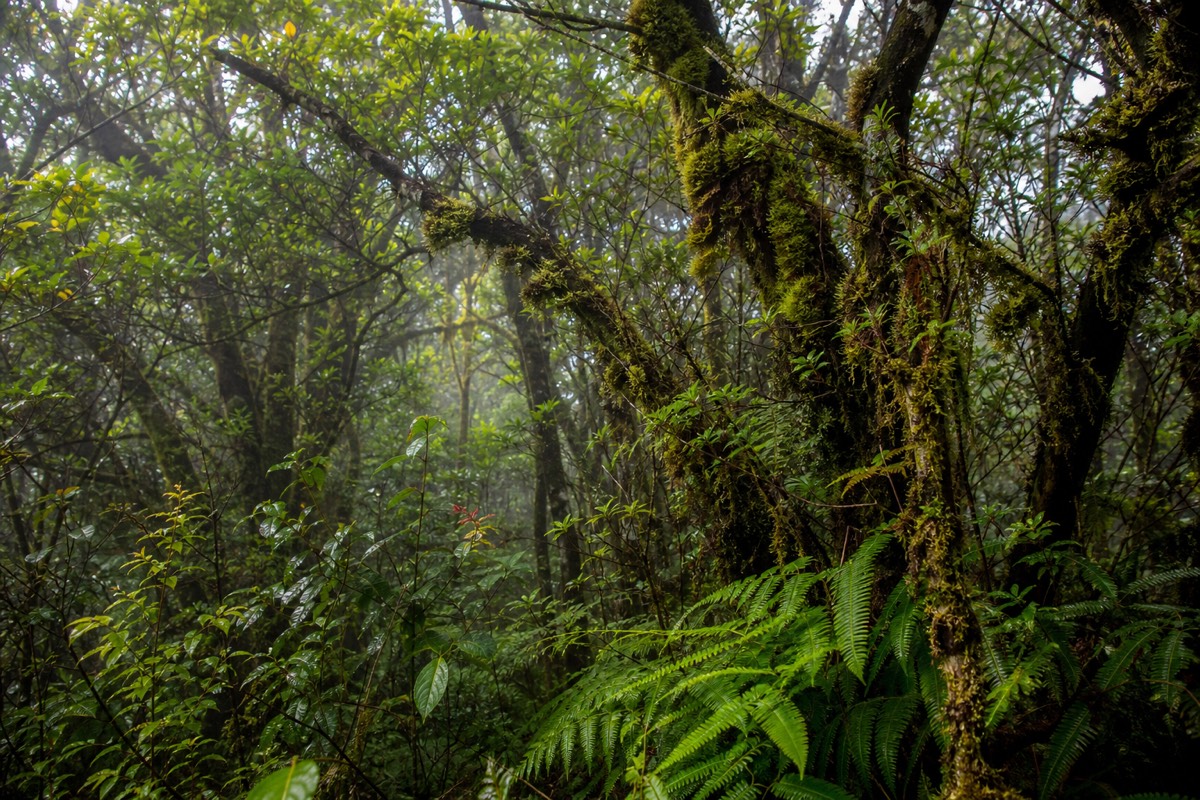
If Waimea Canyon is the dramatic view, Kōkeʻe is where you slow down and walk into it. The upland forest smells of ʻōhiʻa and rain, native honeycreepers like the ʻapapane and ʻiʻiwi flit through the canopy, and wild goats pick along distant ridges. This is also where the longer, more rewarding hikes start. Our Kōkeʻe State Park guide covers the museum, the meadow, and how to combine it with the canyon in one loop.
Practical bits make Kōkeʻe easy to fold in. The Kōkeʻe Natural History Museum sits by the meadow with exhibits on the island's geology, birds, and weather, and a small donation gets you in. The neighboring lodge is the one reliable place up here for a hot lunch and a coffee, which matters more than you would think on a cool, damp day. Feral chickens and the occasional wild pig wander the grounds, and the meadow makes a good spot to warm up in the sun between the shaded forest trails.
What Are The Best Hikes?
Trails range from a two-minute rim overlook to full-day ridge treks. The most popular real hike is the Canyon Trail to Waipoʻo Falls, a moderate walk to the canyon's best-known waterfall. Beyond that, Kōkeʻe holds Pihea, Alakaʻi Swamp, Awaʻawapuhi, Nualolo, and Kukui, from easy boardwalks to steep cliff-edge routes.
Match the trail to your energy and the weather; upper trails get muddy and slick fast. If you only walk one thing, make it the route to Waipoʻo Falls, covered step by step in our Waipoʻo Falls trail guide. For the full menu, from short to serious, see the best hikes guide.
| Trail | Difficulty | Approx. round trip | Payoff |
|---|---|---|---|
| Cliff Trail | Easy | ~0.2 mi | Quick overlook into the canyon |
| Canyon Trail to Waipoʻo Falls | Moderate | ~3 to 3.5 mi | The signature waterfall and canyon views |
| Pihea Trail | Moderate | ~3.5 mi | Kalalau Valley rim from above |
| Alakaʻi Swamp Trail | Moderate to hard | ~7 to 8 mi | Boardwalk bog and a Nā Pali overlook |
| Awaʻawapuhi Trail | Hard | ~6 to 7 mi | Cliff-edge Nā Pali views |
| Nualolo Trail | Hard | ~7 mi | Remote ridge scenery |
| Kukui Trail | Hard | ~5 mi | Steep descent into the canyon itself |
A word on the two crowd-pleasers. The walk to Waipoʻo Falls follows the Canyon Trail down into the gorge, crossing streams and open red-dirt slopes before reaching the falls; it rates moderate mostly for the climb back out and the mud after rain. The Pihea and Alakaʻi Swamp combination, meanwhile, trades canyon views for a strange, beautiful high bog crossed on a wooden boardwalk, ending at a Nā Pali overlook when the cloud cooperates. Neither needs technical skill, but both reward closed shoes and an early start.
What Should You Bring? (the Rim Is Cool)
Pack a warm layer, closed shoes, water, sun protection, snacks, and a full tank of fuel. The rim above 3,400 feet can run 15 to 20 degrees cooler than the beach, with wind and passing showers, and there are no gas stations and few services once you leave Waimea town.
People arrive in flip-flops and a tank top, then shiver at Kalalau. Do not be those people. Even in summer a light jacket earns its place at the top, and mud makes real shoes worth it on any trail. Download an offline map too, because cell service up the road is patchy at best.
| Bring | Why |
|---|---|
| Warm layer or light jacket | Rim air is much cooler and windier than the coast |
| Closed walking shoes | Trails and overlooks get muddy and uneven |
| Water, 1 to 2 liters | Limited services once you leave town |
| Sun protection | Sun is strong at altitude even when it is cool |
| Snacks or a packed lunch | Few food options beyond the Kōkeʻe lodge |
| Full fuel tank | No gas stations up Highway 550 |
| Offline map | Cell coverage is spotty on the climb |
| Rain layer | Passing mist and showers are common up top |
Is Waimea Canyon Good With Kids And Seniors?
Yes. The four main lookouts are drive-up viewpoints with short, mostly paved paths from the parking lots, so families with young kids and travelers with limited mobility can enjoy the headline views without hiking. The deeper trails are optional, and you can build a full day without any of them.
The things to watch are the guardrails, the drop-offs, and the winding road for anyone prone to motion sickness. A morning start also helps here, since kids fade and clouds gather as the day wears on. For tailored plans, see our notes on visiting with kids and on seniors and non-hikers.
What Else Is On Kauai's West Side?
The canyon anchors a whole day of west-side stops. On the way up or down you can add Hanapepe's small-town main street and swinging bridge, a coffee estate tasting, the Spouting Horn blowhole, and, with more time, the long remote sands of Polihale. Many guided canyon trips already string several of these together.
Because you are driving all the way out west anyway, it pays to know what shares the route. The south-shore beaches at Poʻipū, the blowhole at Spouting Horn, and the coffee farms around Hanapepe all sit below the canyon road, while the Nā Pali views you glimpse from Kōkeʻe have their own dedicated overlooks. Our west Kauai guide maps the wider area, and the Nā Pali views from Kōkeʻe guide covers the coast angle from up top.
Should You Also See It From The Air Or The Water?
The rim lookouts are only one way to take in this landscape. Helicopter and fixed-wing flights reveal the inner folds and hidden waterfalls you cannot reach on foot, and boat tours along the Nā Pali Coast show the fluted cliffs from sea level. Many visitors pair a morning at the canyon with an air or boat tour for the full picture.
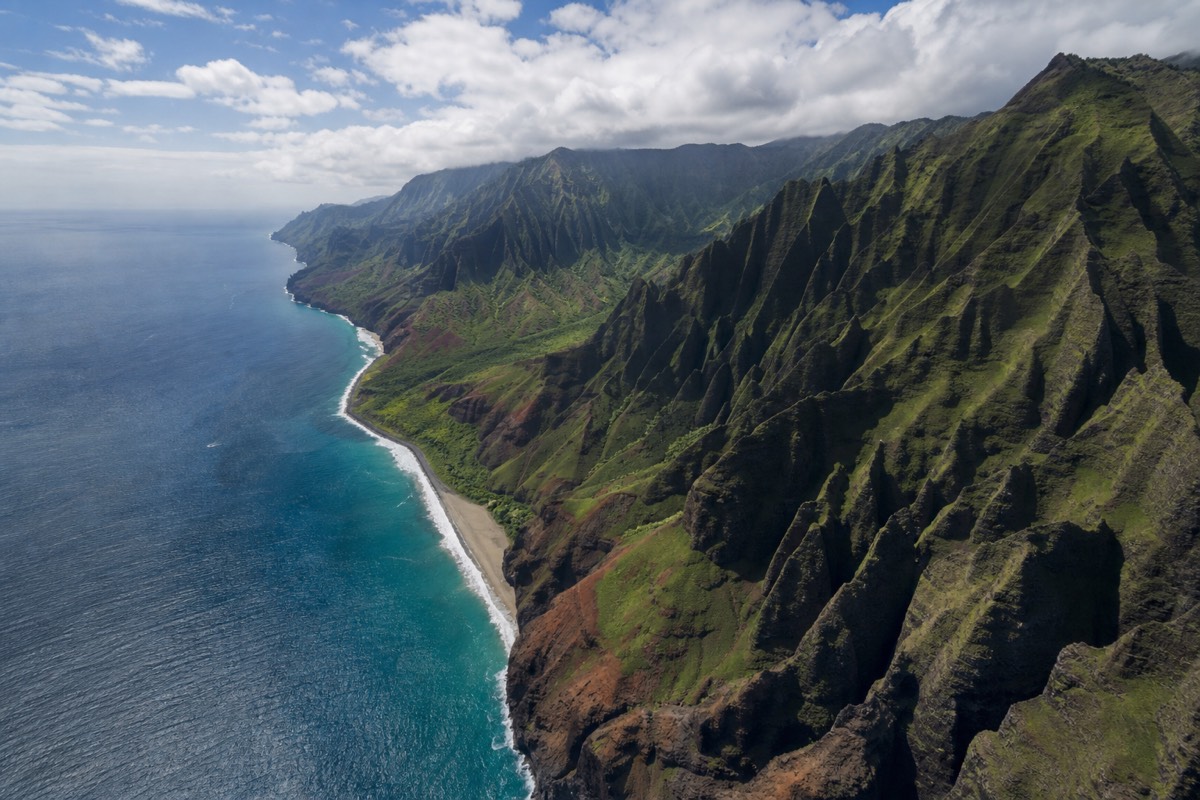
From the rim you grasp the canyon's scale and its layered walls. From the air you see into it, over ridgelines and past waterfalls like Manawaiopuna that have no road or trail. From the water you swap the canyon for the coast it drains toward, the sea caves and green spires of Nā Pali. None replaces the lookouts, but each adds an angle, and winter flights and cruises often catch whales offshore as a bonus.
Half-day Or Full-day: How Should You Plan The Day?
Give the canyon a half day for the lookouts alone, or a full day to add Kōkeʻe, the museum, and a hike to Waipoʻo Falls. A half day means an early drive up, the four viewpoints, and back by lunch. A full day layers in the forest, a trail, and a lunch stop at the lodge, with food paid separately.
Here is how the two shapes compare in practice. Both assume an early start, because that is the one thing you should not flex:
| Time | Half-day plan | Full-day plan |
|---|---|---|
| Early morning | Drive up Highway 550 | Drive up Highway 550 |
| Mid-morning | Waimea Canyon and Puʻu Hinahina lookouts | Same, plus a short rim walk |
| Late morning | Kalalau and Puʻu o Kila before clouds | Kalalau and Puʻu o Kila before clouds |
| Midday | Drive back down | Lunch at Kōkeʻe, visit the museum |
| Afternoon | Free for the beach | Hike toward Waipoʻo Falls, then descend |
If you are wrestling with the clock, our post on how much time you need walks through each option.
Whichever shape you pick, anchor it to an early start and let the rest flex. A half day that begins at sunrise beats a full day that begins at noon, every time, because the morning is when the canyon actually shows itself.
What Mistakes Should You Avoid?
The big five: arriving at midday when the clouds have already won, dressing for the beach instead of the mountain, driving up on a near-empty tank, rushing past Kalalau, and skipping Kōkeʻe entirely. Avoid those and the day almost runs itself.
- Coming too late. Afternoon mist can erase the Kalalau and Nā Pali views. Morning is not a suggestion here.
- Underdressing. The rim is genuinely cool and windy. A layer changes the whole experience.
- Running low on fuel. Fill up in Waimea; there is nothing up top.
- Treating it as one photo stop. The higher lookouts are the best part, so leave time for them.
- Ignoring Kōkeʻe. The forest and the extra Nā Pali views are right there, on the same ticket.
Get those right and Waimea Canyon delivers exactly what the nickname promises, without the crowds you would find at its mainland namesake.