Best Waimea Canyon Lookouts
Six main viewpoints line the road up Waimea Canyon, and each one frames the red rock or the Nā Pali Coast differently. Here is which lookout to prioritize, and why.
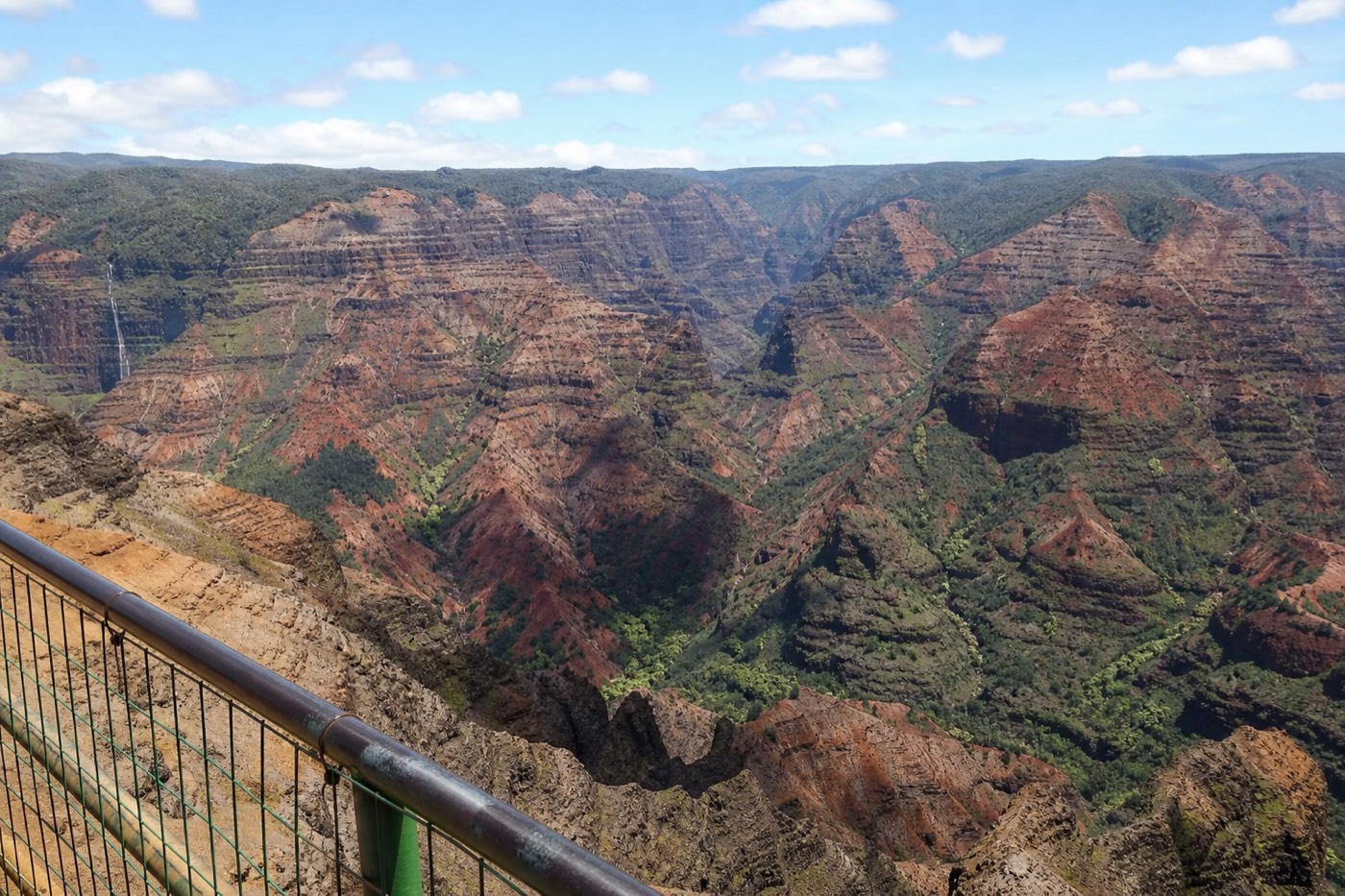
Four numbered pullouts and a pair of forest overlooks string along Route 550, and every one of them shows the canyon or the coast from a different angle. Pick the wrong one for the wrong hour and you spend forty minutes driving to a rail that is buried in cloud by late morning. Pick well, and you get red walls dropping thousands of feet, a thin waterfall on the far side, and a valley that runs straight out to the ocean.
Booking choice: Explore canyon lookouts, Kalalau and the south shore with your own driver-guide. Explore Private Canyon & South Side Day
Which Waimea Canyon Lookout Is Best?
For most visitors the main Waimea Canyon Lookout near mile marker 10 is the best single stop. It gives the widest red-rock panorama, sits low enough on the rim to stay clear the longest, and asks for almost no walking. For coast views, Kalalau Lookout wins on a clear morning.
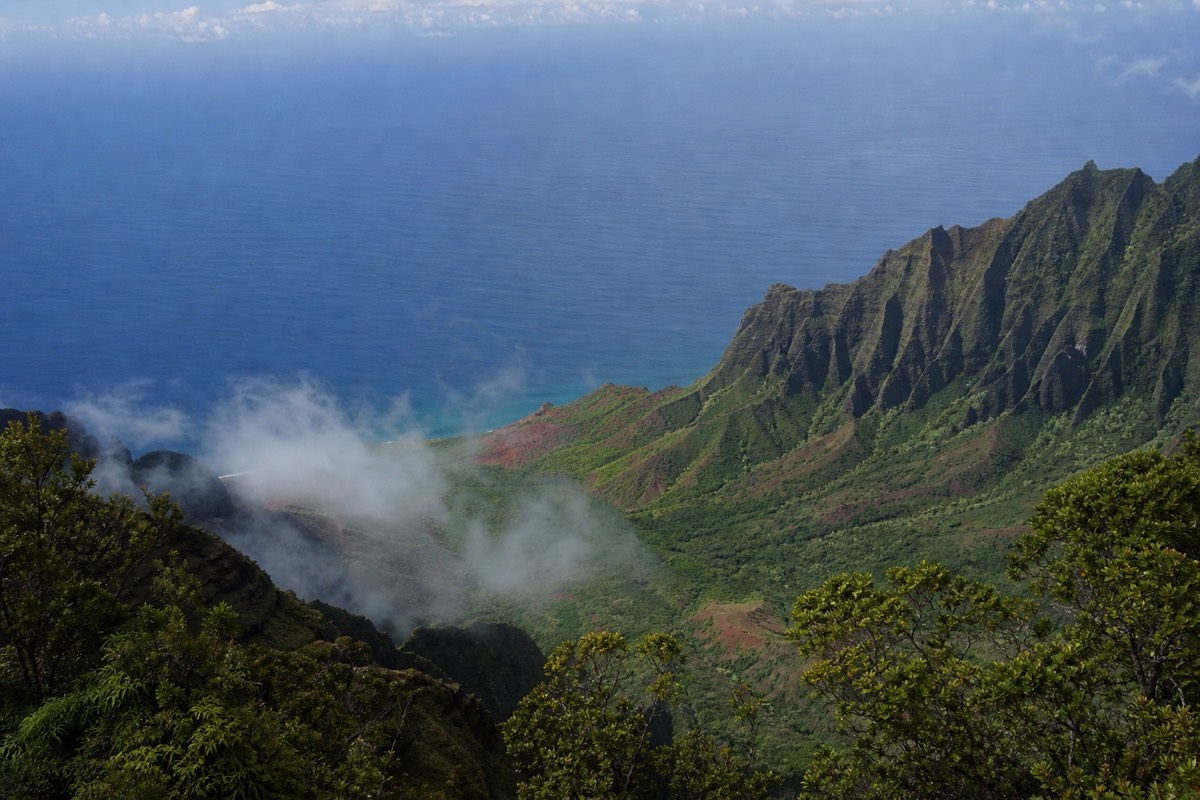
There is no single answer that fits everyone, because the lookouts split into two jobs. The lower viewpoints are about the canyon itself: the layered rust, green and gold walls that earned the nickname Grand Canyon of the Pacific. The upper viewpoints, past the Kōkeʻe forest, are about the Nā Pali Coast, where you look down a deep valley to sea cliffs. Most people want both, and the good news is that one drive covers the lot.
The table below lines up the main lookouts by what they actually deliver. Elevations are approximate rim heights, and walking distance describes the effort from the parking area to the view, not any trail beyond it.
| Lookout | Approx. elevation | What you see | Walking needed |
|---|---|---|---|
| Waimea Canyon Lookout | ~3,400 ft | Widest canyon panorama, Waipoʻo Falls in the distance | A few steps from the lot |
| Puʻu Hinahina Lookout | ~3,600 ft | Deep canyon view plus Niʻihau island on clear days | Short paved path |
| Kalalau Lookout | ~4,000 ft | Down Kalalau Valley to the Nā Pali Coast and the sea | Steps from the lot to the rail |
| Puʻu o Kila Lookout | ~4,000+ ft | End-of-road Nā Pali view, start of the Pihea Trail | Flat and short |
Notice that the two coast lookouts sit roughly 600 feet higher than the canyon rim. That extra elevation is exactly why they cloud over first. It also means the temperature at the top can feel ten to fifteen degrees cooler than the beach you left that morning, so layers matter more than you would guess for a Hawaiian day trip.
The Main Waimea Canyon Lookout
The main Waimea Canyon Lookout, roughly at mile marker 10 on Route 550, is the postcard view. From a railed platform a few steps off the parking area you take in the full width of the gorge, about 3,500 to 4,000 feet deep, with the Waimea River threading the floor and Waipoʻo Falls visible as a pale ribbon across the canyon.
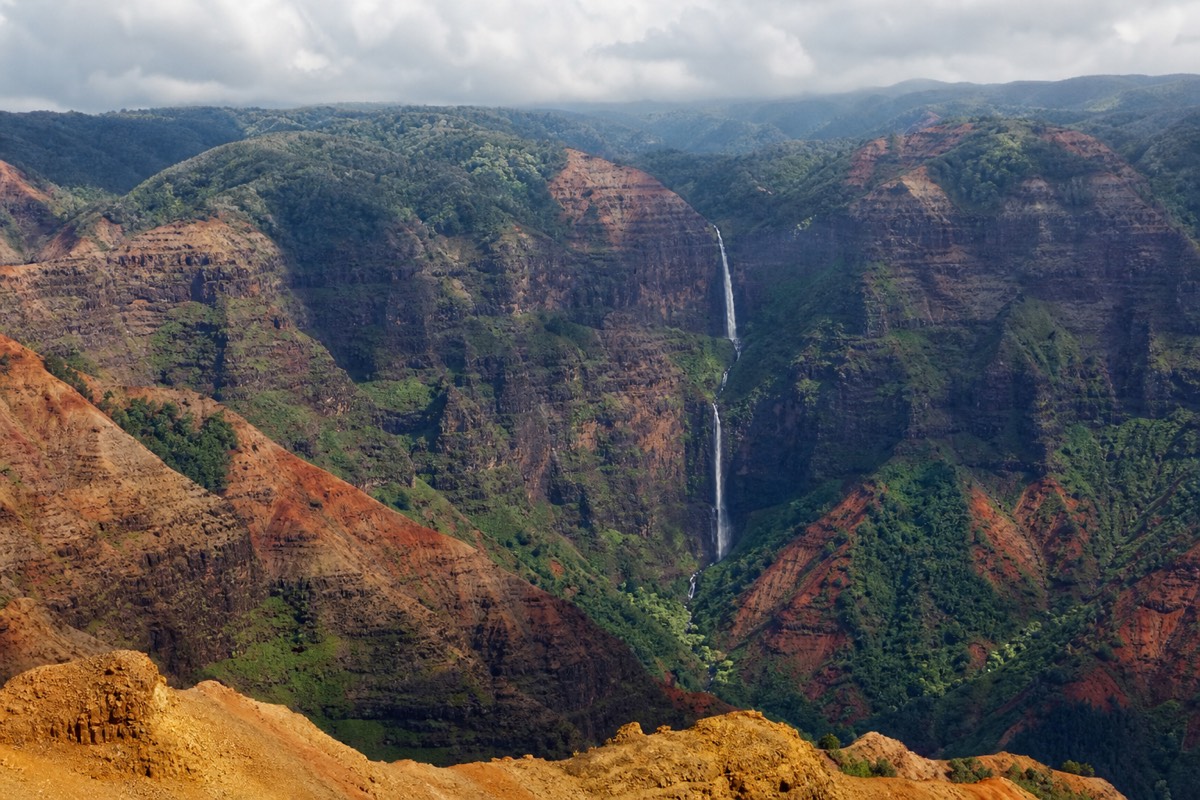
This is the stop that sells the whole drive. The canyon here is close to a mile across, and the walls show the color banding that photographs so well: oxidized red iron up top, greener volcanic rock below, and shadow pooling in the side gullies. On a morning with a little leftover mist, rainbows form in the rising vapor, and the light rakes across the far wall instead of flattening it.
Because it is the lowest of the classic viewpoints, it is also the most reliable. When the upper lookouts are socked in, this one is often still open, which is one more reason this guide routes an early stop here first. Look across and slightly right and you can pick out Waipoʻo Falls, the canyon's best-known waterfall, dropping in two tiers on the opposite side. It is small from this distance but unmistakable once someone points it out.
Access is genuinely easy. There is a paved lot, restrooms nearby, and the railed overlook is a short, level walk from the car. If a member of your group is not up for stairs or uneven ground, this is the viewpoint that still works for them.
Puʻu Hinahina Lookout
Puʻu Hinahina Lookout, a few miles up from the main overlook, actually holds two viewpoints on a short paved path: one aimed down the canyon and one that, on a clear day, looks out to the forbidden island of Niʻihau off the west coast. It is the quieter, slightly higher counterpart to the main lookout.
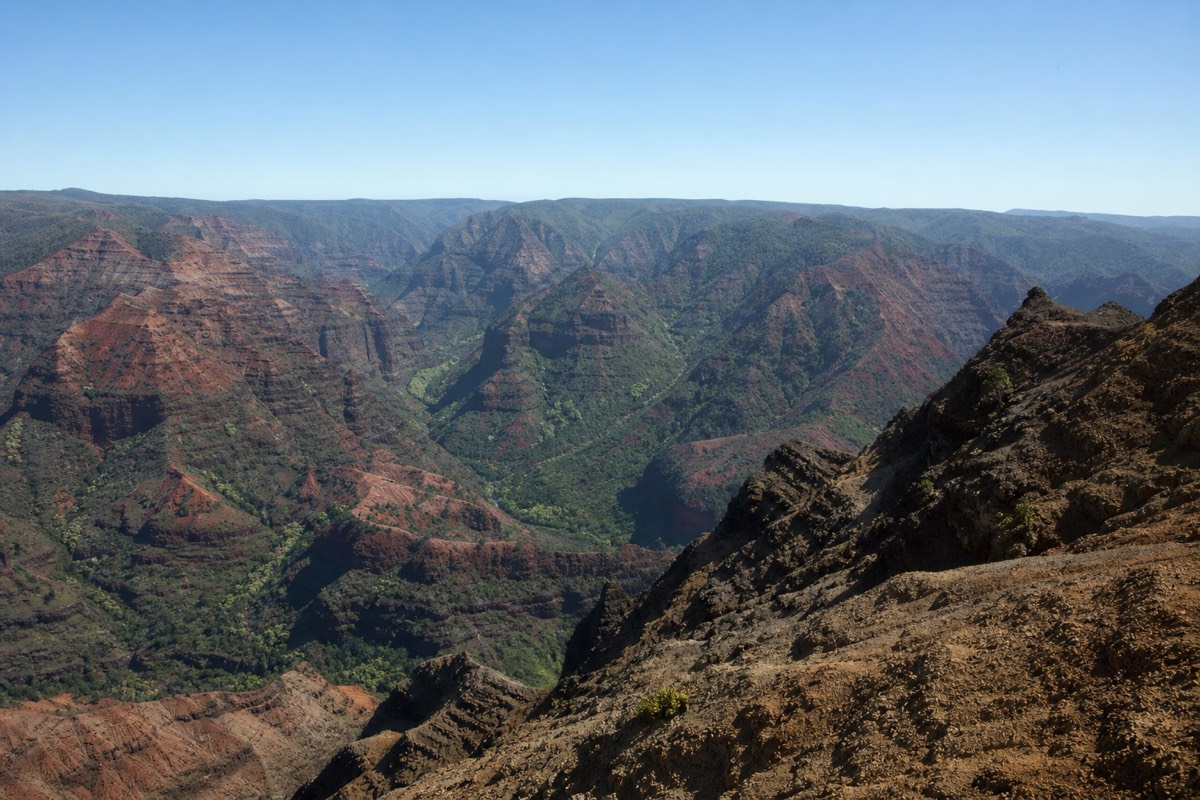
The canyon-facing side gives you a deeper, more head-on plunge into the gorge than the main lookout, with the river bend framed neatly below. The second platform points seaward, and when the haze cooperates you can make out Niʻihau sitting low on the horizon. That second view is weather dependent, so treat it as a bonus rather than a guarantee.
Some guided itineraries lean on Puʻu Hinahina when trail work or repairs close other pullouts, which has happened in recent seasons. The small-group canyon and Kōkeʻe tour we list, for example, has used this overlook as a primary canyon stop during rim repair work. The walk from the lot is short and paved, so it stays friendly for most mobility levels.
Kalalau Lookout
Kalalau Lookout, near mile marker 18 at about 4,000 feet, is where the trip changes character. Instead of the canyon, you look straight down the deep green throat of Kalalau Valley to the Nā Pali Coast and the Pacific beyond. When the clouds hold off, it is the single most dramatic drive-up view on Kauai.
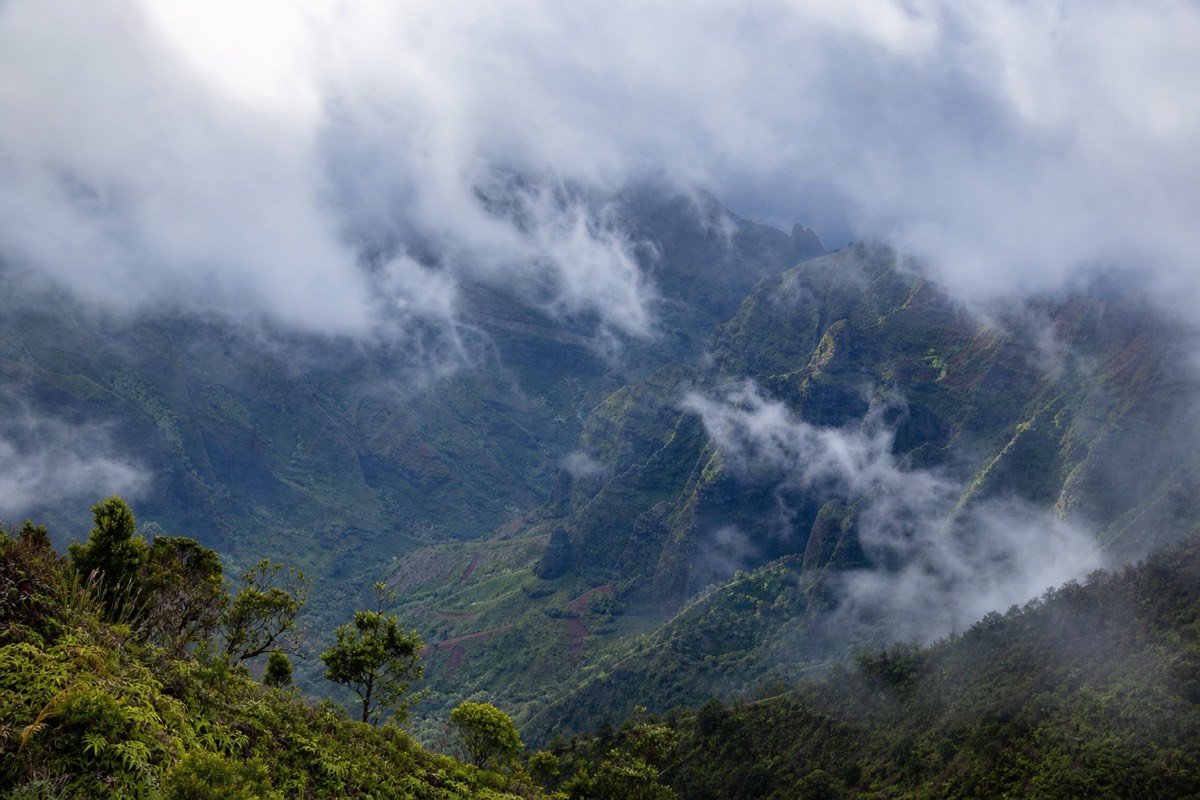
The valley walls here are fluted and impossibly steep, draped in green where the canyon walls were red. Two thousand feet below, the valley floor runs out toward a beach you cannot quite reach by car, framed by ridgelines that fold into each other like curtains. This is the view people picture when they imagine the Nā Pali Coast from land.
The catch is cloud. Because Kalalau sits high and faces the wet windward air, mist tends to fill the valley as the day warms, often by late morning. Getting here early is the whole game. If you want the full breakdown of what to expect and how the timing works, see our dedicated Kalalau Lookout guide, and if the rail is already grey when you arrive, what to do when Kalalau is clouded in covers your options.
The walk from the parking area to the railed overlook is short, but there are a few steps and the ground is uneven in spots. Most people manage it comfortably; anyone using a walker or wheelchair should know it is less flat than the main canyon lookout.
Puʻu O Kila Lookout
Puʻu o Kila Lookout marks the literal end of Route 550, a little higher than Kalalau. It offers a second, slightly wider angle on the same Nā Pali valley and doubles as the trailhead for the Pihea Trail. If Kalalau is crowded or partly clouded, this overlook sometimes catches a clear window a few minutes later.
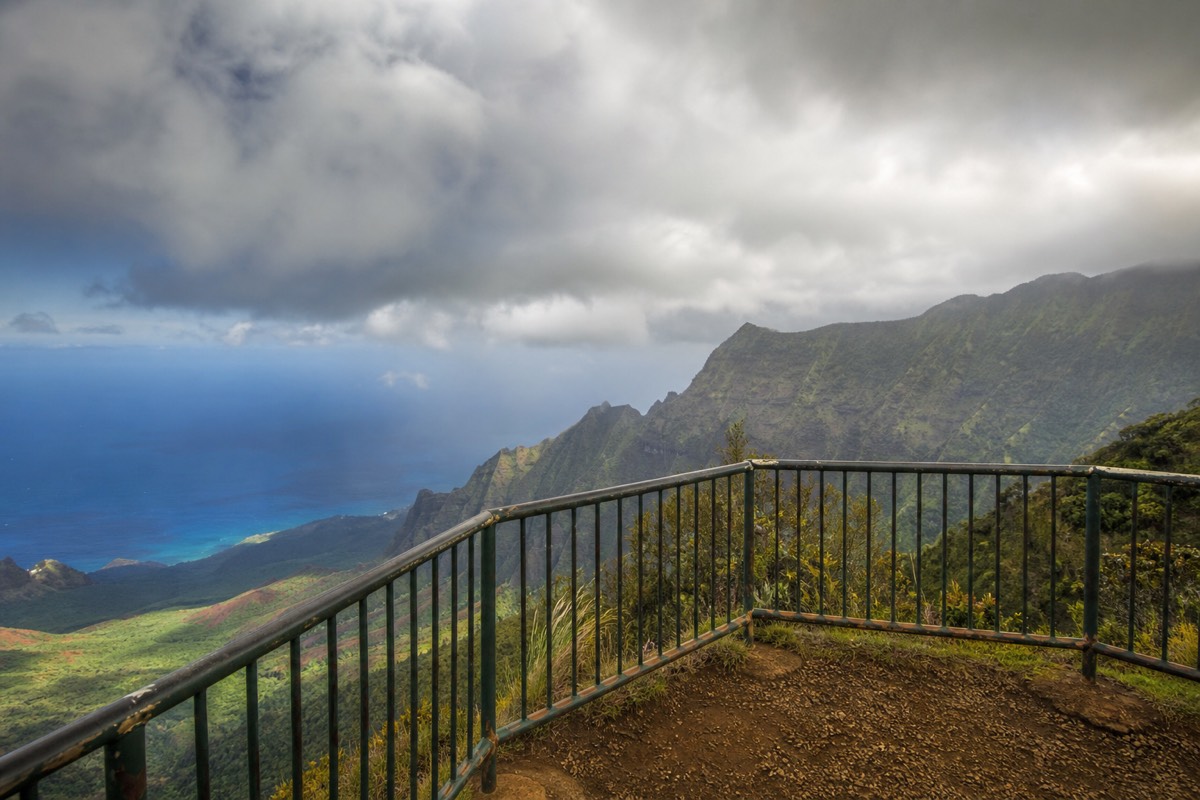
Standing at the end of the road feels like an ending, which suits the view. The overlook sweeps across the head of Kalalau Valley and out along the ridge, and the perspective is broad rather than deep. Photographers often prefer Kalalau for the plunging valley shot and Puʻu o Kila for the wider ridge-and-sea composition.
This is also where hikers step off onto the Pihea Trail, which climbs along the rim toward the Alakaʻi Swamp. You do not need to hike any of it to enjoy the lookout, but even the first few hundred feet of the path open a slightly different angle for those willing to walk. The lot is small, so it fills fast on clear mornings.
Which Lookout Has The Best Nā Pali Coast Views?
For the Nā Pali Coast from land, Kalalau Lookout gives the deeper, more vertical valley-to-sea view, while Puʻu o Kila gives a broader ridge panorama. Visit both, since they are only minutes apart and the clouds may favor one over the other on any given morning.
People argue over these two, and the honest answer is that they show the same coast in two moods. The comparison below sums up the trade-offs.
| Feature | Kalalau Lookout | Puʻu o Kila Lookout |
|---|---|---|
| View style | Deep, vertical plunge down the valley | Wider, flatter ridge-and-coast sweep |
| Elevation | ~4,000 ft | Slightly higher, end of the road |
| Best for | The classic Nā Pali valley photo | Panoramic framing, Pihea trailhead |
| Cloud behavior | Valley can fill with mist first | Sometimes clears a few minutes apart |
| Crowds | Busier, main coast stop | Smaller lot, end of the line |
If you only have time for one, take Kalalau. If you have twenty extra minutes, drive the last stretch to Puʻu o Kila as well; the odds that at least one of them is clear go up when you try both. For the fuller picture of drive-up coast viewing, and how it stacks against seeing Nā Pali from the water or the air, read seeing the Nā Pali Coast from Kōkeʻe.
How Many Lookouts Should You Visit?
Plan on three to five lookouts. With a couple of hours you can do the main Waimea Canyon Lookout, Puʻu Hinahina, and Kalalau. With a half day you add Puʻu o Kila and a short Kōkeʻe stop. Fewer than three and you miss either the canyon or the coast half of the drive.
The lookouts are strung along one road, so the real cost is driving time and stopping time, not distance between wildly separated sites. Here is a simple way to match your available time to a stop list.
| Time available | Recommended lookouts | What you get |
|---|---|---|
| ~1.5 hours | Waimea Canyon Lookout + Puʻu Hinahina | The core canyon views, no coast |
| ~2.5 hours | Add Kalalau Lookout | Canyon plus the Nā Pali valley view |
| Half day | Add Puʻu o Kila + a Kōkeʻe stop | Full lookout set, forest, and museum |
| Full day | All lookouts + a short trail or falls view | The complete rim, at an unhurried pace |
A common mistake is stopping at every single pullout on the way up, running the clock down, and reaching Kalalau after the cloud has already settled. Our guides tend to reverse that instinct: hit the high coast lookouts early while they are clear, then work the canyon overlooks on the way back down, since those stay open later.
Best Lookout For Sunrise And Photography
For photography, the main Waimea Canyon Lookout and Puʻu Hinahina are strongest in early to mid-morning, when side light rakes the red walls. For the Nā Pali valley, aim for the first clear window at Kalalau, usually soon after the road opens, before the mid-morning cloud build-up.
Light is the whole story up here. Flat midday sun washes out the canyon's color and depth, while low morning light picks out every fold and gully. Because the canyon faces generally eastward into the morning, the walls glow warm early, then the light climbs and flattens as the sun rises.
| Time of day | Canyon lookouts | Kalalau / coast lookouts |
|---|---|---|
| Sunrise to ~8 a.m. | Warm, directional light on the walls | Often the clearest window of the day |
| ~8 to 10 a.m. | Excellent color and contrast | Still good, cloud starting to gather |
| ~10 a.m. to noon | Bright, flatter, less dramatic | Valley often filling with mist |
| Afternoon | Harsh light, occasional showers | Frequently clouded over |
Full sunrise from the rim is a stretch for most travelers, since it means leaving the coast in the dark and driving the winding road before dawn. A realistic target is to be at the top lookouts within an hour or two of sunrise, which usually beats the cloud without demanding a pre-dawn alarm. For a deeper look at timing, see the best time of day to see Waimea Canyon.
Which Lookouts Need The Least Walking? Seniors And Non-hikers
The main Waimea Canyon Lookout and Puʻu Hinahina need the least effort: paved parking and a short, mostly level path to a railed view. Kalalau and Puʻu o Kila involve a few steps and uneven ground but stay short. None of the classic lookouts requires a real hike.
This drive is well suited to travelers who cannot or would rather not hike, because the headline views are drive-up views. The table below sorts the lookouts by physical demand.
| Lookout | Surface | Effort level |
|---|---|---|
| Waimea Canyon Lookout | Paved, level | Easiest, suits most mobility needs |
| Puʻu Hinahina Lookout | Short paved path | Easy, a little longer than the main stop |
| Kalalau Lookout | A few steps, some uneven ground | Moderate but short |
| Puʻu o Kila Lookout | Flat, short, end of road | Easy, small parking area |
A guided ride removes the two hardest parts of the day for non-drivers: the twisting mountain road and the timing. A driver who knows the pattern can put you at the clearest lookout at the right hour and handle the wheel while you watch the walls go by. The small-group and private canyon tours we list are built around exactly that, with hotel pickup and stops paced for the light. To weigh doing it yourself against riding along, our page on the canyon drive itself lays out the route in detail: the Waimea Canyon drive, mile by mile.
Do The Lookouts Change Through The Seasons?
Somewhat. The wetter winter months, roughly November through March, bring more cloud and rain but also fuller waterfalls and greener walls. Summer tends to deliver more clear mornings. The daily pattern matters more than the month, though: on any date, an early start beats the cloud better than picking a season ever will.
Kauai's west side is drier than the rest of the island, but the upper rim and Kōkeʻe pull down their own weather. In winter you trade reliability for drama: expect more days with cloud sitting on the coast lookouts, yet the extra rain sends thin waterfalls streaking down the canyon walls and keeps everything a deep, saturated green. It is a moodier canyon, and often a more colorful one.
Summer swings the other way. Clear mornings come more often, the road is less likely to be rained on, and the odds of an open valley at Kalalau improve. The trade is that the waterfalls thin out and the light can turn hazy by midday. Neither season is wrong; they simply reward slightly different plans.
A couple of things hold steady all year. The rim stays cool, so layers are a four-season item, not a winter one. And whale season, roughly winter into spring, is a coast-and-water event rather than a lookout one, so if seeing humpbacks matters to you, that belongs to a boat or a flight, not the canyon overlooks. Whatever the month, the single most reliable move is the same: get to the top lookouts early.
A Best-for Matrix: Which Lookout Matches Your Trip?
Match the lookout to what you actually care about. Photographers and canyon lovers should prioritize the main Waimea Canyon Lookout and Puʻu Hinahina early. Anyone chasing the Nā Pali Coast should aim for Kalalau. Non-hikers should stick to the paved main lookout, and time-pressed visitors should do the top first, then the canyon.
There is no single winner, because the right lookout depends on who you are and what you came for. The matrix below turns the whole set of overlooks into a quick recommendation for common types of visitor.
| You are... | Best lookout(s) | Why |
|---|---|---|
| Short on time | Waimea Canyon Lookout + Kalalau | Canyon and coast in just two stops |
| A photographer | Main lookout + Puʻu Hinahina, early | Morning side light on the red walls |
| Chasing the Nā Pali Coast | Kalalau + Puʻu o Kila | The only drive-up coast views |
| A senior or non-hiker | Waimea Canyon Lookout | Paved, level, easiest access |
| Traveling with kids | Main lookout + Puʻu Hinahina | Railed, short, quick payoff |
| On a cruise-ship stop | Whatever a guided shore tour reaches | Tight timing handled for you |
Cruise passengers face the sharpest time squeeze, since the ship sets the clock. That is where a guided run shines, because a driver who knows the road can hit the clearest overlooks in the window you have and get you back to port on schedule. Families, meanwhile, do well to keep expectations modest: two or three railed lookouts with a snack in between beats forcing a tired group up and down every pullout on the mountain.
What Should You Bring To The Lookouts?
Bring layers, water, sun protection, and sturdy shoes. The upper lookouts sit above 3,400 feet and can run ten to fifteen degrees cooler than the coast, with wind and passing mist. There is little shade and few services up top, so pack for a couple of unhurried hours away from the car.
People routinely underdress for this drive, arriving in beach clothes and shivering at Kalalau. The elevation changes the rules. A short packing list keeps the day comfortable.
| Bring | Why it matters |
|---|---|
| A light layer or two | The rim runs much cooler than the coast, and it can be breezy and damp |
| Water and a snack | Services are limited between the canyon lookouts and Kōkeʻe |
| Sun protection | Little shade at the overlooks, strong high-elevation sun |
| Sturdy closed shoes | Some paths have steps and uneven ground |
| Camera or phone, charged | The light changes fast, and you will stop more than you expect |
| Cash or card for fees | Around $5 per person plus roughly $10 to park |
On a guided tour, most of this is handled for you: water and treats come along, park fees are included, and the pacing accounts for the cool air and the light. Doing it yourself, the main thing to remember is that the day starts warm at sea level and ends cool on the rim, so pack for both ends of that swing.
A Simple Plan That Hits The Best Lookouts
Start early, drive to the top first, and work back down. Do Kalalau and Puʻu o Kila while they are clear, then Puʻu Hinahina and the main Waimea Canyon Lookout on the return. That order beats the cloud and puts the reliable canyon views last, when the coast may already be closing up.
Whether you book a Waimea Canyon Tour with a guide or drive it yourself, the winning sequence is the same. The one ticket that covers both Waimea Canyon and Kōkeʻe runs around five dollars per person plus roughly ten dollars to park, so check the current rate and keep the receipt on your dash. Bring a light layer, water, and a bit of patience for the mist, and the lookouts will do the rest.