Best Hikes in Waimea Canyon & Kōkeʻe
Every trail worth your legs on Kauai's west side, sorted by difficulty, distance and the view at the end, plus how many you can realistically fit in one day.
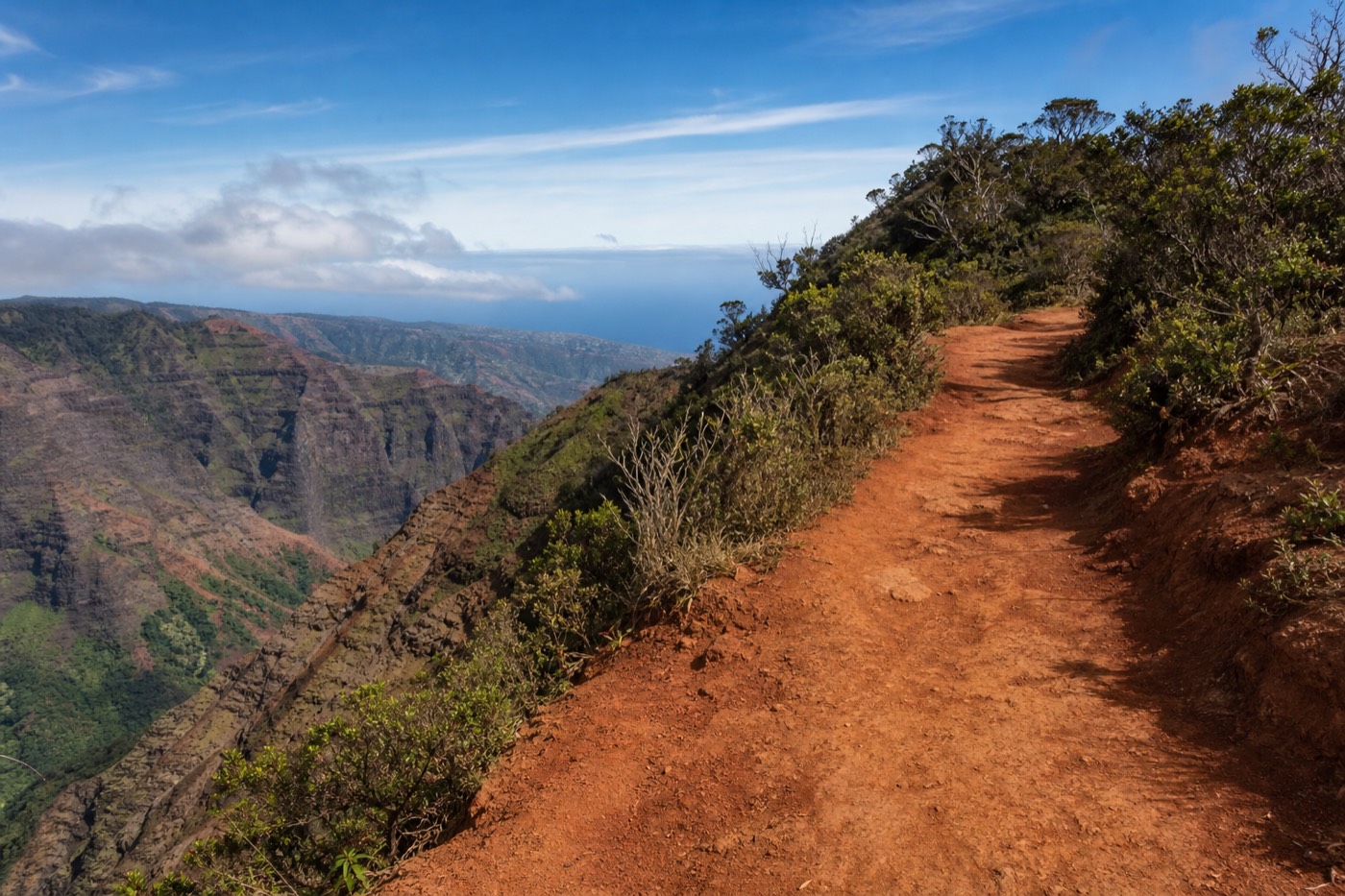
Two parks stack on top of each other on Kauai's west side, and the hiking splits neatly between them. Down in Waimea Canyon you get red-rock rim trails and a waterfall. Higher up in Kōkeʻe you cross into cool native rainforest, bog boardwalks, and cliff-edge overlooks of the Nā Pali Coast that most visitors never earn. One paved road connects both, so a single day can hold a gentle canyon stroll and a lung-busting ridge trail if you pace it right.
Booking choice: Hear Hawaiian history and geology as offline GPS narration follows your own canyon drive. Explore Waimea Canyon Offline Audio Drive
Access is easy and cheap, which is part of the appeal. Day hiking here is free and needs no permit or reservation. You pay only the state park entry, around five dollars per person plus about ten dollars to park for non-residents, and that single ticket covers both Waimea Canyon and Kōkeʻe. Overnight camping is the exception and does require a permit in advance. For a day of hiking, though, you just drive up Route 550, pay at the entrance, and pick a trailhead.
What Are The Best Hikes In Waimea Canyon And Kōkeʻe?
The standout hikes are the Cliff and Canyon Trail to Waipoʻo Falls, the Pihea Trail along the Kalalau rim, the Alakaʻi Swamp Trail boardwalk, and the Awaʻawapuhi and Nualolo trails out to Nā Pali overlooks. They range from a fifteen-minute overlook to a strenuous all-day loop, so the real question is how much climbing you want.
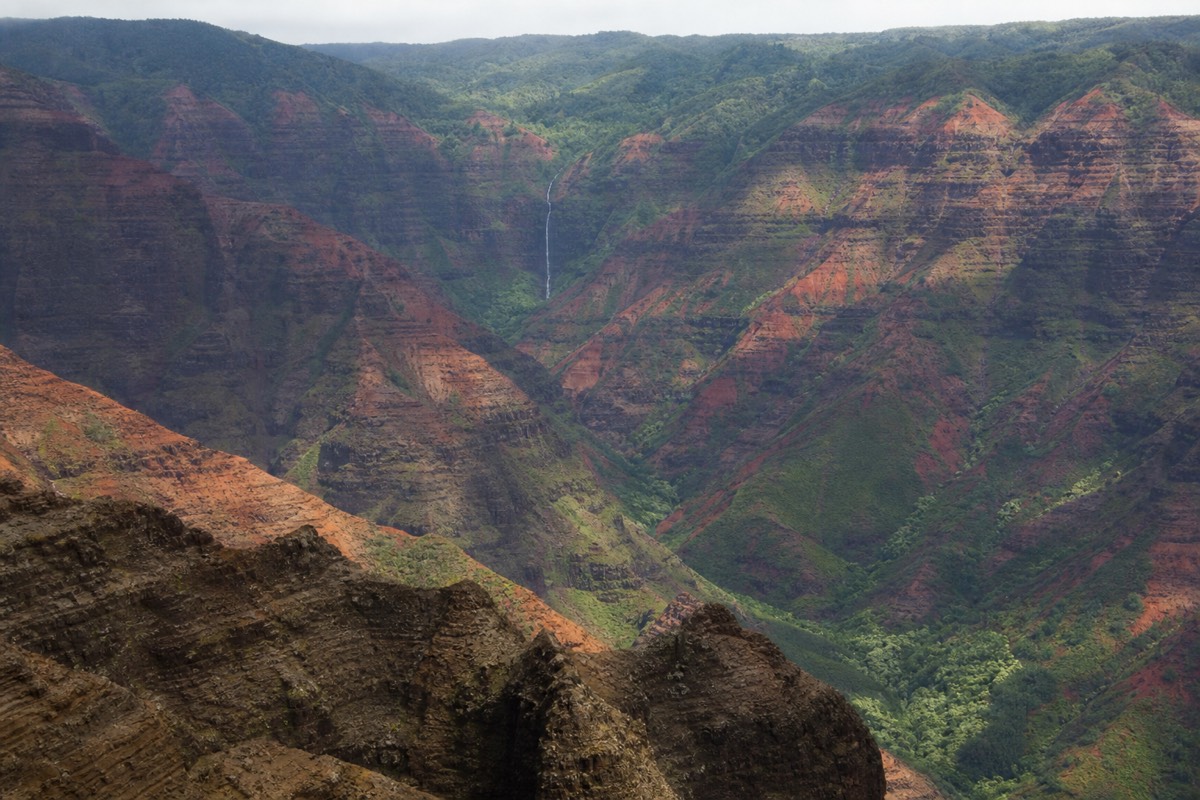
The trails here are unusually varied for one area. You can log an easy nature loop before breakfast and a 2,000-foot descent in the afternoon. What ties them together is that the best views cost effort. The paved lookouts give you the postcard, but the trails put you on the edge of the canyon or the rim of the Nā Pali valleys, alone, with nothing between you and the drop but air.
| Trail | Round trip | Difficulty | Time | What you see |
|---|---|---|---|---|
| Iliau Nature Loop | About 0.3 mi | Easy | 15 to 20 min | Canyon overlook and the endemic ʻiliau plant |
| Cliff Trail | About 0.2 mi | Easy | 15 to 20 min | Quick railed canyon overlook |
| Canyon Trail to Waipoʻo Falls | About 3 to 3.6 mi | Moderate | 2 to 3.5 hr | Top of Waipoʻo Falls, canyon walls, the river below |
| Kukui Trail | About 5 mi | Strenuous | 3 to 5 hr | Steep switchbacks around 2,000 ft down to the Waimea River |
| Pihea Trail | About 3.75 mi | Moderate | 2.5 to 4 hr | Kalalau Valley rim, Nā Pali views, rainforest |
| Alakaʻi Swamp Trail | About 7 mi | Strenuous | 4 to 6 hr | Boardwalk across a high bog to Kilohana Lookout |
| Awaʻawapuhi Trail | About 6.2 mi | Strenuous | 3 to 5 hr | Descends around 1,600 ft to a knife-edge Nā Pali overlook |
| Nualolo Trail | About 7.5 mi | Strenuous | 4 to 6 hr | Remote ridgeline to Lolo Vista and fluted cliffs |
Those figures are commonly cited planning allowances, not exact surveys, and they shift with where you park and how wet the ground is. Every strenuous trail here shares the same trap as Waipoʻo Falls: the hike out is the easy half, and the climb back is where the effort lives.
The Cliff Trail And Canyon Trail To Waipoʻo Falls
This is the most rewarding short-to-moderate hike in the canyon. The Cliff Trail is a two-tenths-of-a-mile spur to a railed overlook; continue on the Canyon Trail and you reach the top of Waipoʻo Falls in about 3 to 3.6 miles round trip. It is the one trail most first-time visitors should prioritize.
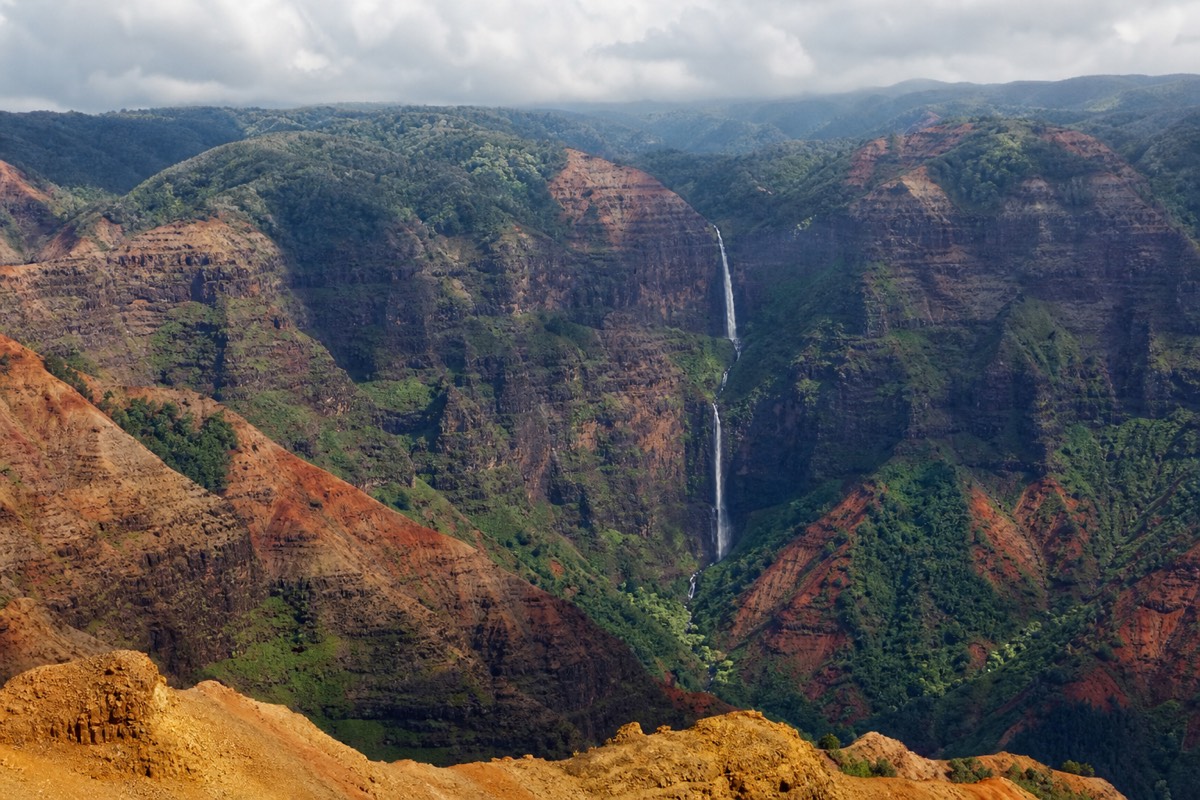
The route starts off the muddy Halemanu Road spur near mile marker 14. The Cliff overlook alone satisfies people who want a taste, and the Canyon Trail beyond it delivers the waterfall payoff with a real climb on the return. Because it is the marquee canyon hike, we gave it a full breakdown in the Waipoʻo Falls trail guide, including the mud, the flow by season, and the safety rules near the falls.
If your group has mixed ambitions, this is the trail that keeps everyone happy. Walk together to the Cliff overlook, then let the strong hikers push on to the falls while anyone who has had enough turns back to the car, which is never far. It is one of the few hikes in the region that splits cleanly like that, and it is why families and multi-generation groups keep coming back to it instead of gambling on a long ridge trail nobody can bail out of.
The Kukui Trail: Into The Canyon
The Kukui Trail is the only maintained way to hike down into Waimea Canyon itself, dropping roughly 2,000 feet of switchbacks over about 2.5 miles to the Waimea River. Going down is deceptively pleasant. The climb back out, in canyon heat with little shade, is a genuine workout that turns people around.
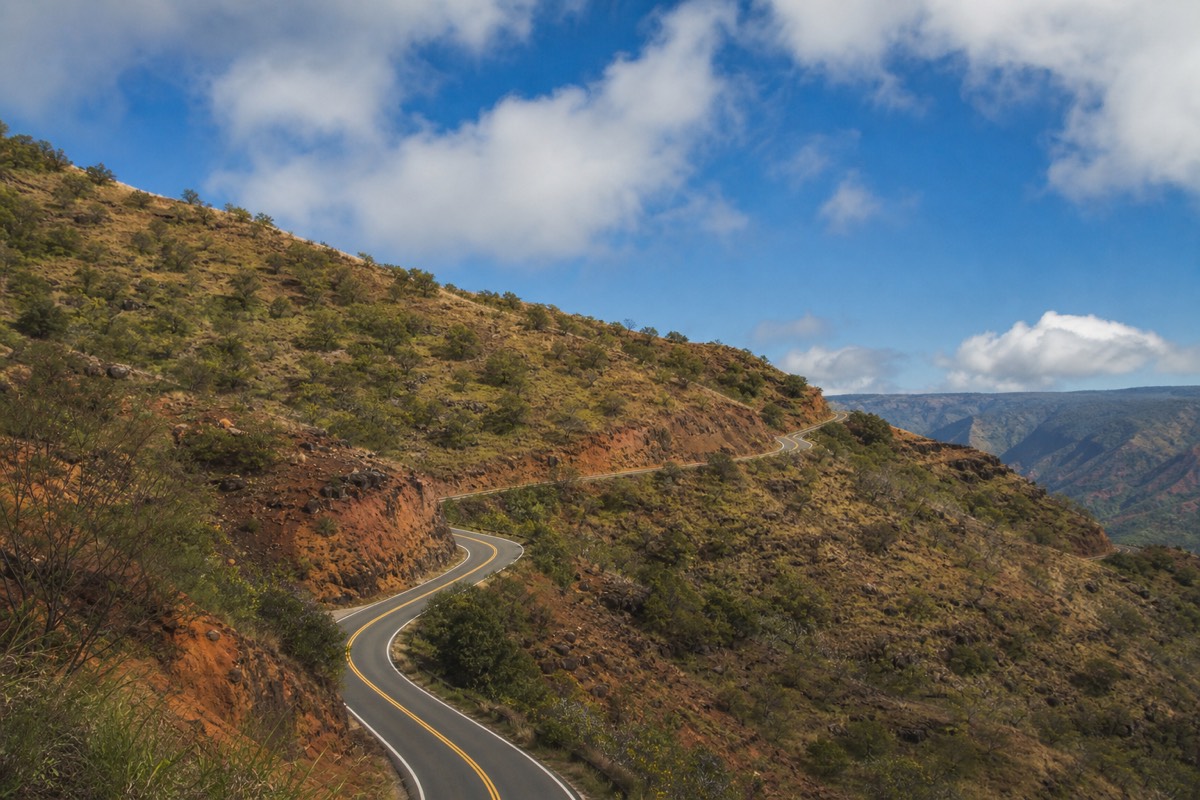
It begins near the Iliau Nature Loop around mile marker 9. The trail loses elevation fast and steadily, giving you a changing view of the canyon walls as you descend toward the river and the Wiliwili camp area at the bottom. This is not a casual stroll. Treat the full round trip as a strenuous half day, carry serious water, and start early so you are climbing out before the afternoon heat peaks. Many hikers go partway down for the views and turn back well before the river, which is a perfectly good plan.
The reason to respect this one is the exposure. Much of the Kukui Trail sits on open, sun-baked slope with almost no shade, so the climb out is hot in a way the mileage does not convey. Do not count on the river at the bottom for drinking water; carry everything you need. If clouds are already building when you reach the trailhead, save it for another morning. A partial descent to the first big viewpoint still delivers a fine sense of the canyon's depth for a fraction of the punishment.
The Pihea Trail And Alakaʻi Swamp Trail
These two connect at the far end of the paved road and take you into a different world: cool, wet, native rainforest. The Pihea Trail runs along the Kalalau Valley rim with Nā Pali views before diving into the forest. The Alakaʻi Swamp Trail follows a boardwalk across a high bog to Kilohana Lookout over the north-shore valleys.
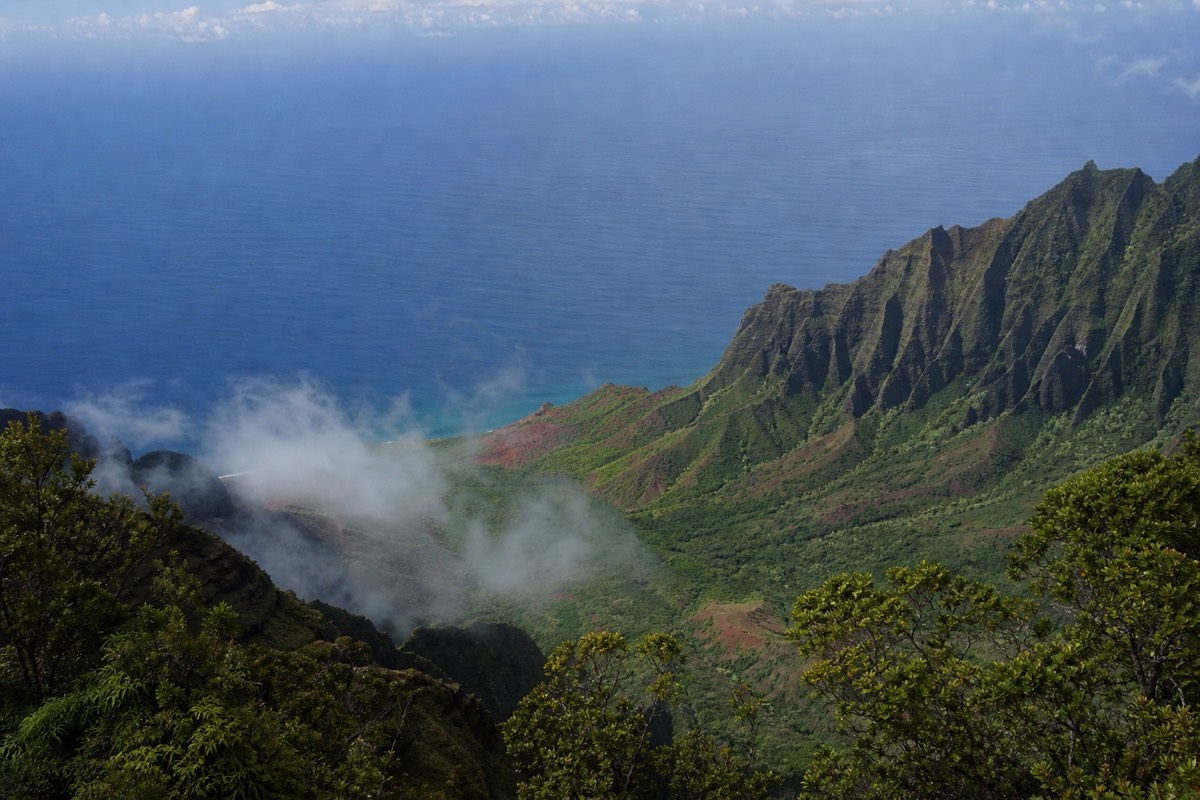
The Pihea trailhead sits at Puʻu o Kila, the very end of Route 550. The first stretch traces the rim with big Kalalau views, then the trail turns muddy and rooty as it drops toward the Alakaʻi junction. The Nā Pali views from Kōkeʻe are at their best on this early section before the clouds close in.
The Alakaʻi Swamp Trail is one of the strangest hikes in Hawaii. A boardwalk carries you across a montane bog that sits below Mount Waiʻaleʻale, one of the wettest spots on Earth, so expect mud, mist, and a real chance of rain even on a fine coastal day. The reward at the end is Kilohana Lookout, a sudden opening over Wainiha and Hanalei on the clear moments between clouds. Come prepared to be wet and cold, and know that the view is never guaranteed. When it appears, it is unforgettable.
The boardwalk deserves a word of its own. It was built to keep hikers out of the fragile bog and to keep them from sinking into it, and where the planks end or turn slick with moss, the mud can swallow a shoe. Waterproof footwear helps, but nothing keeps you fully dry here. Treat the swamp as the acquired-taste hike of the region: quiet, otherworldly, alive with native birds and plants found nowhere else, and best attempted on the driest morning you can find. People who love it come back for it. People who wanted a sunny stroll should choose a canyon trail instead.
The Awaʻawapuhi And Nualolo Trails: Nā Pali Overlooks
These are the big-view, big-effort hikes. The Awaʻawapuhi Trail descends about 1,600 feet over roughly 3 miles to a railed overlook on the edge of the Nā Pali cliffs. The Nualolo Trail reaches a similar cliff-edge vista, and the Nualolo Cliff Trail links the two into an 11-mile loop for strong hikers.
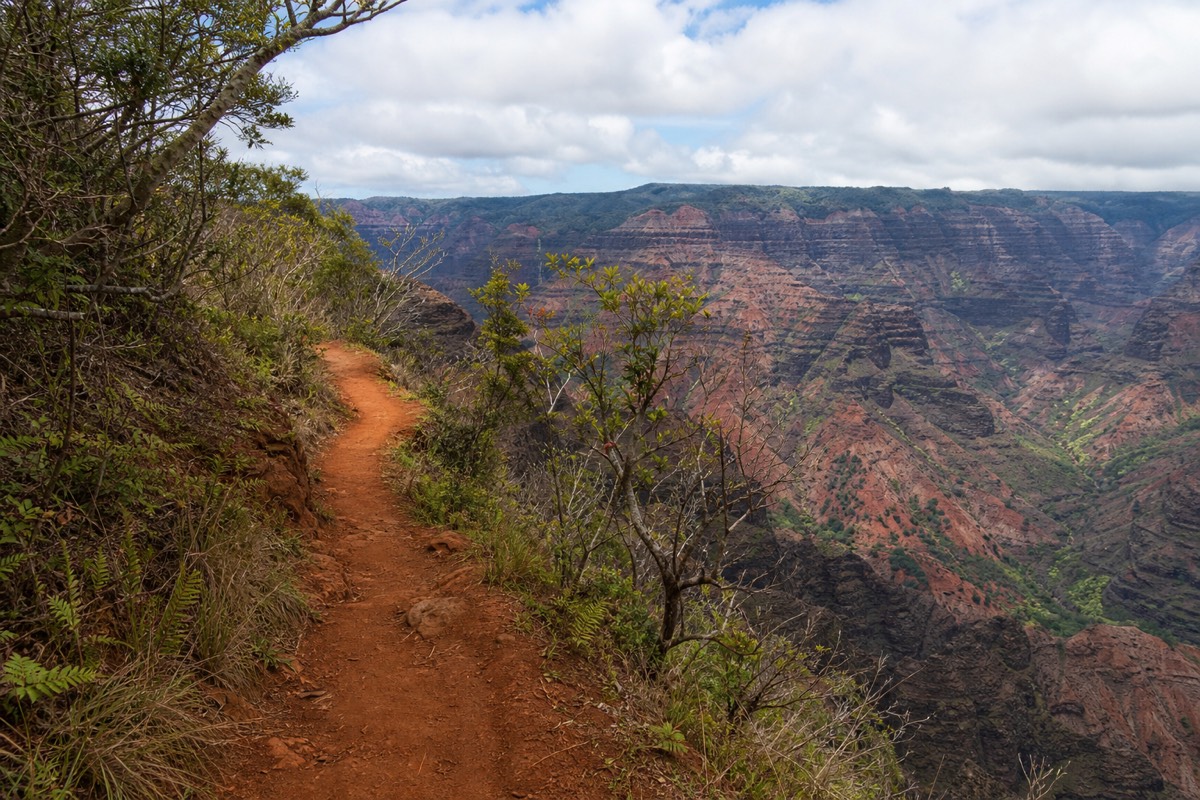
The Awaʻawapuhi overlook is one of the finest viewpoints on Kauai that you can only reach on foot. You stand at the top of fluted green ridges that plunge toward the ocean, with valleys falling away on either side. The trail is deceptively easy on the way down and demanding on the climb back, so save energy and water for the return. The Nualolo Trail delivers a comparably stunning Nā Pali vista from Lolo Vista Point and is quieter, with a slightly longer, remote feel.
Linking them via the Nualolo Cliff Trail makes a loop that many consider the best day hike in Kōkeʻe, but it is long, exposed in places, and not for beginners. Start at first light, watch the weather, and be honest about your fitness. A cloud-socked ridge robs the reward and the footing at once.
One practical note on these two: the overlooks are the whole point, so weather is not a detail here, it is the decision. Hiking three miles down to a cliff edge only to find a wall of cloud is a real and common disappointment, and the climb back out feels twice as long when the view never came. Check the forecast, favor the drier summer months, and be at the trailhead early. If the upper lookouts on the drive up are already hazy, that is your signal that the ridge will likely be worse.
Which Are The Easy Hikes And Which Are The Hard Ones?
The easy tier is short and flat: the Iliau Nature Loop, the Cliff Trail overlook, and the first open stretch of Pihea. The hard tier is all about long descents you have to climb back out of: Kukui, Awaʻawapuhi, Nualolo, and the wet, mud-heavy Alakaʻi Swamp. The Canyon Trail to Waipoʻo Falls sits in the moderate middle.
Sorting the trails this way saves people from the classic mistake, which is picking a trail by its view alone and ignoring what the return climb costs. A cliff overlook that took you an easy hour to reach can take two hard hours to leave. Read the difficulty column as a promise about the way back, not the way there.
There is a middle strategy worth knowing: turn a hard trail into a moderate one by not finishing it. The strenuous descents all reward a partial hike. Go halfway down the Kukui switchbacks for the canyon depth, walk the first mile of Awaʻawapuhi for the ridge feel, or take the Pihea rim as far as the views hold and then turn back. You skip the punishing bottom and the worst of the climb while still getting most of the scenery. Nobody hands out medals for reaching the exact end, and a turnaround at the point you stop enjoying yourself is always the right call.
| Easy | Moderate | Hard |
|---|---|---|
| Iliau Nature Loop | Canyon Trail to Waipoʻo Falls | Kukui Trail |
| Cliff Trail overlook | Pihea Trail (full) | Awaʻawapuhi Trail |
| Pihea rim (first stretch) | Nualolo Trail and cliff loop | |
| Alakaʻi Swamp Trail |
Best Hikes By What You Want To See
For Nā Pali cliff views, hike Awaʻawapuhi or Nualolo. For a waterfall, take the Canyon Trail to Waipoʻo Falls. For the deepest canyon experience, the Kukui Trail drops you toward the river. For something genuinely odd and beautiful, the Alakaʻi Swamp boardwalk has no equal.
Choosing by goal beats choosing by name. Most visitors have time for one memorable hike, so decide what you most want to stand in front of, then accept the effort that particular view demands. The short-view options are real rewards too, and there is no shame in the Iliau Loop and the lookouts if a big climb is not your day.
| Goal | Best pick | Backup pick |
|---|---|---|
| Easiest big view | Iliau Nature Loop | Cliff Trail overlook |
| Short waterfall payoff | Canyon Trail to Waipoʻo Falls | Cliff Trail overlook |
| Best Nā Pali views | Awaʻawapuhi Trail | Nualolo Trail, Pihea rim |
| Deepest into the canyon | Kukui Trail | Canyon Trail |
| Strangest, most unique | Alakaʻi Swamp Trail | Pihea Trail |
| Hardest full day | Awaʻawapuhi to Nualolo loop | Alakaʻi Swamp round trip |
Hikes With Kids, Seniors And Beginners
Families and casual walkers should stick to the Iliau Nature Loop, the Cliff Trail overlook, and the first flat stretch of Pihea. Skip the long descents like Kukui, Awaʻawapuhi and Nualolo unless everyone is a strong, experienced hiker, because the climb back out is the hard part and there is no shortcut once you commit.
The rule for kids in this park is simple: distance is fine, drop-offs and long uphill returns are not. A short loop with a fenced view keeps children happy and safe. The moment a trail runs along an unguarded edge or commits you to a 1,500-foot climb back, the calculus changes. Our Waimea Canyon with kids guide sorts the stops by how well they hold young attention.
Seniors and beginners get an enormous amount from the short loops and the paved lookouts without touching a strenuous trail. If long climbs are off the table but you still want to feel like you hiked, the Iliau Loop and Cliff Trail deliver real scenery. The non-hiker and seniors guide builds a full low-effort day around them.
Hiking Safety And What To Wear
Dress for two climates: warm canyon floor and cool, wet upper Kōkeʻe. Wear real hiking shoes with tread, carry more water than the distance suggests, start early, and turn back when red clay turns to grease. The two constant hazards are slick mud and unguarded cliff edges, both worst after rain.
The temperature swing catches people out. Down in the canyon it can be hot and still, while the upper Kōkeʻe trails sit thousands of feet higher and run cold, misty, and rain-prone. Layers solve it. A light rain shell is smart for anything near the Alakaʻi Swamp, where a clear morning can flip to drizzle in minutes.
A few habits keep hikers out of trouble on these trails specifically. Tell someone your route and rough return time, because cell signal is unreliable to nonexistent once you leave the road. Carry every drop of water you will drink, since there is no safe source on any of these trails. Watch for the fine red dust that turns to grease the moment it rains, and give unrailed cliff edges a wide margin, especially for photos. If a stream is running high after heavy rain, do not cross it. None of these trails is worth a rescue, and the weather that ruins a view is the same weather that makes the ground dangerous.
| Item | Why it matters here |
|---|---|
| Grippy hiking shoes | Red clay is slick when wet; smooth soles slide |
| Extra water | Canyon floor is hot with little shade; no reliable water on trail |
| Rain shell and a warm layer | Upper Kōkeʻe is cold and wet even on a sunny coast day |
| Trekking poles | Save your knees on steep descents and climbs |
| Sun protection | Open rim sections have no shade |
| Early start | Beats the heat and the afternoon clouds |
When Is The Best Hiking Season?
The drier stretch of roughly May through September gives the firmest footing and the clearest upper-elevation views, which is when the strenuous cliff trails shine. The wetter winter months make waterfalls run harder but leave trails muddy and the Nā Pali overlooks socked in more often. Any month, hike in the morning.
Season matters most for the two extremes. Waterfall hikes reward the wet months, and cliff-edge Nā Pali hikes reward the dry ones, because a clouded overlook gives you nothing after all that climbing. The middle-ground trails are fine year round. Regardless of season, the single best habit is an early start, since clouds and mist build over both parks as the day goes on. Our best time to visit guide breaks the year down month by month.
| Season | Waterfall hikes | Nā Pali cliff hikes |
|---|---|---|
| Winter (Nov to Mar) | Best flow, muddy footing | Riskier: more cloud on the overlooks |
| Shoulder (Apr, May, Oct) | Good if rain has been recent | Decent odds, check the forecast |
| Summer (Jun to Sep) | Thinner flow, firm and safe | Best: clearest overlooks, dry trails |
How Many Hikes Can You Do In One Day?
Realistically, one big trail or two to three short ones. A casual day can pair the Iliau Loop, the Cliff Trail, and the paved lookouts. An active day can do the Canyon Trail to Waipoʻo Falls plus a rim walk. Save a full strenuous trail like Awaʻawapuhi or Alakaʻi Swamp as the only major hike of the day.
The mistake is trying to stack two strenuous descents. Each one costs you the climb back out, and the second one in afternoon heat is where people get into trouble. Build the day around a single hard trail or a handful of easy ones, and leave room for the lookouts, which need no hiking at all.
Factor the drive into your math, too. Getting up Route 550 from the coast takes real time on a slow, winding road, and you want to be climbing it early to beat both the crowds and the clouds. That travel time is a big reason most visitors realistically fit one main hike rather than three. If you would rather spend the day walking than driving and parking, a guided tour absorbs the road and the timing so your energy goes into the trail instead of the wheel.
| Day style | Suggested plan |
|---|---|
| Casual half day | Iliau Loop, Cliff Trail overlook, and the main paved lookouts |
| Active full day | Canyon Trail to Waipoʻo Falls, then the Pihea rim and lookouts |
| Strong hiker full day | One big trail only: Awaʻawapuhi to Nualolo loop, or Alakaʻi Swamp |
If you would rather see the canyon and Kōkeʻe without planning trailheads and driving the winding road, a guided small-group tour builds an easy nature walk into the day and handles the logistics. A private option adds a south-side stop for beach and wildlife on the way back. Either way, our full Kōkeʻe State Park guide covers what waits at the top of the road once you park the boots. A guided Waimea Canyon Tour is also the simplest fix for anyone who wants the views without the driving.