Waimea Canyon for Seniors & Non-Hikers
You do not have to hike, or even walk far, to stand at the rim of the Grand Canyon of the Pacific. Here is how older travelers, and anyone who would rather skip the trails, see the best of Waimea Canyon.
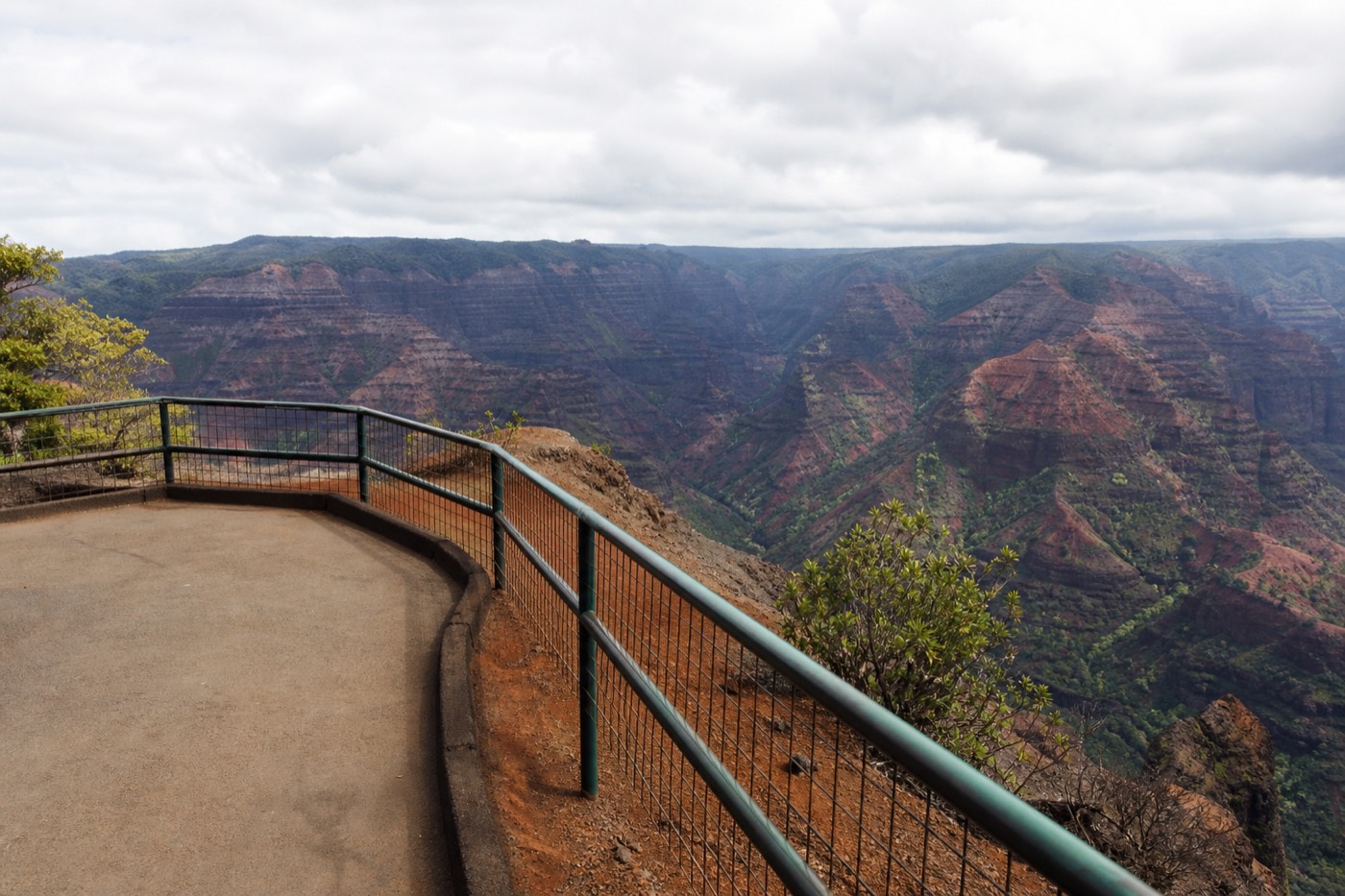
The best views into Waimea Canyon sit a few steps from a parking space, not at the end of a trail. Route 550 climbs the whole west rim on smooth pavement, and the main lookouts hand you a mile-wide gorge roughly 3,500 to 4,000 feet deep, striped in rust red and forest green, with almost no walking involved. That one fact changes the whole trip for anyone with tired knees, a cane or walker, or a grandchild in a stroller.
Booking choice: Explore canyon lookouts, Kalalau and the south shore with your own driver-guide. Explore Private Canyon & South Side Day
Most of the canyon's reputation for effort comes from the hiking crowd. Trails like the Canyon Trail down to Waipoʻo Falls are wonderful, and they are also long, steep, and dusty. You can skip every one of them and still see the sights that put Waimea Canyon on the map. This guide is written for exactly that traveler.
Waimea Canyon For Seniors And Non-hikers: The Quick Plan
Yes, you can see Waimea Canyon without hiking. Drive or ride up paved Route 550 to the railed lookouts, arrive early before the clouds build, and plan three or four short stops. A guided van tour removes the winding mountain driving and the parking hunt, which is why many older visitors prefer it over a rental car.
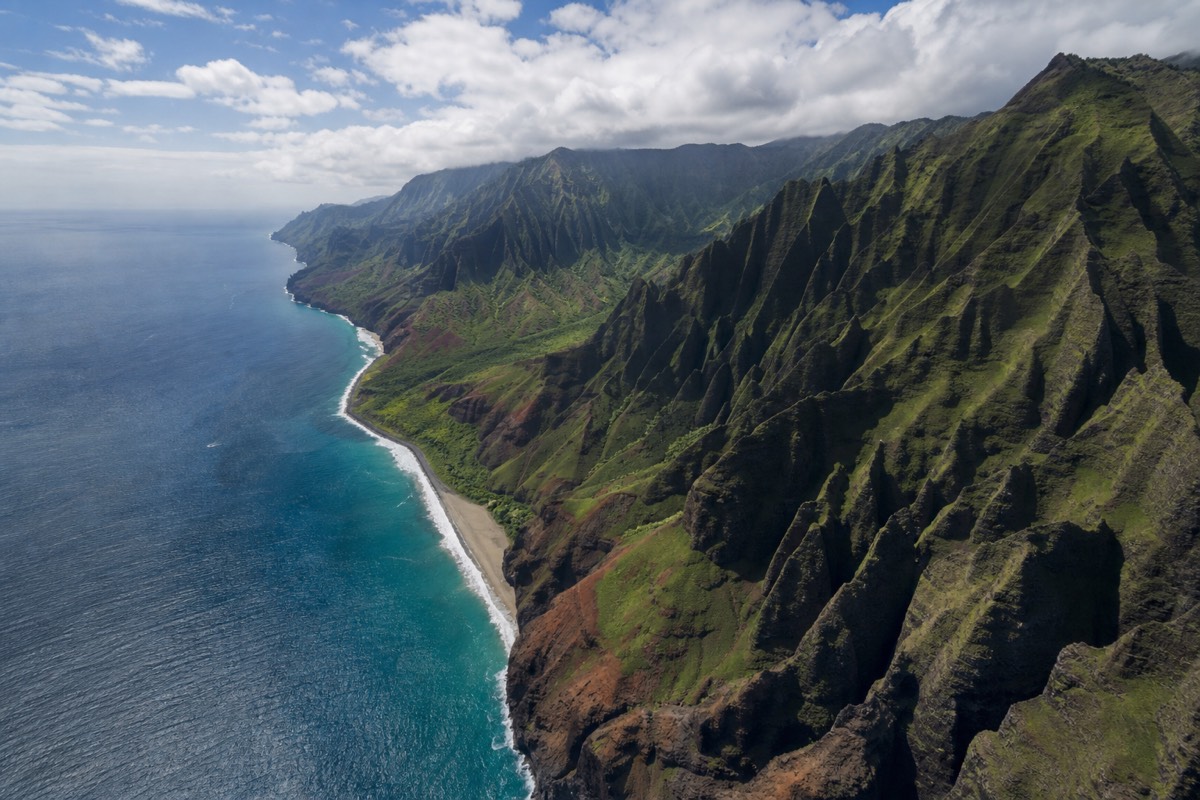
Think of the canyon as a drive-up attraction first and a hiking destination a distant second. Four overlooks carry the day: Waimea Canyon Lookout, Puʻu Hinahina, Kalalau, and Puʻu o Kila at the very end of the road. Each sits within steps of its own parking area, each has a paved or hard-packed viewing platform, and none asks you to walk a trail. Pick two or three, take your time, and you have seen the canyon properly.
The other half of the plan is timing and temperature. Clouds and mist rise up the valleys through the morning and often smother the high lookouts by early afternoon, so the earlier you are on the rim, the clearer your view. And because the top of the road sits well above 3,000 feet, the air is markedly cooler than the beach you left an hour earlier. A light jacket matters more here than good boots. For the full timing picture, our guide to the best time to visit Waimea Canyon lays out the month-by-month pattern.
One more reassurance before the details. Nobody has to do the whole road, and nobody has to walk a trail to have seen the canyon. A single stop at the right lookout counts as a real visit, and two or three relaxed stops make a full, satisfying morning. Everything that follows is about doing less, not more, and still coming home with the view that put this place on the map.
Which Lookouts Are Road-accessible?
All four headline lookouts are road-accessible. Waimea Canyon Lookout and Puʻu Hinahina have the shortest, flattest walks and the sturdiest railings. Kalalau and Puʻu o Kila sit higher and colder with a little more uneven ground, but the walk from car to view is still short at every one.
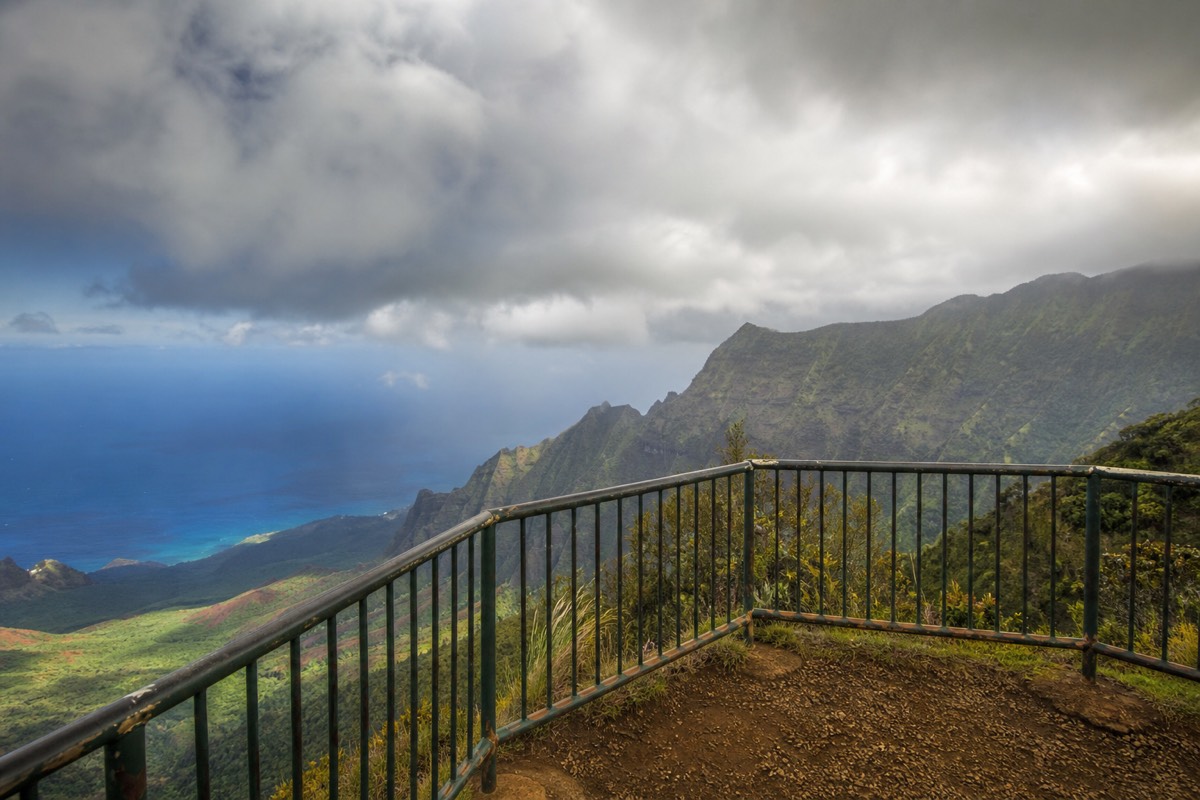
Here is how the developed overlooks compare for a traveler who wants the view without the workout. Distances are approximate and generous; the point is the order, not the exact yardage.
| Lookout | Elevation (approx.) | Walk from parking | Terrain | Railing | Non-hiker rating |
|---|---|---|---|---|---|
| Waimea Canyon Lookout | ~3,400 ft | Short, ~1–2 min | Paved, gentle slope | Full railing | Excellent |
| Puʻu Hinahina Lookout | ~3,600 ft | Very short, ~1 min | Mostly level, packed | Full railing | Excellent |
| Kalalau Lookout | ~4,000 ft | Short, ~2–3 min | Some steps, uneven spots | Railing at the platform | Good, take it slow |
| Puʻu o Kila Lookout | ~4,100 ft | Steps from the lot | Level near the rail, wind-exposed | Railing at the edge | Good |
Waimea Canyon Lookout is the one to prioritize if you only manage a single stop. It faces the deepest, most colorful stretch of the gorge, the parking lot is large, and the paved path to the railed overlook is short and gentle. Puʻu Hinahina, a few minutes further up, became the main canyon viewpoint during recent repair work and is nearly as easy underfoot. Our roundup of the best Waimea Canyon lookouts ranks all of them, hikers and non-hikers alike.
Kalalau and Puʻu o Kila are a different reward: instead of the canyon, they open onto the Kalalau Valley and the Nā Pali Coast, a vertical world of green ridges dropping to the sea. They sit at the coldest, cloudiest end of the road, so they are the ones most worth reaching early. The ground has a few more bumps and a step or two, nothing dramatic, but worth a slow, steady pace and a hand on the rail.
How Does The Canyon Compare To Kauai's Other Sights For Effort?
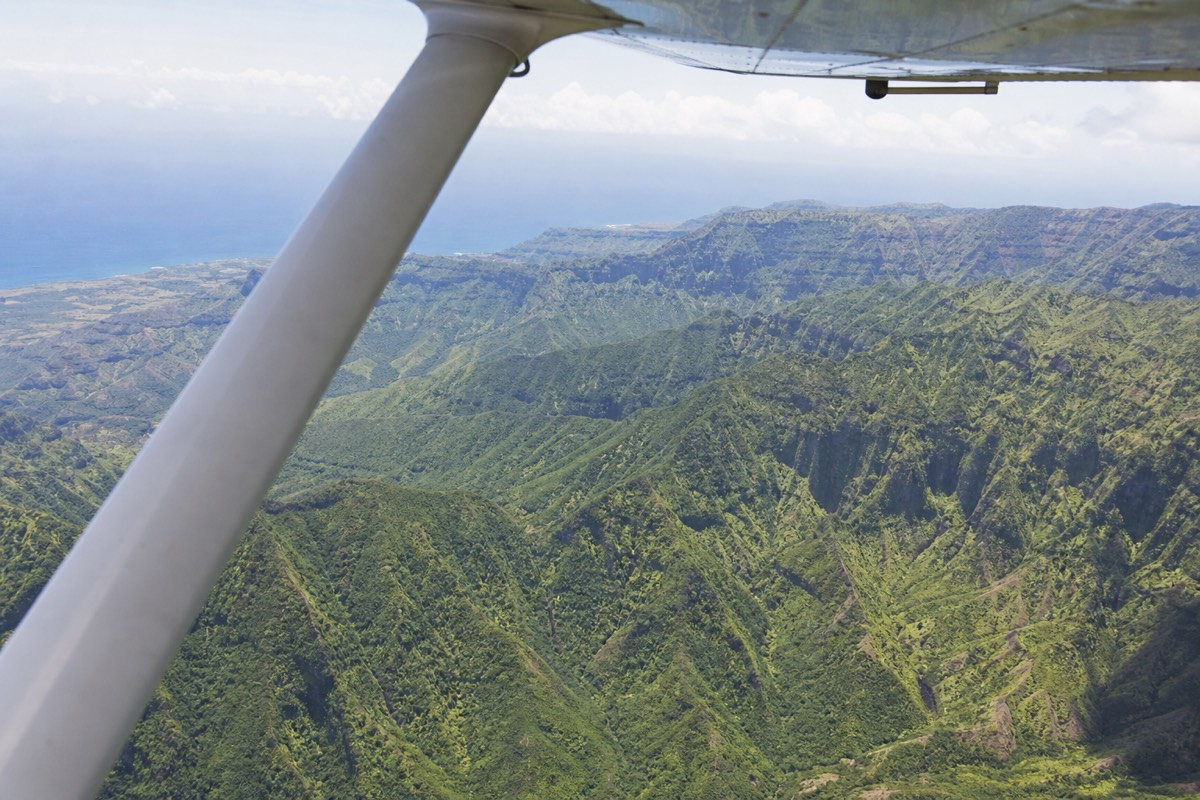
Among Kauai's headline sights, Waimea Canyon is one of the easiest to enjoy without exertion. The view meets you at the railing, unlike beaches with soft sand and steps or trails that demand real hiking. Only a scenic flight or a boat tour rivals it for how little your legs have to do.
Effort is the quiet deciding factor for a lot of older travelers, and the canyon scores well on it. Standing at a paved, railed overlook is gentler on the body than crossing soft sand to a beach, climbing down to a sea arch, or looping a botanical garden's paths. Here is a rough ranking of west and south Kauai sights by how much they ask of you.
| Attraction | Typical effort | Non-hiker friendliness | Note |
|---|---|---|---|
| Waimea Canyon lookouts | Very low, steps from parking | Excellent | Paved, railed platforms |
| Kōkeʻe forest meadow | Low, flat and optional | Excellent | Rest, museum, lodge |
| Spouting Horn blowhole | Low, short paved path | Very good | Railed viewpoint |
| Poʻipū Beach | Moderate, sand and steps | Good | Soft, uneven footing |
| Waipoʻo Falls trail | High, long and steep | Poor for non-hikers | Skip it; view the falls from the rim |
The takeaway is reassuring. The marquee view on the west side is also one of the least demanding, so if a beach day already feels like plenty, the canyon will feel like a gift rather than a chore.
Which Viewpoints Need Minimal Or No Walking?
If any walking is too much, you can still enjoy the canyon. Several roadside pullouts along Route 550 let you take in layered cliffs and distant valleys from beside the car, and the two main lookouts put a full canyon view within a one to two minute stroll on paved ground.
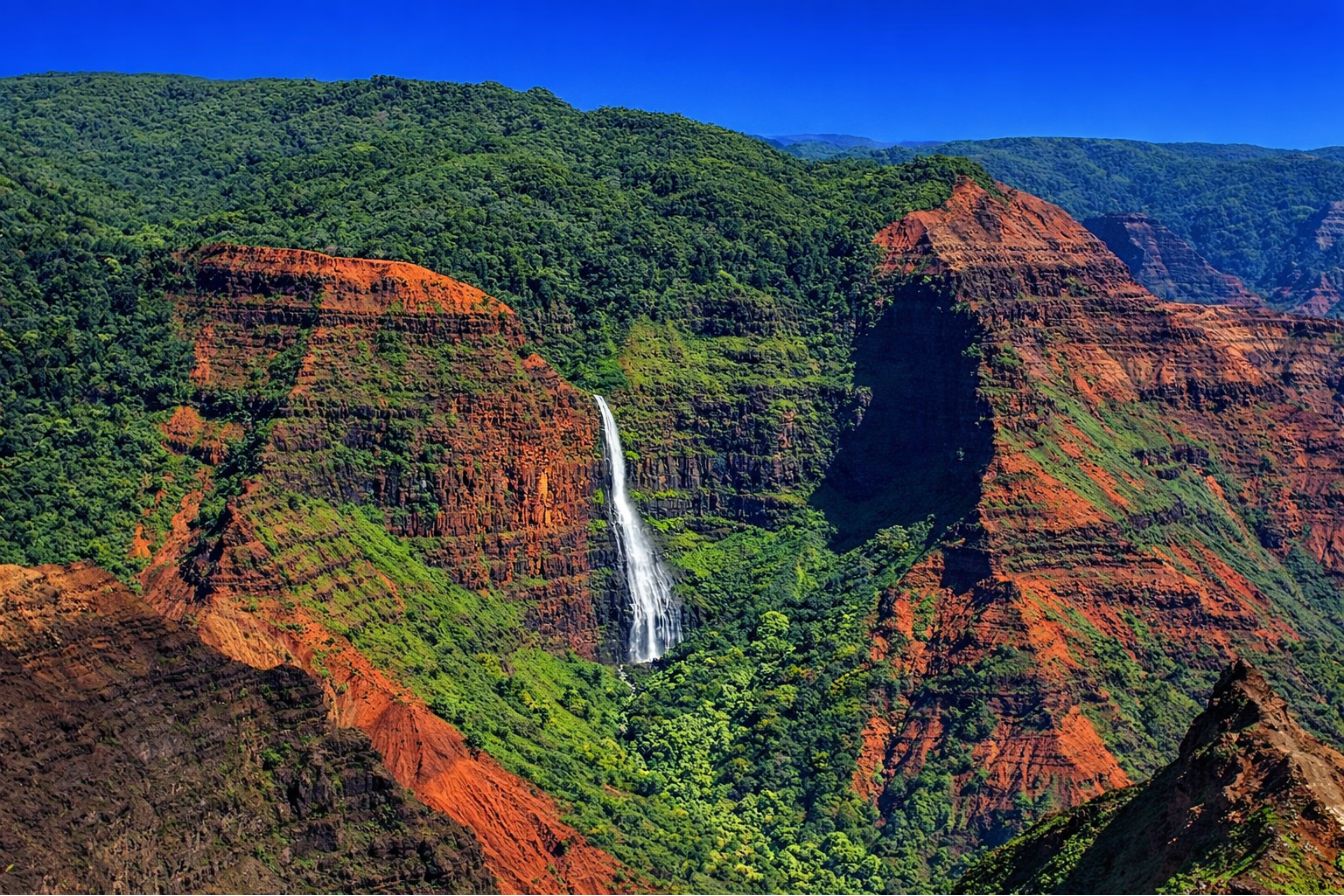
The drive itself is scenery. Route 550 climbs through a series of curves with unmarked pullouts, and on a clear morning you can see the canyon open up between the trees long before you reach the signed lookouts. For someone who would rather not leave the vehicle much, those pullouts turn the road into a slow-motion gallery.
| Stop | What you see | Effort | Best for |
|---|---|---|---|
| Roadside pullouts (Route 550) | Canyon walls, ocean glimpses, Niʻihau on clear days | None to a few steps | Photos from beside the car |
| Waimea Canyon Lookout | The deepest red-and-green canyon panorama | 1–2 min paved | The single must-see |
| Puʻu Hinahina Lookout | Wide canyon view, sometimes toward the ocean | ~1 min, level | An easy second stop |
| Kōkeʻe State Park meadow | Cool forest, lawn, lodge and museum | Flat, your choice | A rest, a snack, a restroom |
| Kalalau Lookout | Kalalau Valley and the Nā Pali Coast | 2–3 min, a few uneven steps | The other great view |
One of the canyon's most-photographed features, Waipoʻo Falls, is a common question for non-hikers, because the famous trail to its base is a real hike. The good news is that you can often spot the thin white ribbon of the falls from the rim on a clear day, no trail required. We cover exactly where and how in seeing Waipoʻo Falls without hiking.
Where Are The Restrooms And Facilities?
Restrooms sit at the main Waimea Canyon Lookout and at Kōkeʻe State Park near the museum and lodge. Plan bathroom stops around those two anchors, carry water, and do not count on facilities at the smaller pullouts. A guided tour builds the stops in for you.
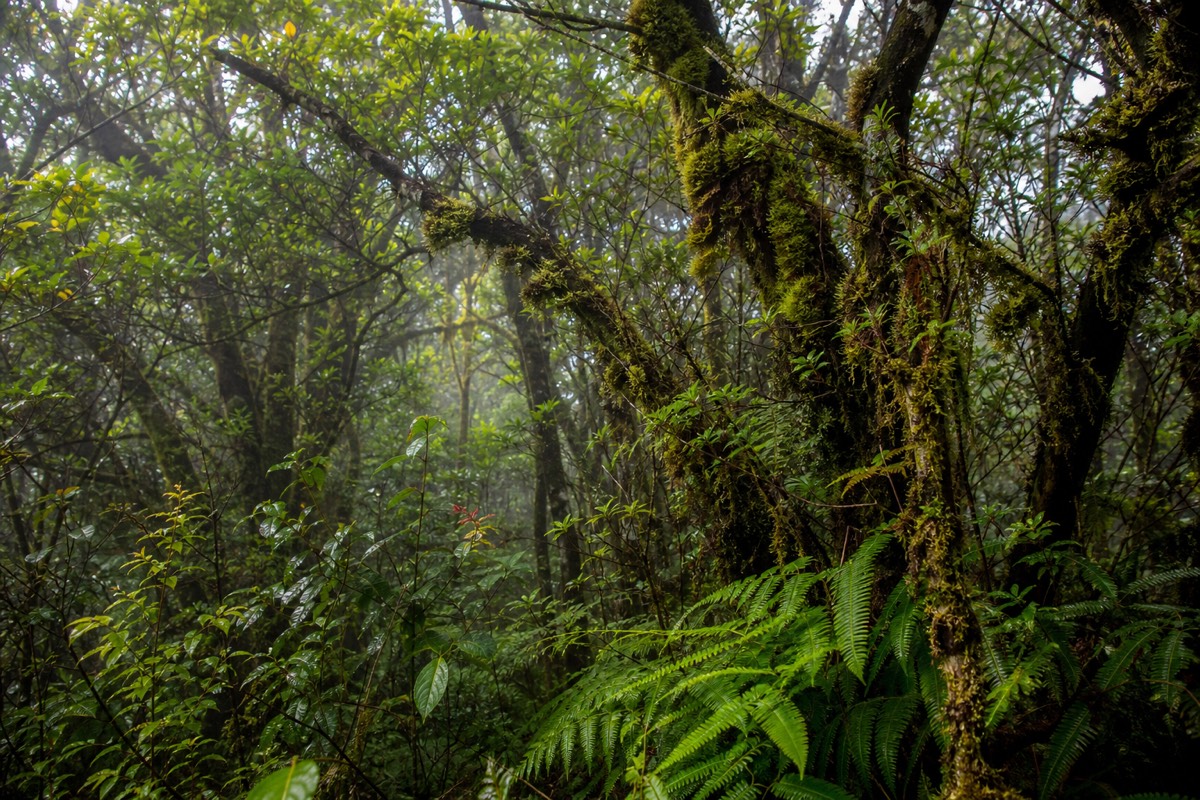
Facilities up the mountain are basic and spaced out, which is worth knowing before you leave the coast. The two dependable stops are the big Waimea Canyon Lookout and the Kōkeʻe State Park area, where the small museum, the lodge, and a gift shop cluster together. That Kōkeʻe hub is also the natural place to buy a coffee, use a real restroom, and sit down for a few minutes out of the wind.
| Location | Restrooms | Food / drink | Notes |
|---|---|---|---|
| Waimea town (base of the road) | Yes | Shops, snacks | Last easy supplies before the climb |
| Waimea Canyon Lookout | Yes | None on site | Main lower stop |
| Puʻu Hinahina Lookout | Limited / none | None | Quick view stop only |
| Kōkeʻe State Park (museum / lodge) | Yes | Lodge café, gift shop | Best rest stop up top |
| Kalalau & Puʻu o Kila | Limited / none | None | Go before, not after |
Cell coverage is patchy to nonexistent on the upper road, so download directions before you go and tell someone your rough plan. None of this is a reason to stay away. It is simply the difference between the canyon and a city park, and a little preparation removes the friction.
Why Does A Guided Tour Help Older Travelers?
A guided tour removes the two hardest parts of the day: the winding, cliff-edge drive and the parking. A driver-guide handles Route 550's curves, times the stops for clear light, and offers a comfortable seat with hotel pickup, so you spend your energy on the views instead of the road.
Route 550 is paved the whole way, but it is a genuine mountain road: tight bends, blind curves, and a fair bit of elevation gain. Plenty of confident drivers enjoy it. Plenty of others, especially after a long flight and a time-zone change, would rather not do it in an unfamiliar rental. A tour hands that job to someone who drives it every week.
The comfort details add up. The small-group mini-coach option climbs the mountain with big windows and a professional driver, includes park admission, and even folds in a stop at the Kōkeʻe museum with a lunch stop at the lodge, with food paid separately, which solves the facilities question in one move. The cruise-port shore excursion runs in a small vehicle capped at fourteen guests with bucket seats and seat belts, built for easy on and off. And a private tour gives you the gentlest pace of all, with a short, flat nature walk to the canyon edge and a schedule that bends around you. If you are still weighing the choice, our comparison of a guided tour versus self-driving Waimea Canyon walks through the trade-offs.
Pickup points matter for older travelers who are not staying near the west side. Most guided canyon trips gather guests from the main resort areas and Līhuʻe, so the drive time to the trailhead of the day becomes the tour's problem, not yours. You settle into a seat in Poʻipū or Līhuʻe and step out at the rim.
Arriving By Cruise Ship? The Easy Shore-excursion Option
Cruise passengers docking at Nawiliwili have an especially easy way in: a small-group shore excursion that picks up right at the pier, seats fourteen guests with seat belts and easy on-off access, and returns you in time for departure. No rental car, no mountain driving, no worry about the ship's clock.
When your Kauai day comes with a ship's departure time attached, self-driving the canyon adds pressure you do not need. The dedicated shore excursion removes it. It gathers you at the Nawiliwili cruise port, runs a comfortable small vehicle with large windows and bucket seats, and folds in the canyon viewpoints plus west-side sights like the historic Hanapepe Swinging Bridge and a coffee farm, all under a return arrangements to confirm before booking to get you back to the pier.
No return-to-ship guarantee has been verified for the independent excursion linked here. Confirm your ship, pickup time, all-aboard deadline and delay policy directly with the provider before paying; leave a suitable return buffer.
| Guided option | Who it suits | Why |
|---|---|---|
| Small-group mini-coach | Most travelers, first-timers | Best value; museum and lodge stops; park fees included |
| Private guided tour | Comfort-first, small groups, mobility needs | Gentle pace, short flat walk to the edge, schedule bends to you |
| Cruise-port shore excursion | Cruise passengers | No return-to-ship guarantee has been verified for the independent excursion linked here. Confirm your ship, pickup time, all-aboard deadline and delay policy directly with the provider before paying; leave a suitable return buffer. |
Whichever you pick, the winding drive and the parking become someone else's job. For an older visitor, that is the single biggest comfort upgrade the canyon has to offer.
What Should You Bring To The Cool Rim?
Pack for weather cooler than the beach. The upper lookouts sit above 3,400 feet and run breezy and often ten to fifteen degrees cooler than the coast, so bring a light jacket or fleece, sun protection, water, and any regular medications. Steady, closed-toe shoes beat sandals on the packed viewing areas.
The single most common surprise for first-timers is the temperature. You leave a warm, sunny coast, drive an hour, and step out into wind and cloud that can feel almost autumnal. Layers fix it. A light fleece or windbreaker you can add and shed is worth more than any other item on the list.
| Item | Why it matters |
|---|---|
| Light jacket or fleece | The rim is cool and windy, well cooler than the beach |
| Sun hat and sunglasses | Strong sun between the clouds at altitude |
| Sunscreen | UV is intense up high even when it feels cool |
| Water | Few places to buy it on the upper road |
| Closed-toe shoes | Sturdier footing on packed, uneven overlooks |
| Medications and snacks | Facilities are sparse; carry what you need |
| Light rain layer | Passing showers are common near the top |
Leave the heavy hiking gear at home. You do not need poles, boots, or a daypack to stand at a railed lookout. The goal is comfort in changeable weather, not readiness for a trek.
A small daypack or tote handles the whole list without weighing you down. Keep the jacket on top so it is easy to grab when you step out of a warm car into the wind, tuck a water bottle and a snack in a side pocket, and keep medications somewhere you can reach without digging. Little touches like that keep each stop pleasant, so you linger for the view instead of hurrying back to shelter.
How Should You Pace And Time The Day?
Go up early, come down for lunch. Start the climb soon after breakfast so you reach the high Kalalau and Puʻu o Kila lookouts before the clouds do, work back down through the canyon overlooks, and rest at Kōkeʻe. A relaxed half day covers the sights without any rush.
A calm, senior-friendly rhythm looks something like this. It front-loads the highest, cloud-prone lookouts and leaves the easiest, lowest one for a leisurely finish.
| Time | Stop | Pace |
|---|---|---|
| 7:30–8:00 | Leave the coast, drive or get picked up | Easy start after breakfast |
| 9:00 | Kalalau & Puʻu o Kila lookouts | Clear light, cool air, go slow |
| 10:15 | Kōkeʻe museum, lodge, restroom break | Sit, warm up, coffee |
| 11:00 | Puʻu Hinahina Lookout | Short, level, quick photos |
| 11:45 | Waimea Canyon Lookout | The grand finale, take your time |
| 12:30 | Descend to Waimea town for lunch | Warmer air, easy road down |
There is no rule that says you must reach the end of the road. If the two lower lookouts and the Kōkeʻe meadow are enough for one day, that is a complete visit. The canyon rewards a slow morning far more than a hurried marathon.
Is One Lookout Enough For A Short Visit?
Yes. If a full morning on the mountain feels like too much, a single stop at Waimea Canyon Lookout captures the canyon's best face. Its large parking lot, short paved path, and full railing make it the highest-reward, lowest-effort stop on the entire road, a complete visit in fifteen unhurried minutes.
Some travelers worry that skipping the higher lookouts means missing the point. It does not. Waimea Canyon Lookout faces the deepest, most colorful stretch of the gorge, the part that photographs like a postcard, and it is the easiest one to reach. Pull in, take the short paved walk to the rail, let your eyes adjust to the scale, and you have seen what people drive up here for.
If energy allows, add Puʻu Hinahina a few minutes up the road for a second angle. If it does not, one stop is genuinely enough, and going home after a single great view beats grinding through the whole road until the joy drains out of it. The canyon does not keep score.
Tips For Travelers With Limited Mobility
The main lookouts have the flattest, shortest paths and railed overlooks, so a slow walker or someone using a cane can reach a full canyon view. For no walking at all, the roadside pullouts deliver from beside the car, and a private tour offers the gentlest, most flexible pace.
A few specific pointers help travelers who need the ground to be predictable:
- Favor Waimea Canyon Lookout and Puʻu Hinahina. They have the shortest, most even approaches and solid railings to hold.
- Use the roadside pullouts. When walking is hard, the view from beside the car is genuinely good on a clear morning.
- Reach for the rail and go slow at Kalalau and Puʻu o Kila. A step or two and some uneven ground reward a careful pace.
- Consider a private tour. It offers the shortest edge-of-canyon nature walk, infant seats on request for multigenerational groups, and a schedule that waits for you.
- Time it for the morning. Clear air means you are not walking to a lookout only to find a wall of cloud.
- Dress for cool wind. Comfort at the rail is half temperature, half footing.
For the broader picture of a west-side day, from the coffee fields at the base of the road to the canyon itself, our Waimea Canyon travel guide ties the whole route together. The canyon is one of the most accessible great views in Hawaii. You just need to get there early, dress warm, and let the road do the climbing.