Kōkeʻe State Park Guide
Everything to know about Kōkeʻe State Park at the top of the Waimea Canyon road: what to do, where to hike, the birds and forest, the weather, and how much time it deserves.
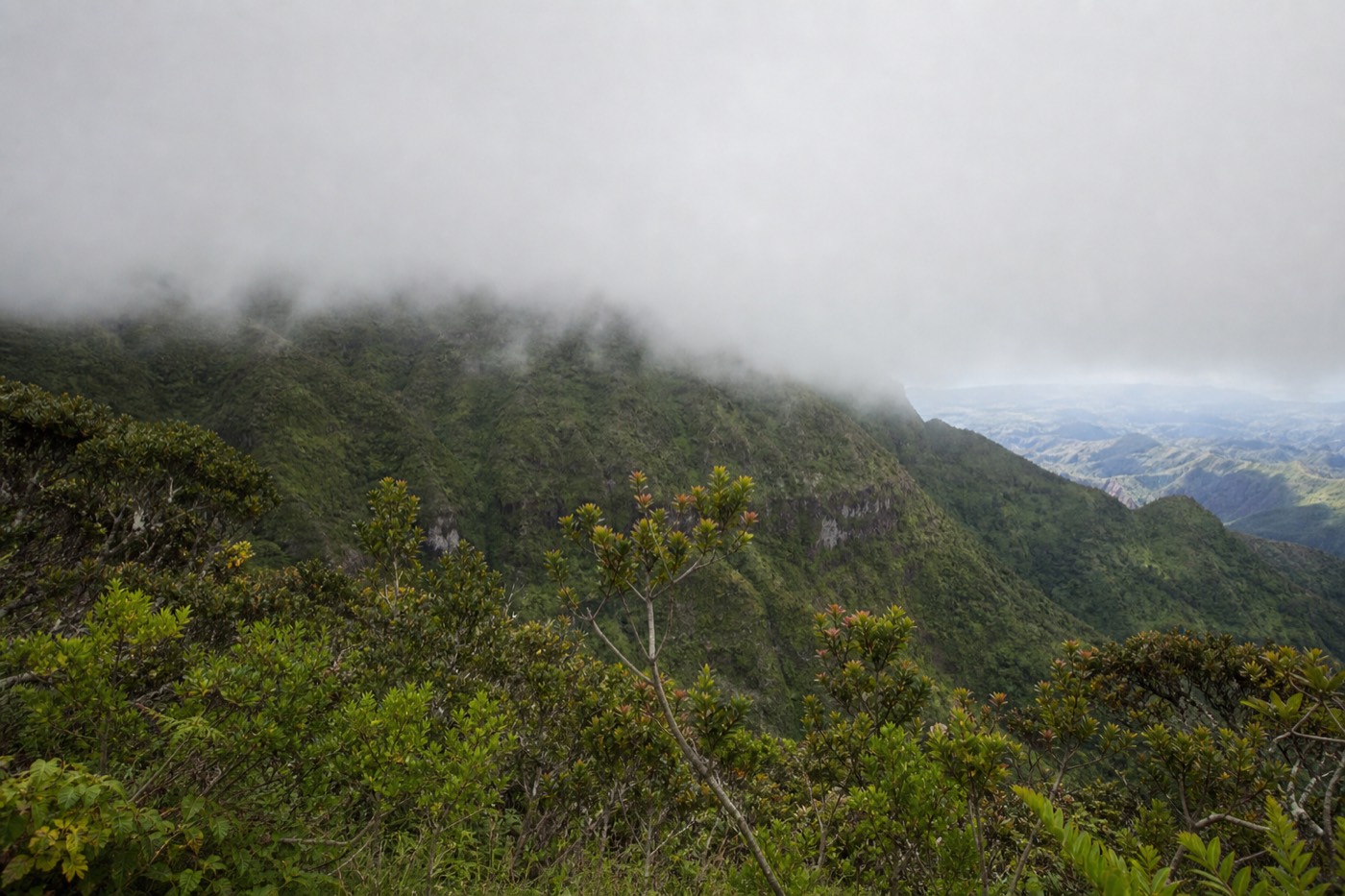
Keep driving past the famous Waimea Canyon lookouts and the landscape quietly changes. The red rock gives way to cool native forest, the air drops several degrees, and mist drifts through moss-hung ʻōhiʻa trees. This is Kōkeʻe State Park, the high, wet, wonderfully strange upland that most canyon visitors rush through on their way to a single lookout. It deserves better than a drive-by.
Booking choice: Explore canyon lookouts, Kalalau and the south shore with your own driver-guide. Explore Private Canyon & South Side Day
What Is Kōkeʻe State Park?
Kōkeʻe State Park is a high-elevation native forest reserve at the top of Waimea Canyon Road on Kauai's west side, sitting roughly between 3,200 and 4,200 feet. It holds around 45 miles of hiking trails, a small natural history museum and lodge, rare native birds, and the island's best land-based Nā Pali Coast overlooks.
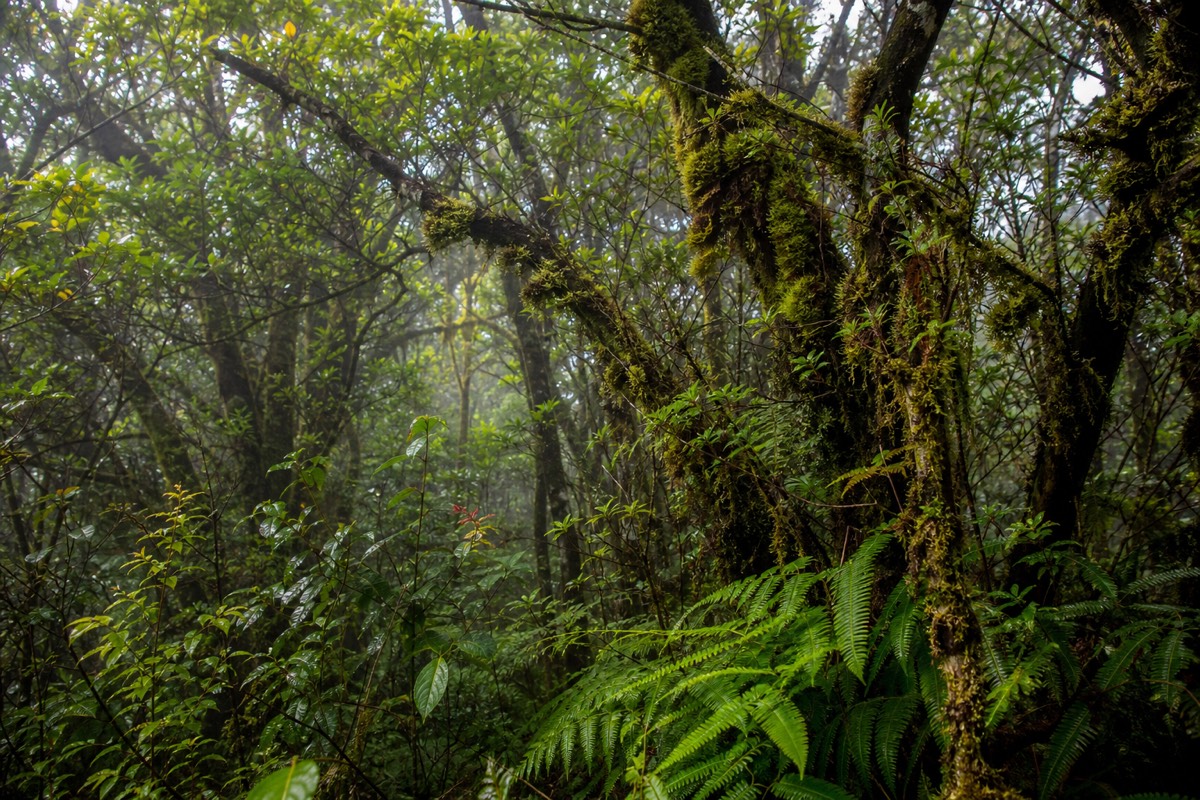
Where Waimea Canyon is about scale and color, Kōkeʻe is about texture and life. The park protects one of the more intact native forests in Hawaii, a place of ʻōhiʻa trees, tree ferns, and birds that exist nowhere else on the planet. It is also the launching point for the great cliff-edge trails and the two showpiece lookouts, Kalalau and Puʻu o Kila, at the very end of the road.
It helps to picture the layout before you go. The park has two centers of gravity. First, a grassy meadow hub partway in, where you will find the museum, the lodge, parking, and the wild chickens that own the place. Second, the road keeps climbing past that to end at the great overlooks, Kalalau at roughly 4,000 feet gazing down the Kalalau Valley to the Nā Pali Coast, and Puʻu o Kila right at the end of the pavement. Most trailheads branch off between those two points. Knowing that shape keeps a first visit from feeling scattered.
One paved highway, Route 550, links the coast at Waimea town all the way up through the canyon to Kōkeʻe. The same park ticket covers both areas, so there is no reason to treat them as separate trips. Non-resident fees run around five dollars per person to enter plus about ten dollars to park, and that one payment covers both Waimea Canyon and Kōkeʻe. Check current rates before you go, since they change. For the full context of the drive and the lower canyon, our Waimea Canyon travel guide sets the stage, and this page picks up where the canyon rim ends.
What Are The Best Things To Do In Kōkeʻe?
The essentials are hiking the native-forest and cliff-edge trails, standing at the Kalalau and Puʻu o Kila lookouts, birdwatching for endemic honeycreepers, and stopping at the Kōkeʻe Natural History Museum and Lodge. Add stargazing after dark, since the high, remote setting gives some of Kauai's clearest night skies.
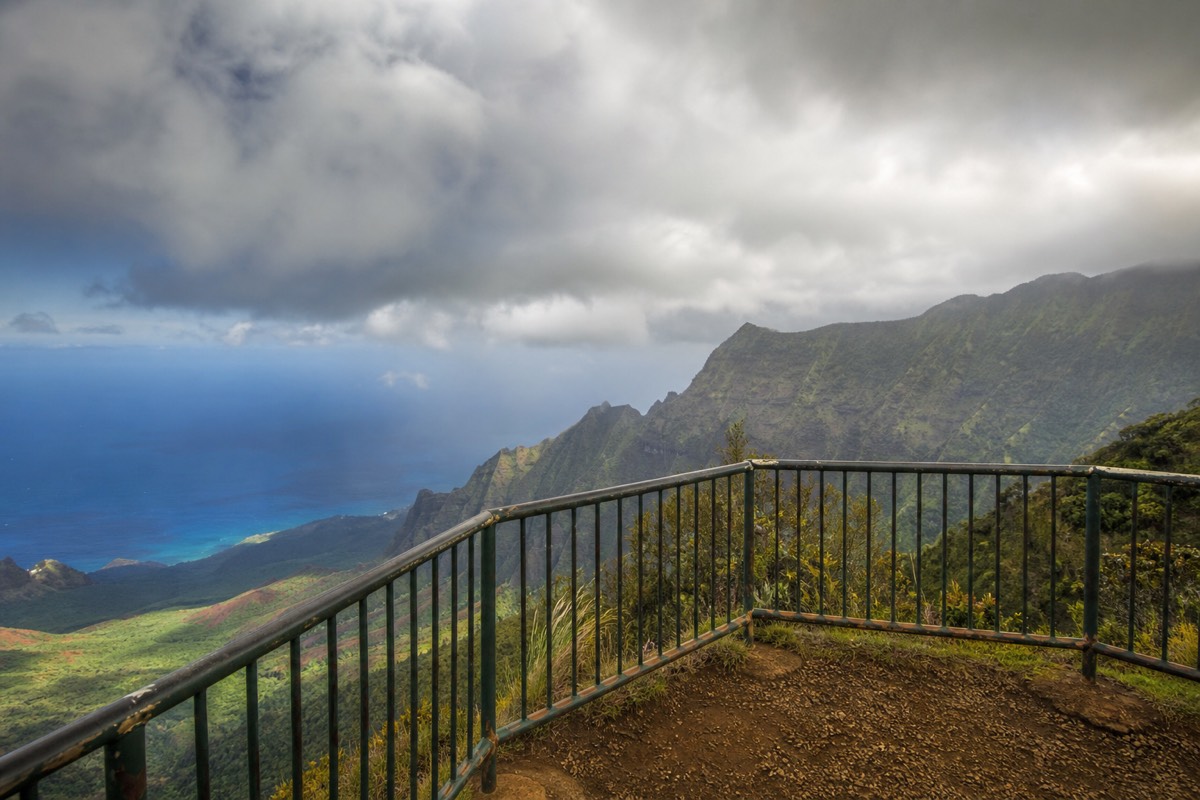
Most people underrate how much there is to do up here. The lookouts alone justify the drive, but the trails, the forest, and the birds turn a quick stop into a half day or more. It is also markedly cooler and quieter than anywhere on the coast, which is a relief on a hot island afternoon.
The two big overlooks earn special mention because they are the reason many people make the drive. From Kalalau Lookout, on a clear morning, you stare straight down a vast green valley to where it meets the ocean at the Nā Pali Coast, a view you cannot reach by car anywhere else on the island. Puʻu o Kila, a little farther on at the road's end, gives a second angle on the same country. Both are a short walk from the parking area, no real hiking involved, which makes them the highest-reward, lowest-effort stops in the whole park. Just get there early, before the clouds.
| Thing to do | Effort | Why it is worth it |
|---|---|---|
| Kalalau and Puʻu o Kila lookouts | None | Kauai's best land views into the Nā Pali valleys |
| Hike a native-forest or cliff trail | Low to high | Pihea, Alakaʻi Swamp, Awaʻawapuhi, Nualolo |
| Birdwatching | Low | Endemic honeycreepers and forest birds you cannot see elsewhere |
| Natural History Museum | None | Context on the geology, plants, birds, and Hawaiian history |
| Kōkeʻe Lodge | None | A warm meal and shelter at elevation |
| Stargazing | None | Dark, remote skies away from coastal light |
What Are The Best Kōkeʻe Hiking Trails?
Kōkeʻe holds the region's best trails: the Pihea Trail along the Kalalau rim, the Alakaʻi Swamp Trail boardwalk across a high bog, and the Awaʻawapuhi and Nualolo trails out to Nā Pali cliff overlooks. They range from an easy rim stroll to a strenuous 11-mile loop for strong hikers.
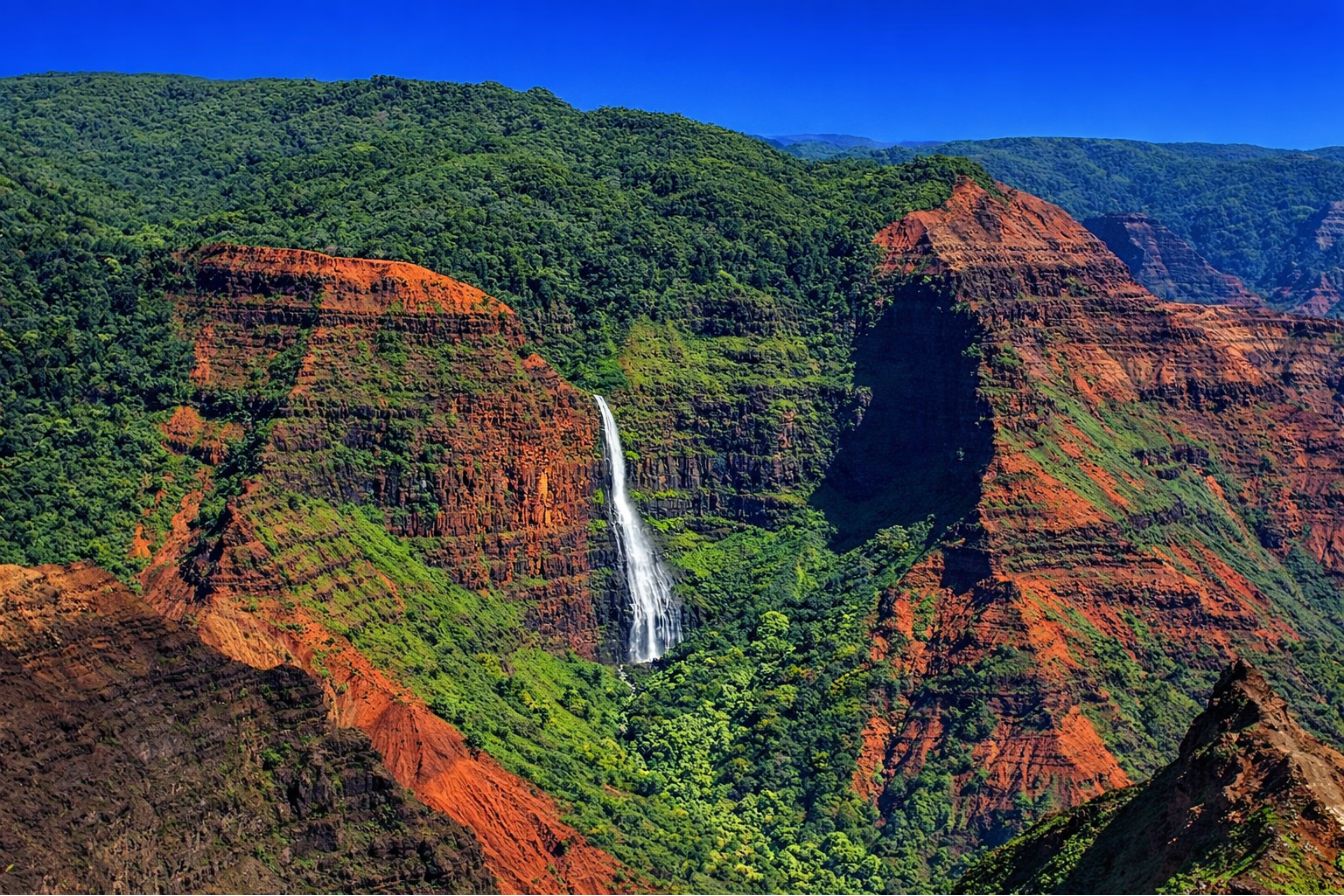
The trails are the reason to linger. Pihea starts at Puʻu o Kila with rim views, then dives into rainforest. The Alakaʻi Swamp boardwalk is one of the strangest walks in Hawaii, crossing a montane bog below Mount Waiʻaleʻale, one of the wettest places on Earth. Awaʻawapuhi and Nualolo drop toward cliff-edge overlooks of the fluted Nā Pali ridges, with a long climb back as the price.
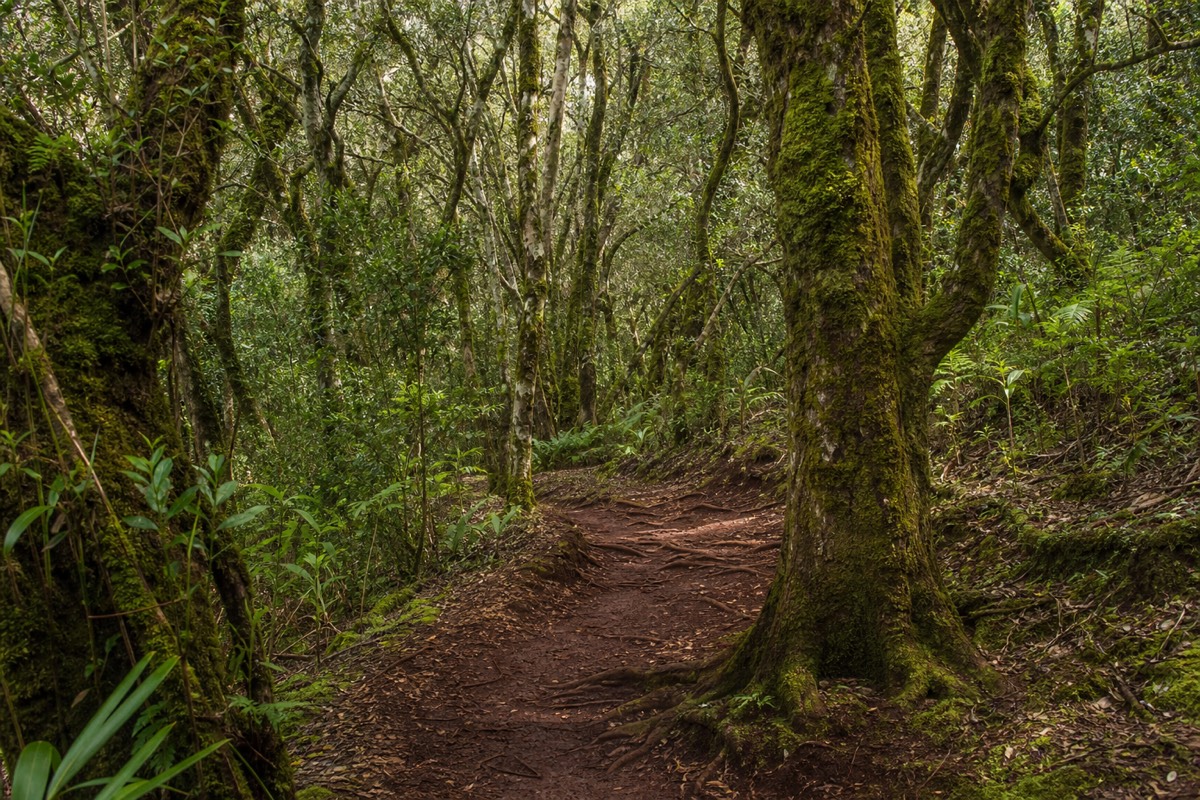
What sets the Kōkeʻe trails apart from the lower canyon is the forest itself. You walk under native ʻōhiʻa with their red blossoms, past tree ferns and moss, through air that smells of wet leaves and earth. This is not the dry, red, exposed landscape of the canyon rim. It is green, close, and alive, and on the swamp trail it turns almost primeval. Even a short walk in from a trailhead drops you into that world within minutes, which is why some visitors who never planned to hike end up doing a mile just to be in the trees.
| Trail | Difficulty | What waits at the end |
|---|---|---|
| Pihea Trail | Moderate | Kalalau rim views, then deep rainforest |
| Alakaʻi Swamp Trail | Strenuous | Boardwalk bog and Kilohana Lookout over the north shore |
| Awaʻawapuhi Trail | Strenuous | Knife-edge overlook of the Nā Pali valleys |
| Nualolo Trail | Strenuous | Remote Lolo Vista and fluted cliffs |
| Canyon and Cliff Trail | Easy to moderate | Canyon overlook and Waipoʻo Falls (lower down) |
We compare all of them side by side, with distances, difficulty, and what waits at the end, in the best hikes in Waimea Canyon and Kōkeʻe guide. If you only want the overlook views without a full trail, the Nā Pali views from Kōkeʻe guide points you to the easiest way to see the coast from up here.
The Kōkeʻe Natural History Museum And Lodge
The Kōkeʻe Natural History Museum is a small, volunteer-run museum near the meadow at the heart of the park, with exhibits on the geology, native plants, birds, and Hawaiian history of the area. A modest donation, often around three dollars, is the norm. The adjacent Kōkeʻe Lodge offers a warm meal and a place to regroup.
Do not skip the museum because it is small. It is the fastest way to understand what you are looking at, from how the canyon formed to which bird is calling in the trees outside. The staff and volunteers know the trails and the current conditions better than any app, which is useful when the weather up here changes on a whim.
The Lodge is a genuine comfort at over 3,000 feet, especially on a cold, damp afternoon. A hot bowl of something and a roof over your head reset the day before you drive back down. Some guided tours include a stop and a meal here, which takes the planning off your hands. Note that hours and offerings shift, so check locally before counting on a sit-down lunch.
The meadow around the museum and lodge is also a fine place to simply stop and breathe. There are picnic spots, big lawns, and the constant company of the wild chickens, and it makes a natural base between hikes or lookout stops. Because this is the last real cluster of facilities before the road ends, it is worth using: a restroom break, a refill, a snack, and a look at the museum's trail-condition notes before you commit to anything longer. Families with restless kids find the open meadow a welcome reset after a slow drive up the mountain.
What Wildlife And Native Birds Live In Kōkeʻe?
Kōkeʻe is one of the best places in Hawaii to see native forest birds, including crimson honeycreepers like the ʻapapane and ʻiʻiwi, the green ʻamakihi, and the friendly ʻelepaio. You will also meet the moa, the wild red junglefowl that roams the meadows, and sometimes the nēnē, Hawaii's endangered native goose.
The honeycreepers are the stars. These small, bright birds evolved on the islands and cling on in the high forest where mosquitoes and introduced diseases have less reach. A quiet morning near the ʻōhiʻa blossoms, which the birds feed on, gives you a real chance to spot the flash of a red ʻapapane or the curved bill of an ʻiʻiwi. Bring binoculars and patience.
Early is best for birds as well as views. The forest is most active in the first hours after dawn, before people fill the trailheads and before the clouds thicken. Walk softly, pause often, and listen. The birds usually announce themselves with song before you ever see them, a bright metallic call high in the ʻōhiʻa canopy. The friendly ʻelepaio is the exception, a curious little flycatcher that sometimes hops down the trail toward hikers as if to inspect them. A pair of binoculars turns every one of these encounters from a fleeting glimpse into a proper look.
The moa are impossible to miss. Kauai's wild chickens, descended from Polynesian junglefowl and escaped domestic birds, strut through the Kōkeʻe meadow and every parking area, unbothered by people. They are a running joke and a genuine piece of the island's story. Please do not feed them, or any wildlife here.
There is a conservation reason to give the native birds space and quiet. Many of Hawaii's honeycreepers have vanished or dwindled, hit by habitat loss, introduced predators, and mosquito-borne disease that creeps higher up the mountain as the climate warms. Kōkeʻe's high, cool forest is one of the last strongholds where several species hang on. Seeing an ʻiʻiwi feed on a red ʻōhiʻa blossom is a small privilege, not a guarantee, so move slowly, keep your voice down, and let the forest come to you. Stay on the trails to protect the fragile native plants the birds depend on.
| Species | What it is | Where you might see it |
|---|---|---|
| ʻApapane | Crimson native honeycreeper | Feeding in ʻōhiʻa blossoms in the forest |
| ʻIʻiwi | Scarlet honeycreeper with a curved bill | Higher native forest, near flowering trees |
| ʻAmakihi | Small green-yellow honeycreeper | Common in the forest canopy |
| ʻElepaio | Curious brown-and-white flycatcher | Low in the forest, often approaches hikers |
| Moa | Wild red junglefowl (feral chicken) | Everywhere: meadows, lots, trailheads |
| Nēnē | Endangered native Hawaiian goose | Open grassy areas, seasonally |
When Is The Best Time To Visit Kōkeʻe?
Morning is the best time of day, every day, because clouds and mist build over the high forest and the Nā Pali lookouts by afternoon and routinely block the views. Across the year, the drier May-to-September stretch gives clearer overlooks, while winter is greener, wetter, and moodier up top.
The timing rule here is stronger than in the lower canyon. Kōkeʻe sits high enough that clouds form around it directly, so a Kalalau Lookout that is crystal clear at 8 a.m. can be a wall of white fog by noon. Getting up the road early is the difference between the view of your trip and a parking lot in the clouds. If your morning lookout is socked in, our what if Kalalau Lookout is cloudy post has a backup plan.
Season is a softer factor. The dry months tilt the odds toward clear overlooks and firm trails, which matters most for the cliff-edge hikes. Winter brings more rain, lusher forest, harder-running waterfalls in the canyon below, and a higher chance of cloud. There is no bad season up here, only different moods. Our best time to visit guide runs the full month-by-month picture.
| Season | Overlook odds | Forest and trails |
|---|---|---|
| Winter (Nov to Mar) | More cloud, come very early | Lush, green, wet and muddy underfoot |
| Shoulder (Apr, May, Oct) | Mixed, forecast dependent | Generally workable, fewer crowds |
| Summer (Jun to Sep) | Best clarity for the Nā Pali views | Drier, firmer trails, warmer days |
Kōkeʻe Versus Waimea Canyon: What Is The Difference?
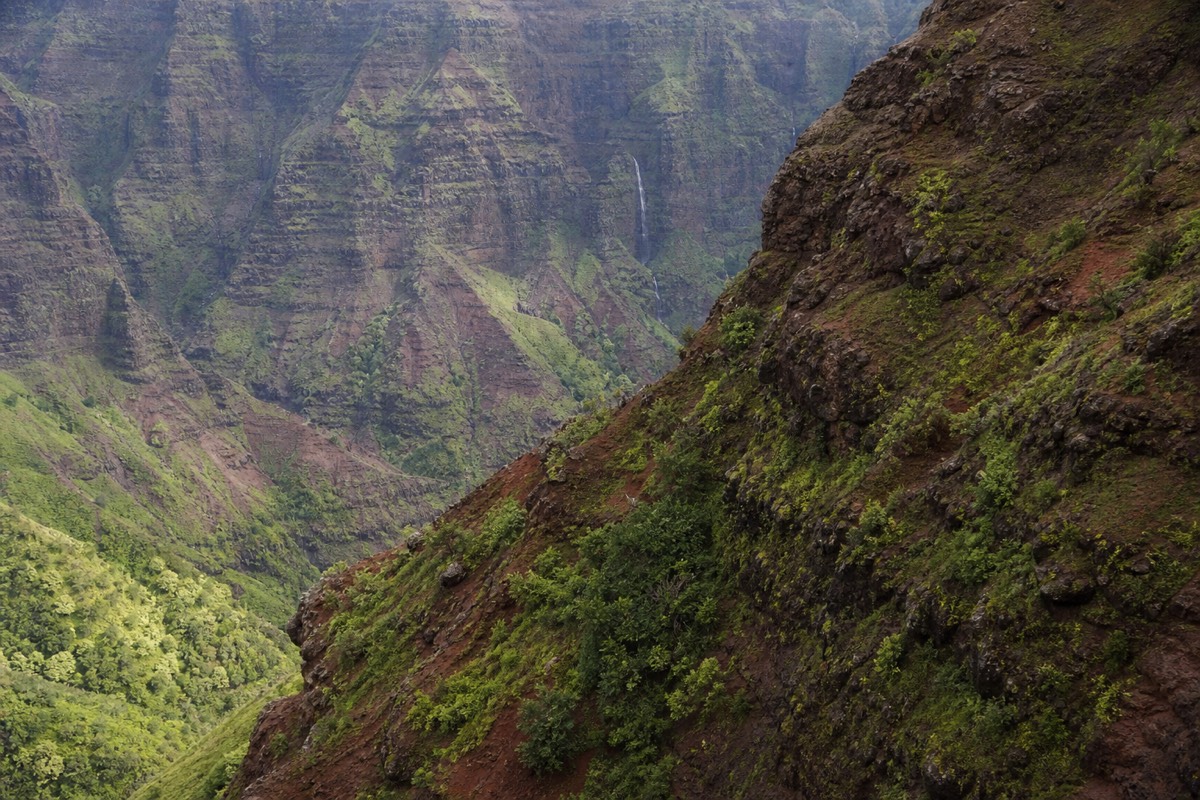
Waimea Canyon is the lower, warmer, red-rock gorge with the classic layered lookouts. Kōkeʻe is the higher, cooler native forest above it, with rainforest trails, native birds, and the Nā Pali Coast overlooks. They sit on the same road and the same ticket, and most visitors do both in one trip rather than choosing.
People often ask which one to see, as if they were rival destinations. They are two chapters of the same drive. You pass the canyon lookouts first, watching the red walls, then climb into the green world of Kōkeʻe where the temperature drops and the forest closes in. The canyon is the color and scale; Kōkeʻe is the cool, living top of the mountain and the coast views.
So the honest answer to which one is: do not choose. The road makes them a single trip, the ticket is shared, and skipping Kōkeʻe to save time means driving past the best coast views and the native forest just as things get interesting. If you truly only have an hour, the canyon lookouts down low are the safer bet for canyon views when visibility allows. With half a day or more, keep going. The transition from red rock to misty rainforest in the space of a few miles is one of the more remarkable short drives in Hawaii.
| Feature | Waimea Canyon | Kōkeʻe State Park |
|---|---|---|
| Elevation | Lower canyon rim, warmer | Around 3,200 to 4,200 ft, cooler |
| Scenery | Red-rock gorge, layered walls, waterfalls | Native forest, bog, Nā Pali overlooks |
| Signature views | Waimea Canyon and Puʻu Hinahina lookouts | Kalalau and Puʻu o Kila lookouts |
| Wildlife | Wild goats on the ridges | Native honeycreepers, moa, nēnē |
| Weather | Warmer, drier lower down | Cool, wet, mist-prone up high |
| Best for | Big color, easy lookouts, waterfalls | Hiking, birds, coast views, cool air |
How Much Time Do You Need In Kōkeʻe?
Budget at least two to three hours in Kōkeʻe on top of your canyon time, and a full day if you plan to hike. Lookouts and the museum fill a couple of hours easily. A single strenuous trail like Awaʻawapuhi or the Alakaʻi Swamp turns Kōkeʻe alone into an all-day outing.
A quick version works: drive to the end at Puʻu o Kila, take in Kalalau on the way, stop at the museum, and you have a solid two hours. But the park rewards more. Add the Lodge, a short trail, some time with the birds, and you have a half day that feels like a different island from the beaches below.
Remember that Kōkeʻe time is on top of your canyon time, not instead of it. The lower Waimea Canyon lookouts already fill a couple of hours on the way up, so a visit that does justice to both parks is genuinely a full-day outing from most parts of the island. Do not let a mid-morning start and a hazy forecast talk you into rushing the top. If your day is tight, the smarter trade is to reach the high lookouts early for the clear view and save the museum, the meadow, and a short trail for after they cloud over.
| Time you have | What fits |
|---|---|
| 1 to 2 hours | Kalalau and Puʻu o Kila lookouts, quick museum stop |
| Half day | Lookouts, museum, Lodge meal, a short trail like Pihea's rim |
| Full day | All of the above plus one major hike, Awaʻawapuhi or Alakaʻi Swamp |
If you would rather not manage the long drive and the timing, a guided small-group tour up the canyon and into Kōkeʻe handles the road, the park fees, an easy nature walk, and often a museum stop and lodge meal, timed for the clear-morning window. Our broader how much time do you need post plans the whole canyon-and-Kōkeʻe day, whether you drive it or ride it. A guided Waimea Canyon Tour is the easiest way to fold both parks into one unhurried day.
What Is Kōkeʻe's Weather Like?
Kōkeʻe is cool and wet by Hawaiian standards. At 3,200 to 4,200 feet it can run 10 to 15 degrees cooler than the coast, and rain, mist, and fog are common, especially near the Alakaʻi Swamp below Mount Waiʻaleʻale. Bring layers and a rain shell even when the beach was sunny.
The single biggest surprise for visitors is the cold. People drive up in shorts and a tank top from an 85-degree beach and find themselves shivering in the fog at the lookouts. A warm layer and a packable rain jacket change the whole experience. The weather can also flip in minutes up here, sun to drizzle and back, so dress for both.
The rain is not random, either. Kōkeʻe sits in the shadow of Mount Waiʻaleʻale, regularly ranked among the rainiest places on the planet, and the moisture that drenches the summit spills across this high country as mist and passing showers. That is the same water that keeps the forest emerald and the streams feeding Waipoʻo Falls in the canyon below. Accept it as part of the deal. A shower here often clears within the hour, and the light between squalls, when it breaks over the Kalalau Valley, is worth the wait and the damp socks.
| Where you are | Rough conditions | What to wear |
|---|---|---|
| Waimea coast and town | Warm, often sunny | Beach clothes, sun cover |
| Canyon lookouts | Mild, breezy, warmer than up top | Light layer, walking shoes |
| Kōkeʻe forest and lookouts | Cool, misty, frequent light rain | Warm layer, rain shell, closed shoes |
| Alakaʻi Swamp trail | Cold, wet, muddy, foggy | Full rain gear, grippy boots |
All of it feeds back to the same advice: come early, watch the sky, and hold your plans loosely. The proximity to one of the rainiest spots on the planet is exactly what makes the forest so green and the birds so alive, and it is also why the lookout you drove all this way for might be hiding in cloud by lunch. Beat it up the hill in the morning and Kōkeʻe rewards you.