Best Time to Visit Waimea Canyon
The season sets the mood, but the hour makes or breaks the view. Here is when to go, month by month and morning to afternoon.
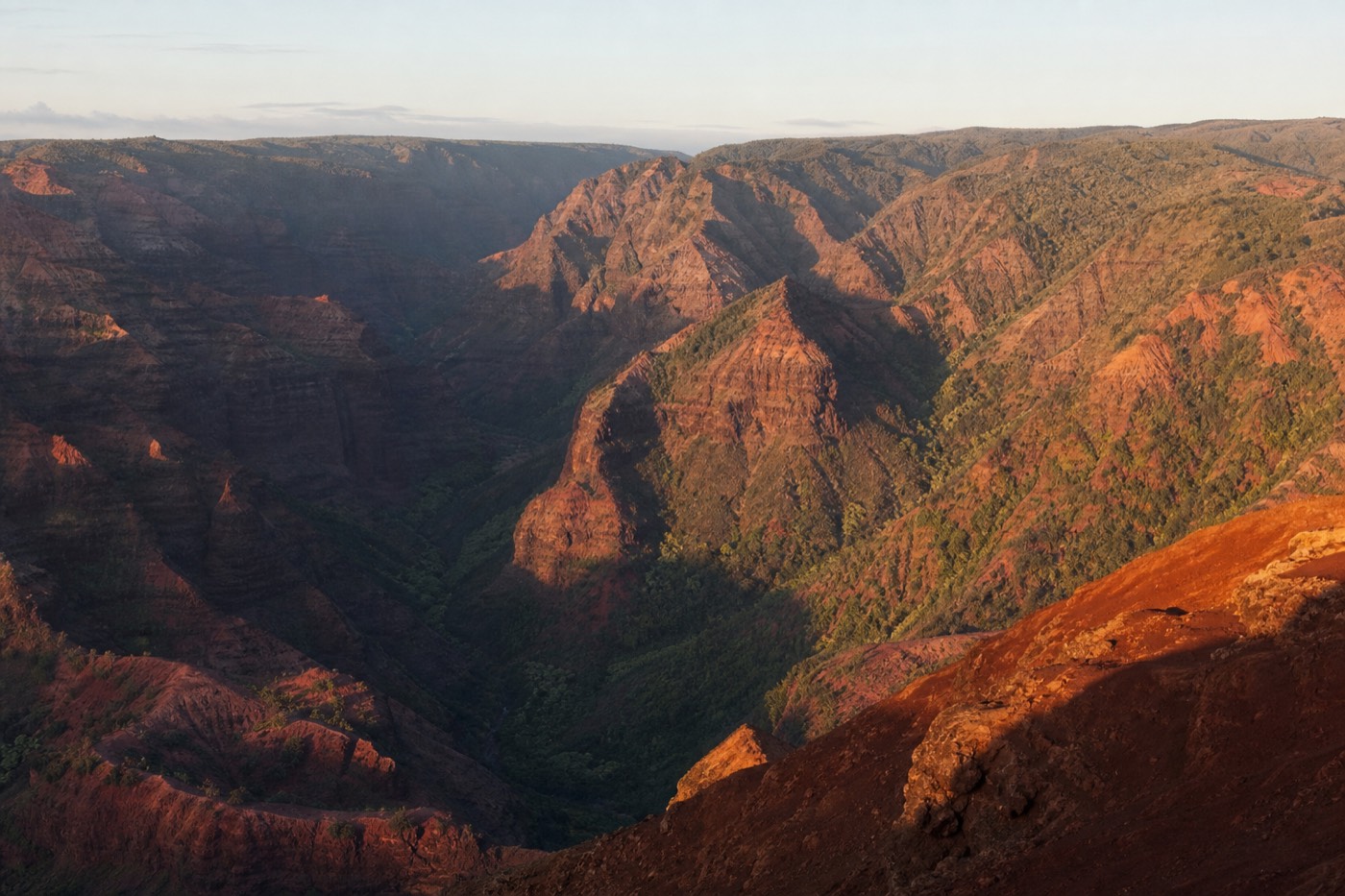
Two people can visit Waimea Canyon on the same day and come away with completely different memories. One arrives at eight in the morning to sharp red walls and a clean line of sight down Kalalau Valley to the sea. The other rolls up at two in the afternoon to a white curtain of cloud where the canyon should be. The weather on Kauai's west side is not really the problem. The timing is.
Booking choice: Explore canyon lookouts, Kalalau and the south shore with your own driver-guide. Explore Private Canyon & South Side Day
Kauai's west side is the sunny, sheltered corner of a famously rainy island, which is good news: the canyon is a viable trip in any month. But the same trade winds that keep the beaches dry also drive a daily build of cloud over the high rim, and the wetter winter half of the year stacks the odds differently than the dry summer. Get both the month and the hour working for you and you tilt the whole visit toward a clear, memorable view.
What Is The Best Time Of Day To Visit?
Morning, without much debate. Aim to reach the lookouts before late morning, because warm air rising off the canyon builds clouds and mist through the middle of the day, and the high Kalalau and Nā Pali overlooks are usually the first to disappear. A clear 8 a.m. can close in by early afternoon.
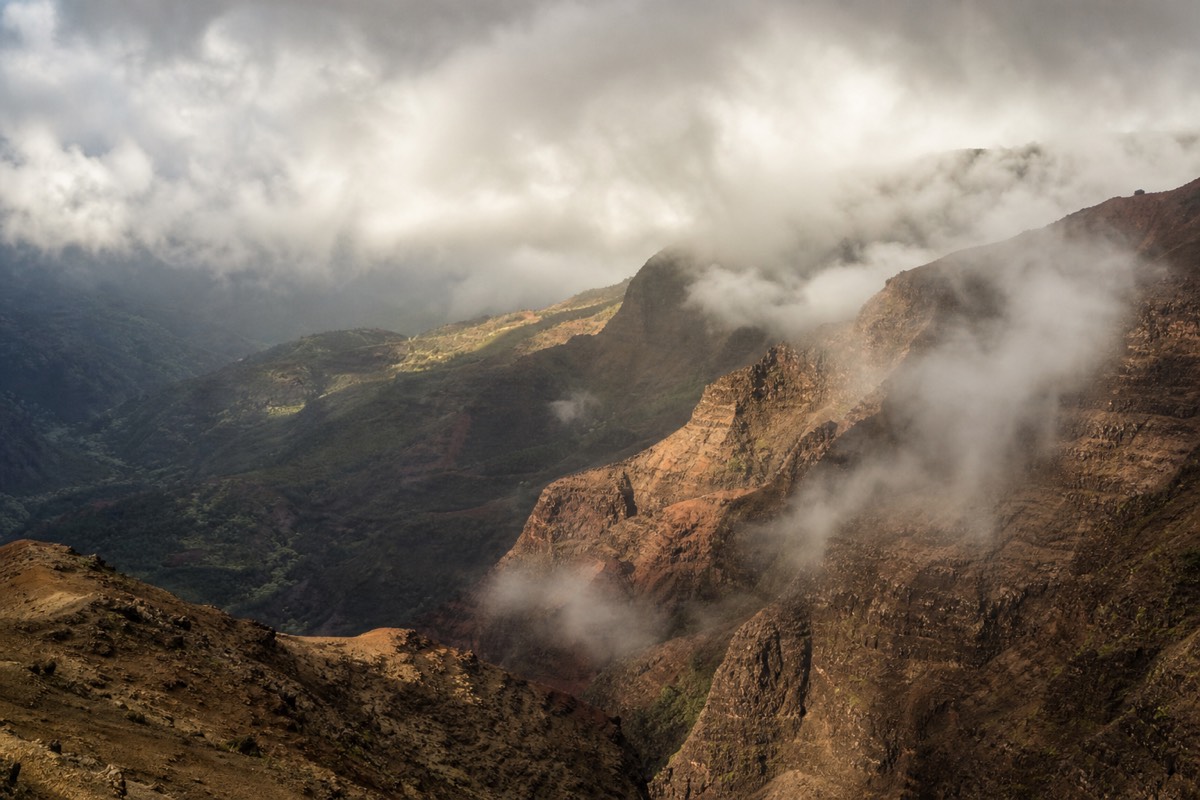
This is a general tendency, not a reliable daily forecast. Overnight and early, the air is settled and the canyon is open. As the sun heats the rock and the trade winds push moisture up the western slopes, cloud forms over the rim and drifts across the highest viewpoints. It does not always fully clear again before sunset. That is why the hour you choose matters more than the month. For the short version of this, see what time of day is best.
| Time of day | Typical clarity | What to expect |
|---|---|---|
| Sunrise to 9 a.m. | Best | Open canyon, clean coast views, soft light, cool air |
| 9 to 11 a.m. | Good | Still mostly clear; clouds starting to gather up high |
| 11 a.m. to 1 p.m. | Variable | Kalalau and Nā Pali lookouts often clouding over |
| 1 to 4 p.m. | Often poor up high | Mist can hide the upper views; lower canyon may hold |
| Late afternoon | Sometimes clears | Occasional reopening and warm light, but no guarantee |
None of this means the afternoon is worthless. The lower canyon lookouts, which face into the gorge rather than out toward the coast, often stay open later, and a passing clearing can hand you dramatic light with cloud spilling over the ridges. But if you have one shot at the headline Nā Pali view, spend it in the morning. Everything after that is a bonus round.
What Is The Best Month To Visit?
The drier summer stretch, roughly May through September, gives you the highest odds of clear skies, at the cost of bigger crowds. The wetter winter half, October through April, brings greener walls, more waterfall flow, and whales offshore, with a higher chance of cloud and rain. No month is bad if you go in the morning.
Because Waimea sits on the leeward, drier side of Kauai, it dodges much of the rain that soaks the north shore. That makes the west side visitable year-round. The trade-off is simple: summer buys clarity and company, winter buys drama and waterfalls. Here is a month-by-month scorecard weighing the things travelers actually ask about:
| Month | Weather odds | Crowds | Waterfalls | Whales |
|---|---|---|---|---|
| January | Cooler, wetter | Busy (holidays ease) | Strong | Yes |
| February | Cooler, showery | Moderate | Strong | Peak |
| March | Improving | Busy (spring break) | Good | Peak |
| April | Drying out | Moderate | Good | Tail end |
| May | Mostly dry | Moderate | Fading | No |
| June | Dry, clear | Busy | Low | No |
| July | Dry, clear | Busiest | Low | No |
| August | Dry, clear | Busy | Low | No |
| September | Dry, warm | Quieter | Low | No |
| October | Rain returns | Quiet | Rising | No |
| November | Wetter | Moderate | Good | Starting |
| December | Cooler, wetter | Busy (holidays) | Strong | Yes |
Read the scorecard as tendencies, not guarantees. A summer morning can still fog in, and a January visit can hand you a flawless clear window; the daily pattern always sits on top of the seasonal one. If your dates are fixed, do not agonize. Plan an early start and keep the afternoon flexible so you can head back up if the morning was cloudy.
What Is Each Season Like?
Summer is bright and reliable but shares the lookouts with more people. Winter is green, cool, and moody, with fuller waterfalls and passing showers you plan around. Spring and fall are the quiet sweet spots, drying out or greening up while the crowds thin.
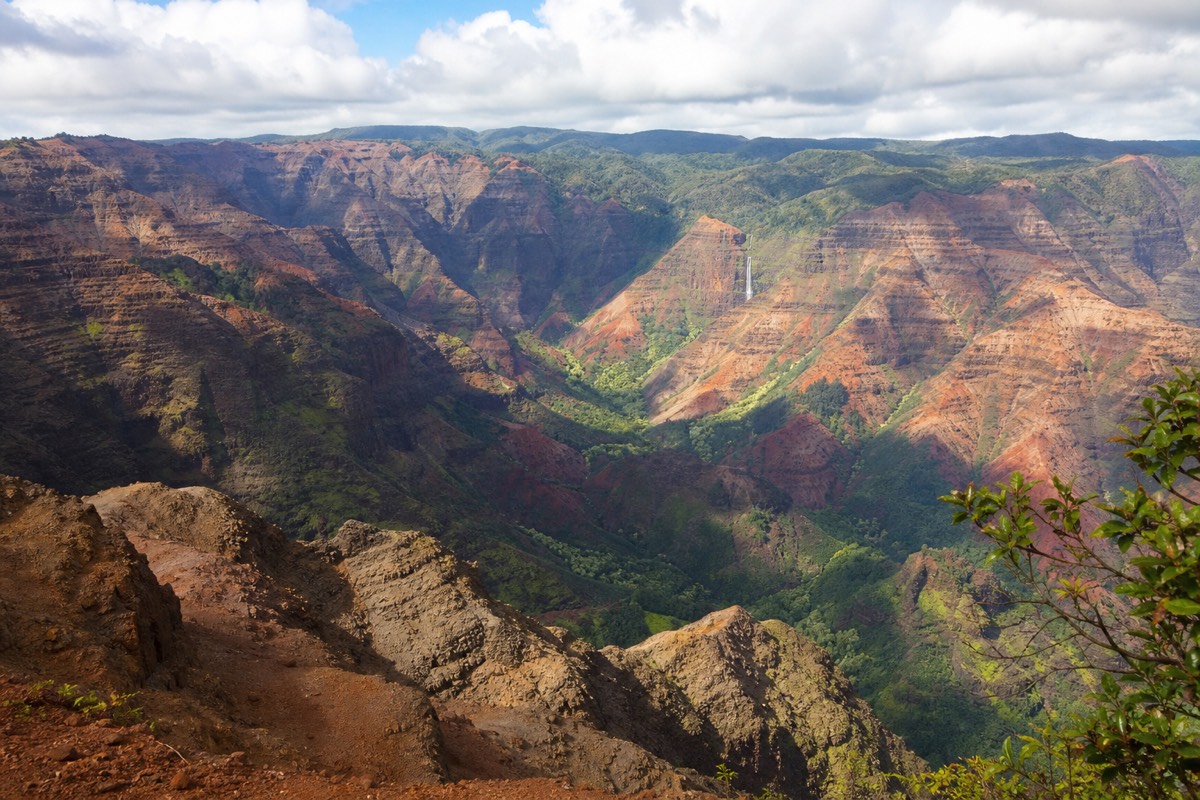
In summer the canyon glows in warm dry light and the odds of an all-day clear window are at their best. The lots fill earlier, though, so the morning rule doubles as a crowd-beating rule. In winter the walls turn lush, the Waimea River runs higher, and the whole west side feels wilder, but you accept the chance of a socked-in rim. Shoulder seasons split the difference: April and May, September and October often deliver clear mornings and elbow room at the same time.
| Season | Best for | Watch out for |
|---|---|---|
| Winter (Dec to Feb) | Green walls, waterfalls, whales | Showers, cooler rim, holiday crowds |
| Spring (Mar to May) | Drying skies, fading crowds | Spring-break weeks spike briefly |
| Summer (Jun to Aug) | Clearest odds, warm light | Peak crowds, low waterfall flow |
| Fall (Sep to Nov) | Quiet, warm early, greening late | Rain returns from October |
One underrated pick is the transition weeks. Late April into May, and September into early October, often line up dry-season clarity with off-peak quiet, so you get the clear views without the summer parking crush. Locals also know that a big winter swell or storm on the north shore can push extra visitors over to the drier west side, so a rainy forecast elsewhere sometimes means busier canyon lots, not emptier ones.
What Are The Weather And Cloud Patterns?
Expect a daily rhythm more than a forecast: clear mornings, cloud building over the rim by midday, and a cooler, breezier top than the coast at any time of year. The rim above 3,400 feet often runs 15 to 20 degrees cooler than the beach, with wind and quick passing showers.
The mechanism is straightforward. Trade winds carry moisture up the slopes, the rising air cools and condenses, and cloud forms right where the best coast-facing lookouts are. That is why the Kalalau Lookout and Puʻu o Kila cloud over first and why they are the stops you sprint to early. A shower here is usually brief and moves through, so a rain layer and a little patience often win you a clearing.
Elevation is the other half of the weather story. You gain thousands of feet from the coast to the rim, and the air cools and dampens the whole way up. Dress for the top, not the beach you left.
| Where you are | Approx. elevation | Typical feel |
|---|---|---|
| Waimea town / coast | Near sea level | Warm, dry, often calm |
| Waimea Canyon Lookout | ~3,400 ft | Noticeably cooler, breezy |
| Kalalau / Puʻu o Kila | ~4,000+ ft | Cool, windy, mist-prone |
| Kōkeʻe forest | ~3,200 to 4,200 ft | Cool and damp, showery |
The upshot: a light jacket that feels absurd at the beach is exactly right at the rail, and a rain layer turns a passing shower from a trip-ender into a five-minute pause.
Fog behaves differently from rain here. Rain moves through; fog and low cloud can sit against the rim for a stretch, then lift all at once. If a lookout is completely white, it is often worth walking to the next viewpoint or waiting a few minutes rather than writing off the view, because these banks shift quickly on the wind.
When Does It Rain, And When Does Waipoʻo Falls Run?
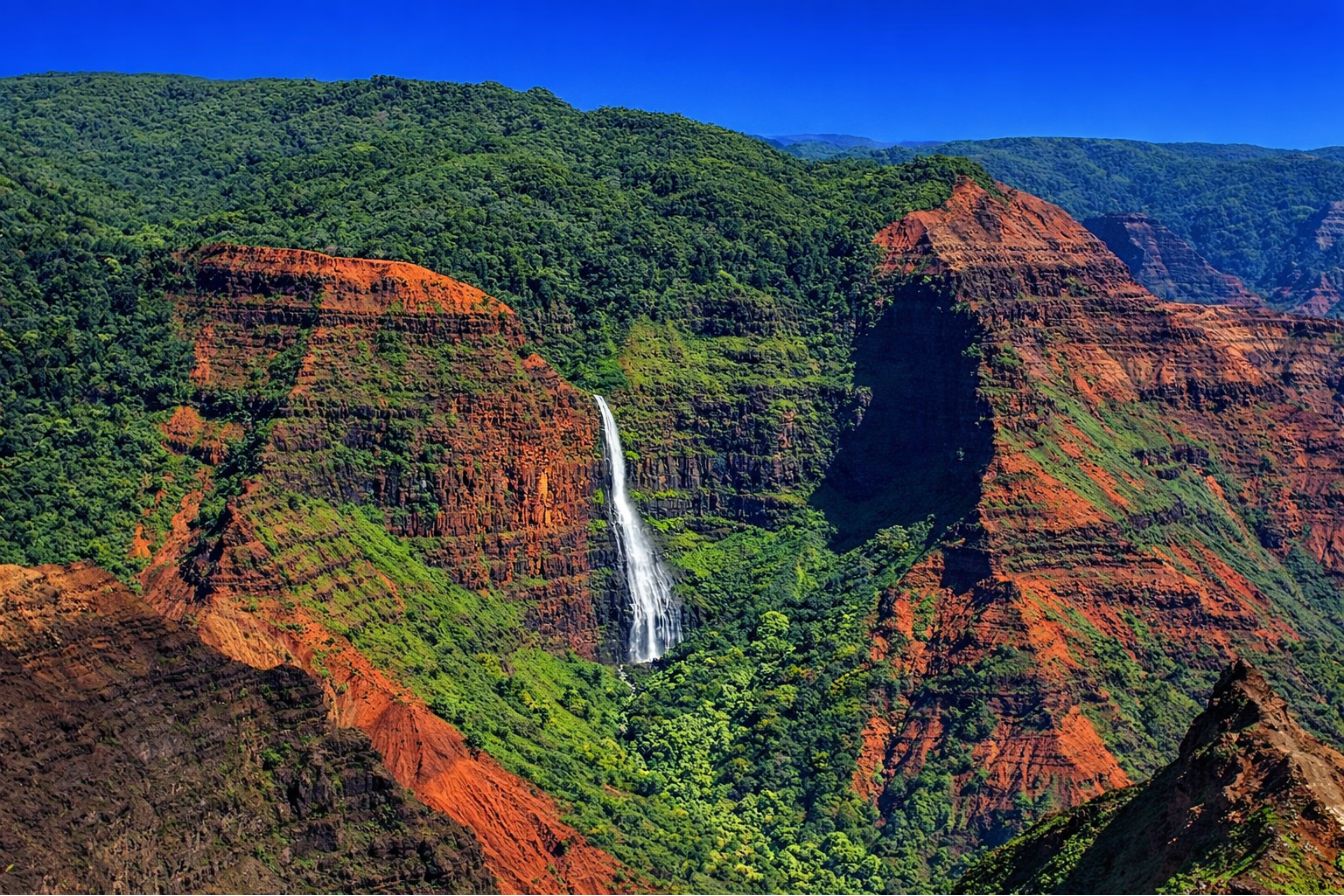
Rain is most frequent in the winter half of the year, and that is also when Waipoʻo Falls runs fullest. The falls are fed by rain on the canyon rim, so after wet spells, especially November through March, the flow is strongest; in a dry summer it can thin to a trickle.
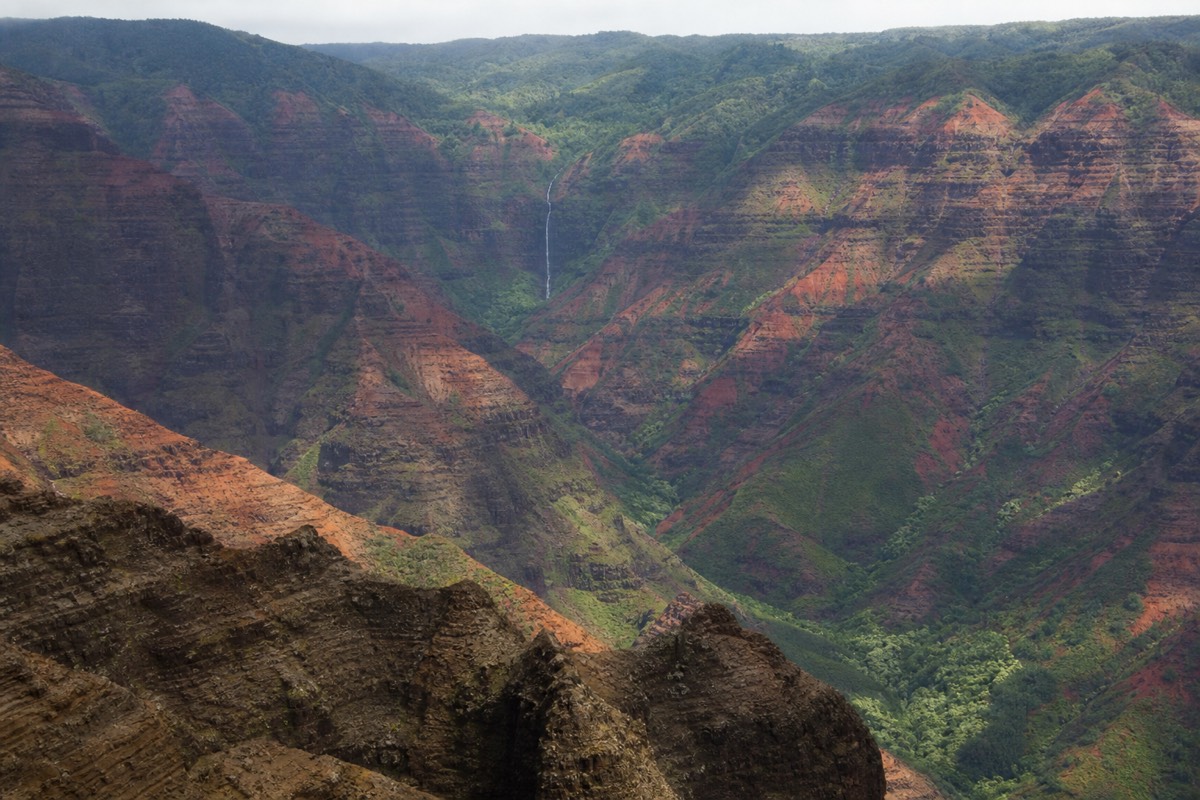
If a waterfall is high on your list, lean toward the wetter months and check recent conditions. The catch is that the same rain that feeds the falls also feeds the cloud, so you still want a morning visit to actually see them. Our Waipoʻo Falls trail guide covers the walk and when the water is at its best, and if you would rather not hike, several rim viewpoints catch the falls from a distance.
If you are timing a visit around the waterfall specifically, the sweet spot is a clear morning a day or two after good rain: enough water to run strong, but a settled enough sky to actually see it. Chasing the falls in the middle of a storm usually just means chasing them through cloud. And because the flow depends on recent rain rather than the calendar alone, it is always worth checking current conditions rather than trusting the month.
Winter Or Summer: Which Is Better?
Pick summer for the best chance of an all-day clear view and warm dry light. Pick winter for green walls, strong waterfalls, and whales offshore, accepting more cloud and cooler air. There is no wrong answer; there is only what you care about most.
Photographers chasing crisp long-distance views often prefer summer mornings. Travelers who want the canyon at its lushest, or who are already on Kauai in whale season, get more out of winter. Either way, the morning rule holds.
| Priority | Winter pick | Summer pick |
|---|---|---|
| Clear long views | Possible, less reliable | Best odds |
| Waterfalls | Strongest | Weak to none |
| Green scenery | Lushest | Drier, warmer tones |
| Whales offshore | Yes | No |
| Crowds | Lighter outside holidays | Heaviest |
For many travelers the deciding factor is what else is on the itinerary. If you are already on Kauai in whale season and want the greenest possible walls, winter makes the canyon part of a bigger cool-season story. If your trip is built around dry-side beaches and reliable sun, a summer morning slots in perfectly. Either way you are optimizing around the same fixed rule about the hour of the day.
Does Whale Season Overlap?
Yes. Humpback whales pass Kauai roughly December through April, peaking around January to March. From the high west-side lookouts and, better still, from the air or the water, winter visitors often spot spouts and breaches offshore while touring the canyon.
The whales are a bonus, not the main event, when you are focused on the canyon itself. But if you are visiting in those months, it is a reason to look seaward from Puʻu Hinahina and the upper lookouts, and a nudge toward pairing the canyon with a boat or air experience that gets you closer to the coast.
From the canyon rim the whales are distant specks and spouts, best caught with patience and a bit of zoom from the coast-facing lookouts. The real winter payoff comes when you pair the canyon with a Nā Pali boat trip or a scenic flight, both of which routinely pass humpbacks in the January-to-March peak while also showing you the coastline the canyon drains toward.
If whales are a priority, weight your trip toward February and March, the heart of the season, and plan the water or air portion for a calm-looking morning. The canyon itself does not change with the whales, but pairing the two turns a single sightseeing day into the fullest version of a winter visit.
When Is Best For Photography?
The golden window is the first couple of hours after sunrise: low warm light rakes across the red walls, shadows give the layers depth, and the air is clearest before the clouds gather. Late afternoon can also reward patience when the rim reopens, but morning is the safer bet.
Early light does two jobs at once: it makes the rock glow and it beats the midday haze. Bring a layer, because the best light comes with the coolest air. For the most dramatic frames, the higher lookouts toward the Nā Pali Coast are the prize, which is one more argument for getting up there early before they cloud in.
Different subjects want different light, so here is a quick planner for photographers working the west side in a single day.
| Shot you want | Best window | Why |
|---|---|---|
| Layered canyon walls | First 2 hours after sunrise | Low raking light brings out the color and depth |
| Kalalau Valley to the sea | Early morning | The coast lookouts cloud over by midday |
| Waipoʻo Falls | Mid-morning after rain | Water running while the rim is still clear |
| Warm-glow rock faces | Late afternoon, if clear | Golden light returns, but the rim may be socked in |
Notice how many rows point back to the morning. That is not an accident; it is the same clarity rule wearing a photographer's hat.
Two quick technique notes for the rim. A polarizing filter cuts haze and deepens the reds, which helps most in the flatter midday light if you end up shooting then. And because the canyon is so deep, a person or a lone tree near an edge gives the frame the scale that raw walls alone never quite convey. Neither trick beats good early light, but both stretch what you can pull from a cloudy or late arrival.
When Can You Avoid Crowds?
Beat the crowds the same way you beat the clouds: go early, ideally on a weekday, and outside the summer peak and major holidays. The first arrivals after sunrise often have the classic lookouts nearly to themselves, and the lots fill through mid-morning.
Shoulder-season weekdays are the quietest of all, pairing thin crowds with decent weather odds. Tour buses and rental cars build up as the morning goes on, so the same early start that saves your view also saves your parking spot and your elbow room at the rail. If you want the timing handled for you, a small-group canyon and Kōkeʻe trip is built around reaching the good stops before the crowds and the cloud, and our complete visitor guide ties the whole plan together.
To put a shape to the day, here is roughly how busy the main lookouts run through the higher season. The pattern rhymes with the cloud chart, which is the whole point.
| Arrival | Crowd level | Parking |
|---|---|---|
| Sunrise to 8 a.m. | Very light | Easy, often near-empty lots |
| 8 to 10 a.m. | Building | Still manageable |
| 10 a.m. to 1 p.m. | Busiest | Lots can fill; expect some waiting |
| Mid-afternoon | Easing | Frees up as tours descend, but views may be gone |
The cruel irony is that the busiest hours are also the cloudiest, so the crowd and the mist tend to arrive together. Beat one and you usually beat both.
Is Sunrise Or Sunset Better At The Canyon?
Sunrise is the safer, more reliable choice. The canyon catches good early light, the air is clearest then, and the coast lookouts are open. Sunset can be lovely on a rare clear evening, but afternoon cloud often lingers, and you then have to drive the winding road down in the dark and cold.
Photographers sometimes argue for late light, and on a clear evening the walls do glow. But the practical realities stack against it: the higher odds of cloud, the long twisting descent afterward, and the cool night air that comes on fast at 4,000 feet. For most visitors, an early start beats a late finish. If you do stay late, carry a warm layer and headlights you trust, and do not count on the coast-facing lookouts being open.
What If Your Only Morning Is Cloudy?
Go up anyway, early, and be ready to wait or to descend and return. West-side cloud is patchy and mobile, so a gray start often breaks into clear windows within the hour. If the top stays socked in, the lower canyon lookouts and the Kōkeʻe forest trails still make for a worthwhile day.
A cloudy forecast is not a reason to cancel. It is a reason to build slack into the plan. Reach the rim early, work the lower lookouts first where the gorge often shows through, and keep an eye up the road: when a clearing opens over the Kalalau Lookout, move fast. If the coast views never come, lean into what does work that day, the waterfalls running after rain, the cool forest, the drama of cloud pouring over the ridgelines. Plenty of travelers find the moody version of the canyon just as memorable as the postcard one. Our complete visitor guide and our hiking guide both help you line up a good gray-day backup.
Does The Day Of The Week Matter?
A little. Weekends and cruise-ship days put more people at the lookouts, while midweek mornings tend to be quietest, especially outside the summer peak. It is a minor lever next to the hour of the day, but a free one: a weekday start stacks the odds for both open parking and open views.
Cruise turnaround days can send a wave of shore-excursion vans up the road together, so if your dates are flexible, favor a weekday. The weather does not read a calendar, of course, so this only shifts the crowd side of the equation. Pair a quiet weekday with an early start and you get the best of both: room at the rail and a clear line down the canyon.
How Do You Plan The Whole Day Around The Weather?
Front-load the views. Drive up early, hit the coast-facing Kalalau and Puʻu o Kila lookouts first while they are clear, then work back down to the canyon overlooks and save the forest trails and the museum for the cloudier midday hours. That order matches the day's weather instead of fighting it.
The logic is simple once you see it. The highest, most weather-sensitive stops are best in the first clear window, so you visit them first even though they sit at the far end of the road. As cloud builds, you retreat to lower, more sheltered experiences that do not depend on a long sightline. A hike into the trees or an hour in the museum is unaffected by a socked-in rim, so those are your afternoon insurance. Our complete visitor guide lays out the full logistics, and the Waipoʻo Falls trail guide gives you a solid rainy-morning walk.
What Should You Wear At The Canyon By Season?
Dress for a cool mountain, not the beach you drove up from. The rim above 3,400 feet runs 15 to 20 degrees cooler than the coast, often breezy and dotted with passing showers, so a warm layer and a packable rain shell earn their place in every season. Closed, grippy shoes beat sandals on the muddy overlooks year-round.
The most common mistake is arriving in beach clothes. People step out of a warm car at Kalalau in a tank top and shorts, then last about four minutes at the rail. Even at the height of summer the top is markedly cooler and the wind finds you, and in winter a fleece and a rain layer are genuinely welcome. What changes month to month is mostly how much insulation you add, not whether you need any.
| Season | On top | On your feet | Don't forget |
|---|---|---|---|
| Winter (Dec to Feb) | Warm layer or fleece plus a rain shell | Closed, grippy shoes for mud | Rain layer and a warm hat for cool mornings |
| Spring (Mar to May) | Light jacket and a packable rain layer | Closed walking shoes | Sunscreen and water as the days warm |
| Summer (Jun to Aug) | Thin long-sleeve or light layer | Closed shoes for the trails | Strong sun protection and extra water |
| Fall (Sep to Nov) | Light jacket, rain layer from October | Closed walking shoes | Layers for the cooler mornings |
Whatever the month, pack for the trail as well as the view. The overlooks are drive-up, but the moment you step onto the Canyon Trail toward Waipoʻo Falls or a Kōkeʻe forest path, the red dirt turns slick and closed shoes stop being optional. A light pack with water, a snack, and that rain shell covers almost every version of the day.
How Do Sunrise And Sunset Times Shift Through The Year?
Hawaii does not use daylight saving time, so the clock stays steady while the daylight window slides. Around midsummer the sun clears the horizon near 5:50 a.m. and lingers past 7 p.m.; in midwinter sunrise comes closer to 7 a.m. with darkness by about 6. Either way, aim to reach the lookouts within the first few hours of daylight.
These times are approximate, so check a local sunrise table for your exact date; they drift week to week, and Kauai sits at the western edge of the island chain. The practical point is that a shorter winter day starts later, which quietly helps, since you can catch first light on the rim without leaving before dawn. A long summer day hands you a generous early window but also more hours for cloud to build, so the morning rule still rules.
| Season | Approx. sunrise | Approx. sunset | Planning note |
|---|---|---|---|
| Midsummer (Jun to Jul) | around 5:50 a.m. | around 7:15 p.m. | Long early window; easy to be up top by 8 |
| Spring / Fall (Mar, Sep) | around 6:30 a.m. | around 6:40 p.m. | Balanced day; leave early from far bases |
| Midwinter (Dec to Jan) | around 7:05 a.m. | around 6:00 p.m. | Later sunrise makes an early start easier |
Because sunset comes early in winter and the descent is a long series of switchbacks, plan to be off the upper road before dark on short days. Our guide to the drive up covers the road itself; the short version is that you do not want to meet those curves in the dark and the cold if you can avoid it.