Nā Pali Coast Views from Kōkeʻe
Most people meet the Nā Pali Coast from a boat. From the lookouts above Kōkeʻe you meet it from the top, looking down thousands of feet into the valleys. Here is how to do it well.
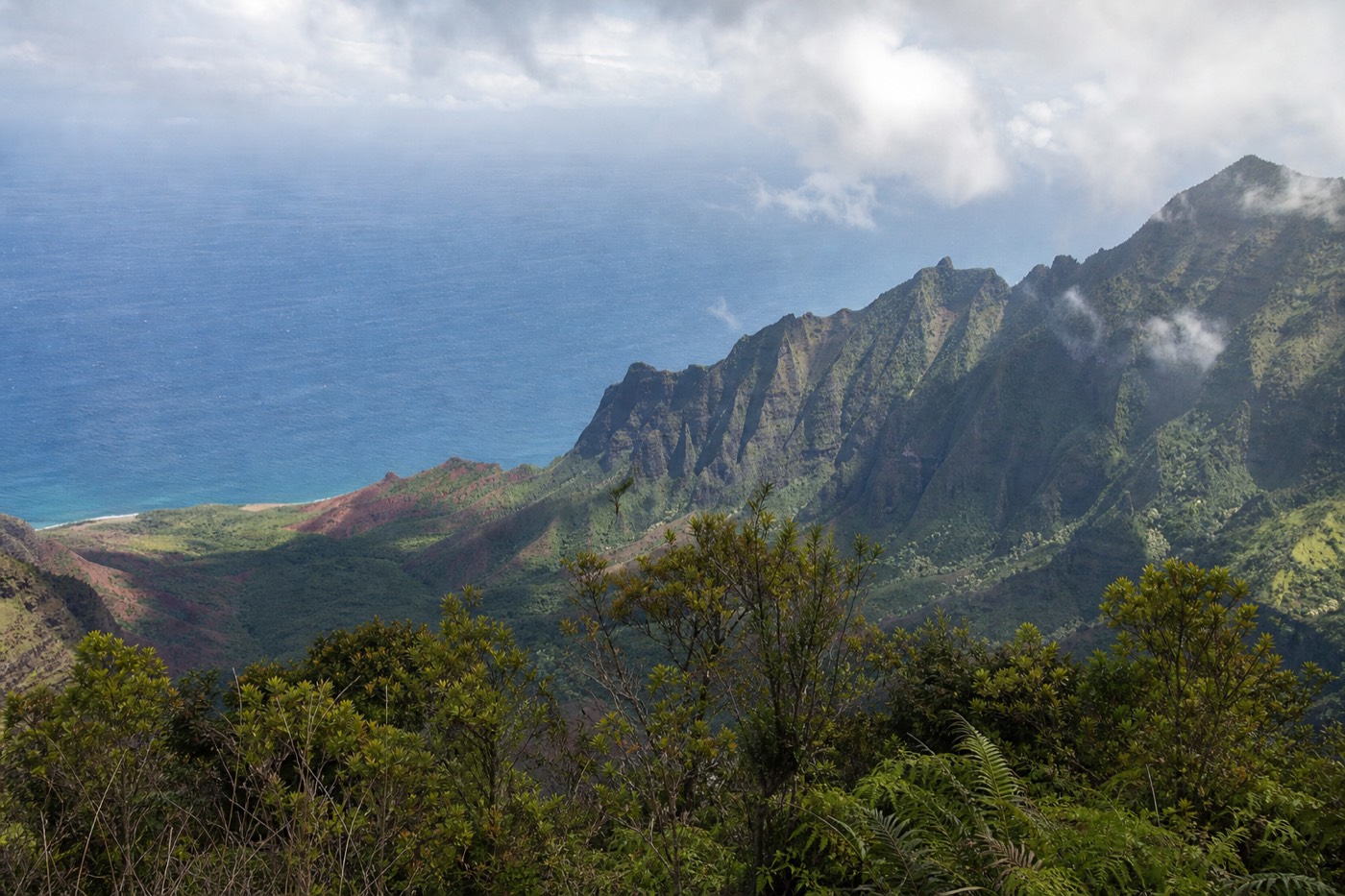
The Nā Pali Coast has a reputation as a place you can only reach by sea, air, or a brutal trail. That is mostly true at ground level, but there is a fourth way in that a lot of visitors overlook: you can drive to the top of it. Past the canyon lookouts and the Kōkeʻe forest, the road ends at a pair of overlooks that stare straight down into the coast's great valleys. No boat, no aircraft, no eleven-mile hike.
Booking choice: Explore canyon lookouts, Kalalau and the south shore with your own driver-guide. Explore Private Canyon & South Side Day
Can You See The Nā Pali Coast From Waimea Canyon And Kōkeʻe?
Yes, from the upper lookouts past Kōkeʻe State Park, not from the canyon overlooks themselves. Kalalau Lookout and Puʻu o Kila, at the end of Route 550 around 4,000 feet, look down Kalalau Valley to the Nā Pali Coast and the sea. It is the only way to see this coastline without a boat, aircraft, or long hike.
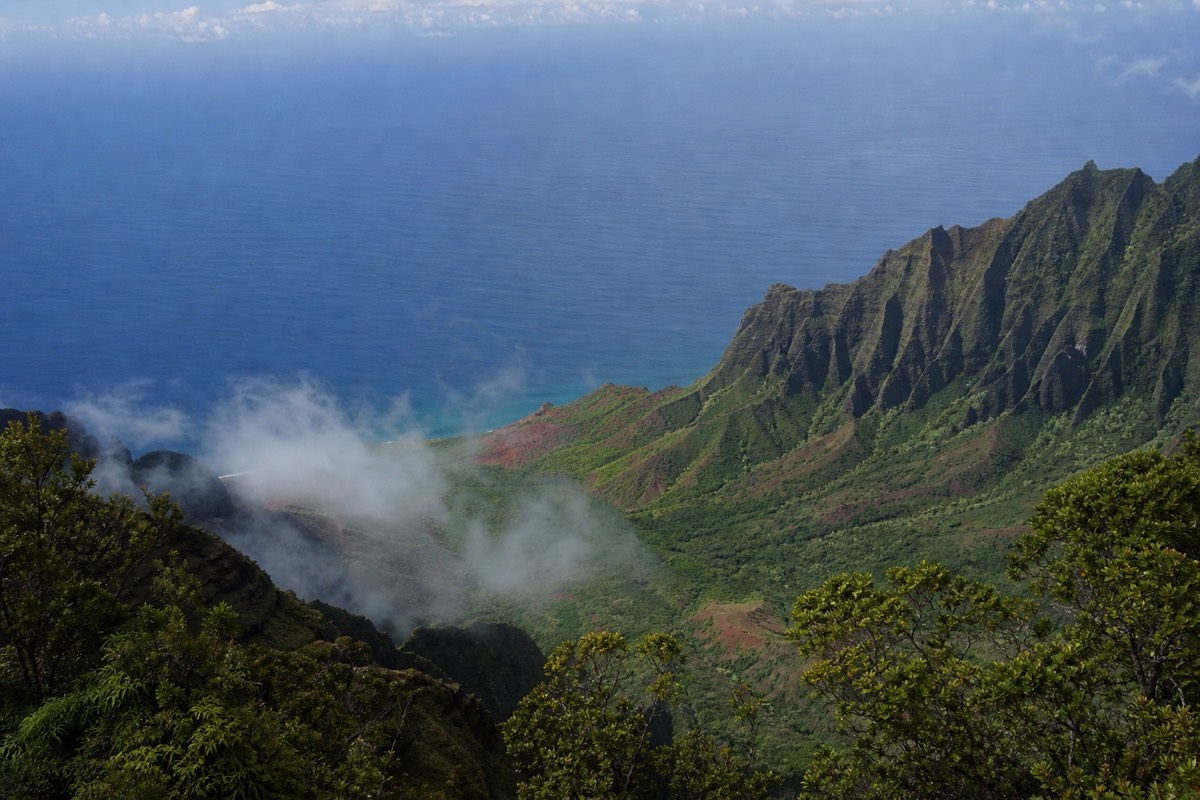
The distinction matters because people conflate the two. The Waimea Canyon lookouts lower down show you red rock and the Waimea River, not the coast. To see Nā Pali you keep driving, past Kōkeʻe, to where the road tops out on the rim above Kalalau Valley. There the land drops away toward the ocean, and you are effectively standing on top of the coast, looking down into it.
Kōkeʻe State Park sits just past the canyon rim at roughly 3,200 to 4,200 feet, a cool native forest with around 45 miles of trails, a small museum, and a lodge. It is the staging ground for the coast lookouts and worth a stop in its own right. The one park ticket that covers Waimea Canyon covers Kōkeʻe too, so there is no second gate to pay at.
The Best Drive-up Nā Pali Viewpoints
Two overlooks matter for the coast: Kalalau Lookout near mile marker 18, with a deep vertical view down Kalalau Valley, and Puʻu o Kila at the very end of the road, with a wider ridge-and-coast sweep. Both are short walks from parking. See both, since clouds may favor one on any given morning.
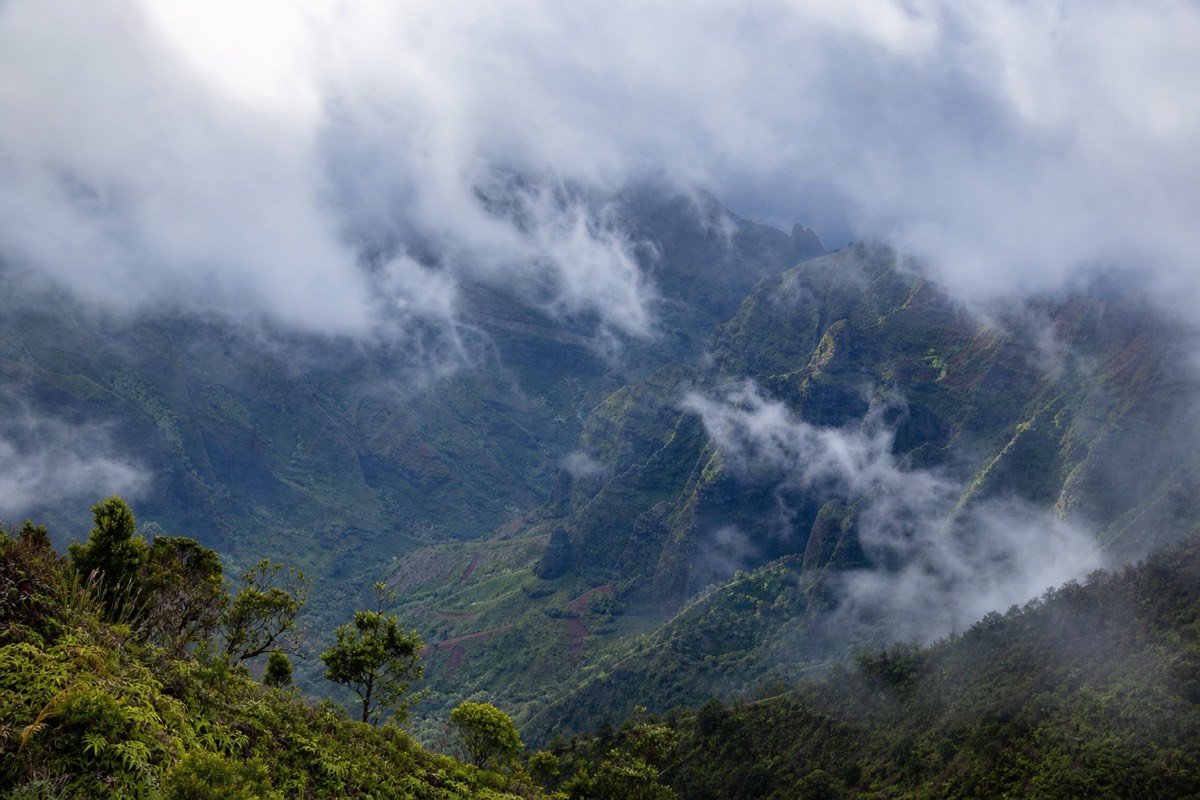
These two are the payoff of the whole drive for coast seekers. They are close together on the same ridge and show the same valley in two moods, so it is not really a choice between them. The table sorts what each does best.
| Viewpoint | Approx. elevation | Coast view | Effort |
|---|---|---|---|
| Kalalau Lookout | ~4,000 ft | Deep plunge down Kalalau Valley to the sea | Short walk, a few steps |
| Puʻu o Kila Lookout | ~4,000+ ft | Wider ridge sweep, end of the road | Flat and short |
| Pihea Trail start | From Puʻu o Kila | Even broader angle a few minutes in | Short trail walk, optional |
Kalalau is the one everyone photographs, for good reason: the valley falls away almost vertically to a distant beach, and the fluted green walls are unforgettable when the light is right. Puʻu o Kila trades some of that depth for breadth. For the full detail on the marquee overlook, see our complete Kalalau Lookout guide.
A practical tip for pairing the two: park at Kalalau first, take in the deep valley view, then drive the last short stretch to Puʻu o Kila rather than trying to judge from the road which one is clearer. The angle changes just enough between them that a valley half-hidden from one rail can read as open from the other. It is only a few minutes of extra driving, and on a marginal morning it can be the difference between a grey wall and a full coastline.
Neither overlook faces the coast head-on, which surprises people expecting a flat seaside panorama. You are looking down and out along the valley, so the ocean sits at the far end of the frame rather than filling it. That geometry is exactly what makes the shot dramatic, since the eye travels the whole depth of the valley before it reaches the water.
Nā Pali From Above Vs By Boat Vs By Helicopter
From Kōkeʻe you see the coast from the top, looking down into the valleys, for the price of a park ticket. A boat puts you at sea level beneath the cliffs and sea caves. A helicopter or small plane threads between the ridges. Each shows a different Nā Pali, and many travelers pair the free top view with one paid angle.
The lookouts and the water and air tours are not really competitors; they are different chapters of the same coast. The overlook gives you scale and the valley-from-above perspective. A boat gives you the base of the cliffs, the caves, snorkeling, and often marine life. A flight gives you the parts no boat or trail can reach. The table compares them plainly.
| Way to see Nā Pali | Perspective | Rough cost | Best for |
|---|---|---|---|
| Kōkeʻe lookouts | From the top, down into the valleys | Park ticket only | Scale, valleys, easy access |
| Boat tour | Sea level, under the cliffs and caves | Around $200 and up | Sea caves, snorkeling, wildlife |
| Helicopter | Threading the ridges, doors-off option | Around $350 and up | Reaching hidden interior spots |
| Fixed-wing plane | Smooth island overview from the air | Check current quote | Budget air view, wide coverage |
Costs are framed as starting points; check the live listing for current pricing and times. If you want to see the coast up close as well as from above, the most-booked option we list is a Nā Pali catamaran run that reaches the sea caves and reefs, and a fixed-wing scenic flight is the gentler, lower-cost way to get the aerial view. To weigh the two air-and-water options against each other, read boat tour versus helicopter for Nā Pali, and our fuller write-up on Nā Pali Coast boat tours from Kauai covers what a day on the water actually looks like.
Best Nā Pali Views For Non-hikers And Seniors
The Kōkeʻe lookouts are the easiest way to see Nā Pali for anyone who cannot hike. Both Kalalau and Puʻu o Kila are short walks from paved parking, with no trail required. A boat is the next most accessible option, since you sit and ride, while helicopters involve step-in access but no walking.
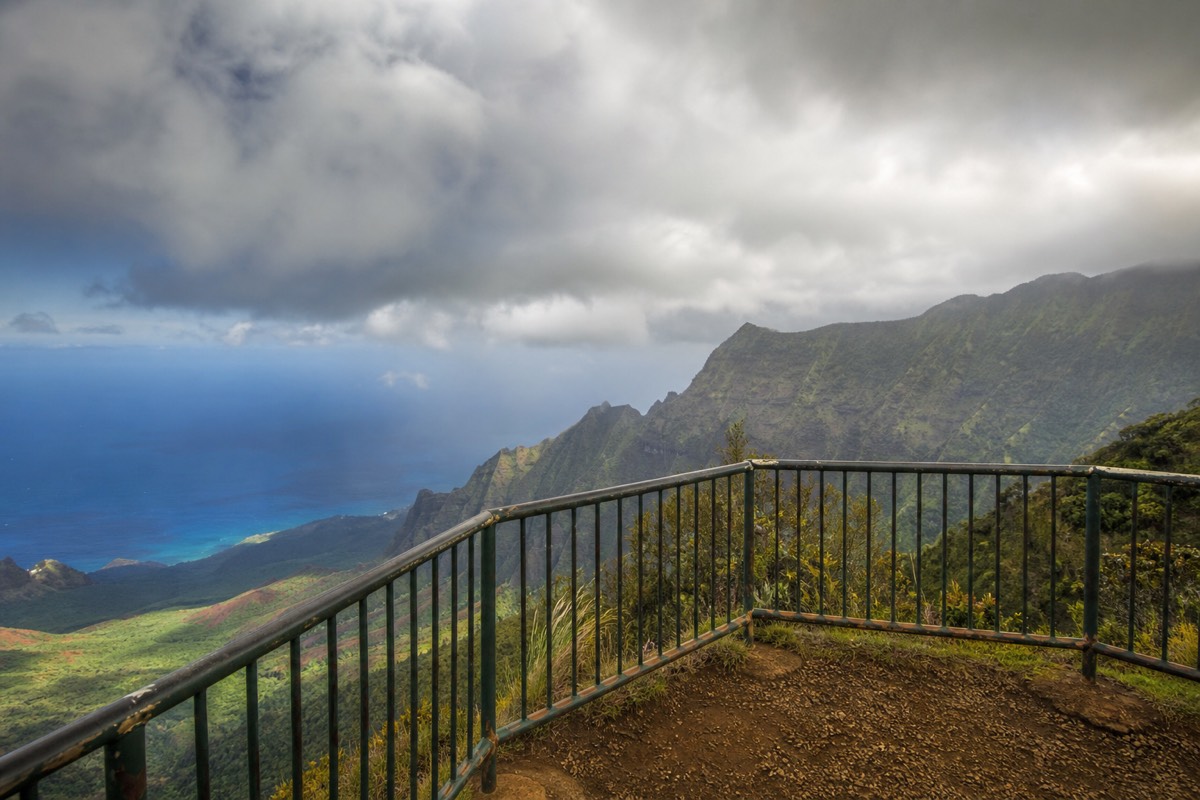
This is one of the underrated strengths of the drive-up approach. The Kalalau Trail that reaches the coast at ground level is a serious, difficult hike, off the table for most casual travelers. The lookouts hand you a comparable, arguably grander, view for a short walk. The table sorts the coast-viewing options by physical demand.
| Option | Physical demand | Suits |
|---|---|---|
| Kalalau / Puʻu o Kila lookouts | Short walk, minimal | Seniors, non-hikers, families |
| Boat tour | Board and ride, some motion | Most travelers, sea-legs helpful |
| Fixed-wing flight | Step in, sit, no walking | Those who prefer air to sea |
| Kalalau Trail (coast level) | Long, strenuous hike | Fit, experienced hikers only |
For travelers who would rather not drive the winding mountain road either, a guided canyon and Kōkeʻe tour is the least demanding path to the top lookouts: pickup, an experienced driver, park fees included, and stops paced for the light. That combination puts an older or non-driving visitor at the rail at the right hour with no logistics to manage.
When Are The Views Clear?
Early morning gives the best odds. The Kōkeʻe lookouts are high and on the island's wet side, so cloud fills the valleys as the day warms, often by late morning. Aim to be at the coast overlooks within an hour or two of sunrise. Afternoons are frequently clouded, though gaps can open at any time.
The clearing pattern here is the same one that rules Kalalau, because it is the same ridge and the same weather. Morning air is cooler and more settled, so the valleys tend to be open; the afternoon heat drives cloud up the slopes and into the view. Rain on the windward side can flip the picture quickly in either direction.
| Time of day | Coast view odds | Notes |
|---|---|---|
| Early morning | Best | Cool, valleys usually open |
| Mid-morning | Good but fading | Cloud beginning to build |
| Midday | Mixed | Valleys often filling |
| Afternoon | Poor | Frequently clouded, brief clearings |
Seasonally, the drier months tend to offer more clear mornings, but there is no month with a guarantee, and Kōkeʻe is genuinely one of the wetter places on the island. The practical takeaway does not change: go early, be patient, and have a backup lower down. For the full timing logic, see the best time of day to see Waimea Canyon.
Kalalau Vs Puʻu O Kila For Nā Pali
For the Nā Pali Coast specifically, Kalalau Lookout gives the deeper, more vertical valley-to-sea view that most people picture, while Puʻu o Kila at the end of the road gives a broader ridge panorama. They sit minutes apart, so the best plan is simply to see both and let conditions decide which is clearer.
Because these two are the only real drive-up coast overlooks, the comparison is worth pinning down. Both look into the same valley system; the difference is angle and framing.
| Consideration | Kalalau Lookout | Puʻu o Kila Lookout |
|---|---|---|
| Coast angle | Deep, straight down the valley | Wider sweep across ridges |
| Iconic shot | Yes, the signature Nā Pali view | Broader, more panoramic |
| Trail option | None from the lookout | Pihea Trail begins here |
| Crowds | Busier | Quieter, smaller lot |
If a short walk appeals, stepping a few minutes onto the Pihea Trail from Puʻu o Kila opens a slightly wider angle again, though it is optional and the lookout view is complete on its own. Whichever you favor, the winning move on any morning is to check both before the cloud settles in.
What Is Kōkeʻe State Park, And Why Start There?
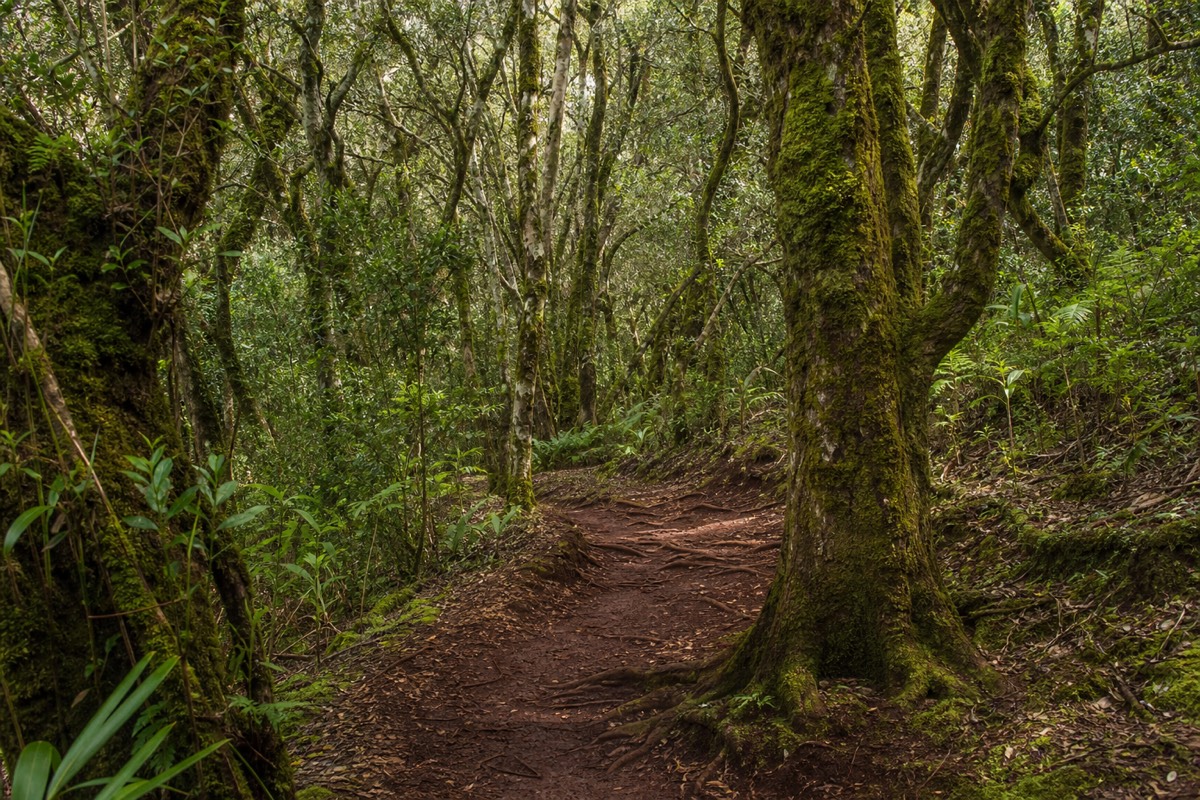
Kōkeʻe State Park sits just past the Waimea Canyon rim at roughly 3,200 to 4,200 feet: a cool native forest with around 45 miles of trails, a small natural history museum, and a lodge. It is the gateway to the coast lookouts and a worthwhile stop for its birds, its air, and its quiet upland woods.
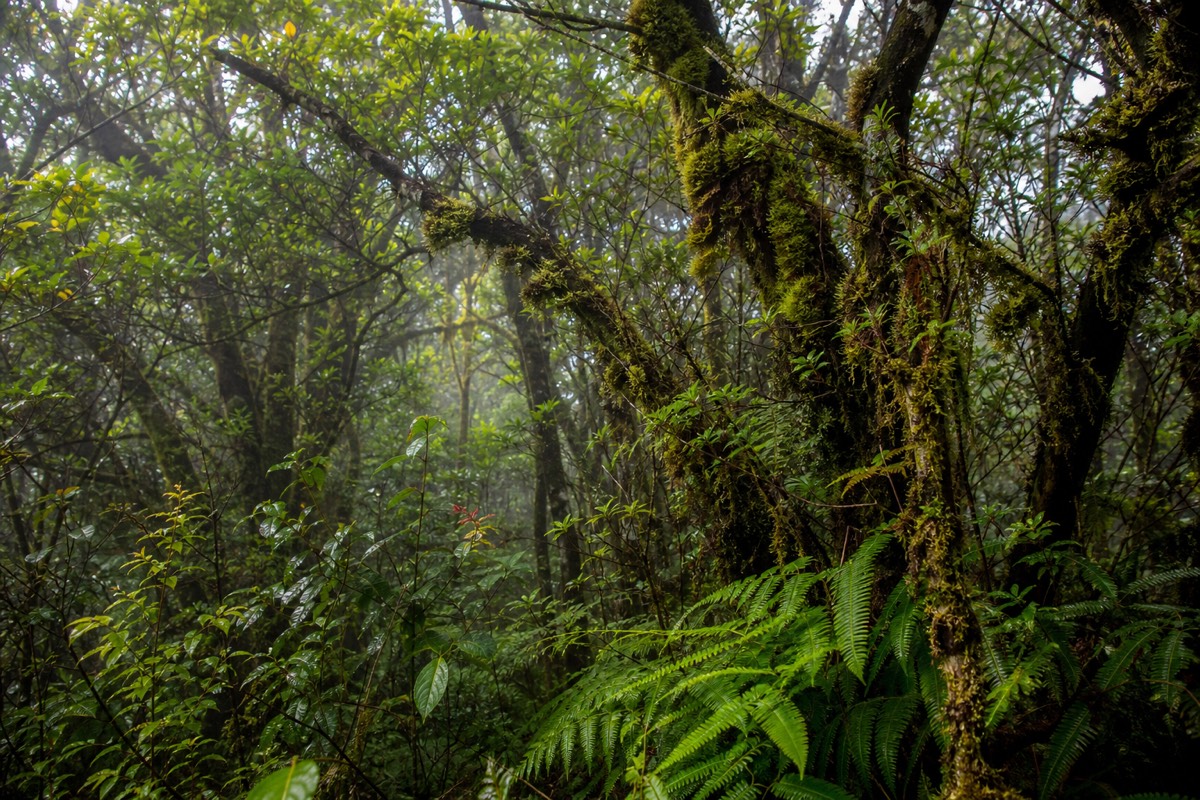
Most visitors treat Kōkeʻe as a place they drive through on the way to Kalalau, and that undersells it. The forest here is a different Hawaii from the beaches: cool, misty, and full of native ʻōhiʻa trees, with rare forest birds like the crimson ʻapapane and ʻiʻiwi flitting through the canopy. After the sun-baked canyon rim, the shade and the birdsong feel like another island entirely.
The small natural history museum near the lodge is a quick, worthwhile stop, explaining the geology, plants, and birds you are looking at, and some guided tours include a visit with a small donation. The lodge is a place to grab a warm bite before the last push to the coast lookouts. Trails fan out from here into the forest and toward the rim, ranging from short loops to serious backcountry routes.
Because Kōkeʻe and Waimea Canyon share one entry ticket, there is no extra gate or fee to stop here, which makes it an easy add to the day. The small-group canyon and Kōkeʻe tour we list builds in a forest stop and the museum, so you get the woods and the coast in one trip without planning the pieces yourself.
Short Walks That Widen The Nā Pali View
You do not need to hike to see Nā Pali from Kōkeʻe, but a few short walks add a wider or fresher angle. The first stretch of the Pihea Trail from Puʻu o Kila opens a broader coast view within minutes. These are optional bonuses; the drive-up lookout views are complete on their own.
For travelers who like a little movement, small efforts pay off here without committing to a real hike. The table below lists short, manageable options that widen or vary the coast view, along with what each one adds.
| Short walk | Rough length | What it adds | Effort |
|---|---|---|---|
| First stretch of the Pihea Trail | A few minutes each way | Wider angle down the coast from the ridge | Easy, some uneven ground |
| Kalalau Lookout viewing area | Minutes from the lot | The signature valley-to-sea view | A few steps, short |
| Puʻu o Kila overlook loop | Very short | Broad end-of-road panorama | Flat, easy |
The Pihea Trail runs on toward the Alakaʻi Swamp and turns into a genuine, muddy hike the farther you go, so know your limits and turn back when the effort outgrows the payoff. The point of these short walks is a slightly different frame on the same coast, not a summit. If a wider view is the goal and the weather is clear, even a hundred yards of trail can be worth it.
What To Bring For The Cool Kōkeʻe Lookouts
Pack a light layer or two: at around 4,000 feet the air runs ten to fifteen degrees cooler than the coast and can be breezy and damp. Add water, sturdy shoes for uneven ground, sun protection, and a camera. There is little shade and few services at the top, so come ready for a couple of hours out.
The temperature drop between the beach and the coast lookouts surprises almost everyone. You leave a warm shore in the morning and stand at a misty rim an hour later, so the gear list is short but it matters.
| Bring | Why |
|---|---|
| Light layers | The rim is much cooler and often breezy or misty |
| Water and a snack | Limited services between the canyon and the coast lookouts |
| Sturdy shoes | Some paths have steps and uneven footing |
| Sun protection | Little shade, strong high-elevation sun |
| Camera, charged | The coast reveals in moments as mist moves |
None of this is heavy, and you can leave most of it in the car until you need it. The one item people most often wish they had brought is a warm layer, so make that the thing you do not skip. On a guided trip, water and pacing are handled, and the driver keeps an eye on conditions so you are at the rail when it counts.
Who Should Skip The Drive-up Nā Pali View?
Skip the top-down view only if your trip is already built around a boat or a flight and you cannot spare a morning, or if you are visiting in the afternoon when the coast lookouts are usually clouded. Otherwise the drive-up view is worth it, and it pairs well with one sea-level or aerial angle later on.
Honesty helps here: the drive-up view is not the coast experience for everyone. If you have limited time and the water calls to you, a boat gets you under the cliffs and into the sea caves, which the lookouts cannot do. If you are short on mornings, the afternoon cloud can defeat the whole drive, and you may be better off spending the day at sea level.
For most itineraries, though, the smart play is to do both: catch the free top-down view early in the trip, then book a boat or a flight for the up-close angle later. That way a clouded morning at the lookouts is not your only shot at Nā Pali, and a great sea day is not your only memory of it. Weigh the water-and-air options against each other in our comparison of a boat tour versus a helicopter.
How Does The Season Affect The Nā Pali View From Kōkeʻe?
The drier months tend to offer more clear mornings, and Kōkeʻe is genuinely one of the wetter spots on Kauai, so no season guarantees an open valley. Winter brings fuller waterfalls on the valley walls but more cloud; summer brings steadier clear mornings. Early timing beats season selection either way.
The coast lookouts sit in a rain shadow that is not much of a shadow at all, because Kōkeʻe catches its own weather off the windward slopes. In winter that means more days with cloud pouring up Kalalau Valley, but also the payoff of thin waterfalls threading the green walls after rain, which many visitors count as a feature rather than a flaw. The coast looks wildest when it is a little wet.
Summer tips the odds toward clear mornings and drier roads, which is the safer bet if a wide-open valley view is your priority. The trade is thinner waterfalls and occasional haze in the strong midday light. Neither season is a wrong choice; they simply favor slightly different reasons for coming.
One seasonal note is worth flagging for coast lovers: winter into spring is humpback whale season, and those sightings belong to the water and the air, not the lookouts. If whales are on your list, that points you toward a boat or a flight rather than the overlooks. For the top-down view itself, the season sets the background odds, but the time of day still decides your morning, so plan to be at the rail early whatever the calendar says.
How To Plan A Nā Pali Viewing Day From Kōkeʻe
Drive up early, go straight to the top lookouts before the cloud, then work the canyon overlooks and a Kōkeʻe forest stop on the way down. Bring layers for the cool 4,000-foot air, water, and a bit of patience. One park ticket covers everything, and a guided tour handles the road and the timing for you.
The mistake is treating the coast lookouts as an afterthought at the end of a slow canyon crawl. Reverse it. Get to Kalalau and Puʻu o Kila first while the valleys are open, since those are the views most likely to close, then enjoy the canyon lookouts on the return, since they hold up later. Add a stop in the Kōkeʻe forest for the cool native woods and the museum, and you have a full, well-ordered day.
Whether you drive yourself or ride along, this is the one drive-up ticket to the Nā Pali Coast, and it costs no more than the park fee to enjoy. Pair that free top-down view with a boat or a flight later in your trip and you will have met this famous coastline from every angle that matters. Few places let you stand on top of a landscape this famous for the price of a parking fee, so treat a clear morning at the rail as the gift it is, and give yourself the early start that makes it likely.