What If Kalalau Lookout Is Clouded In?
It happens to plenty of visitors: you reach Kalalau Lookout and the valley is a wall of grey. Here is how to salvage the view, and how to avoid it next time.
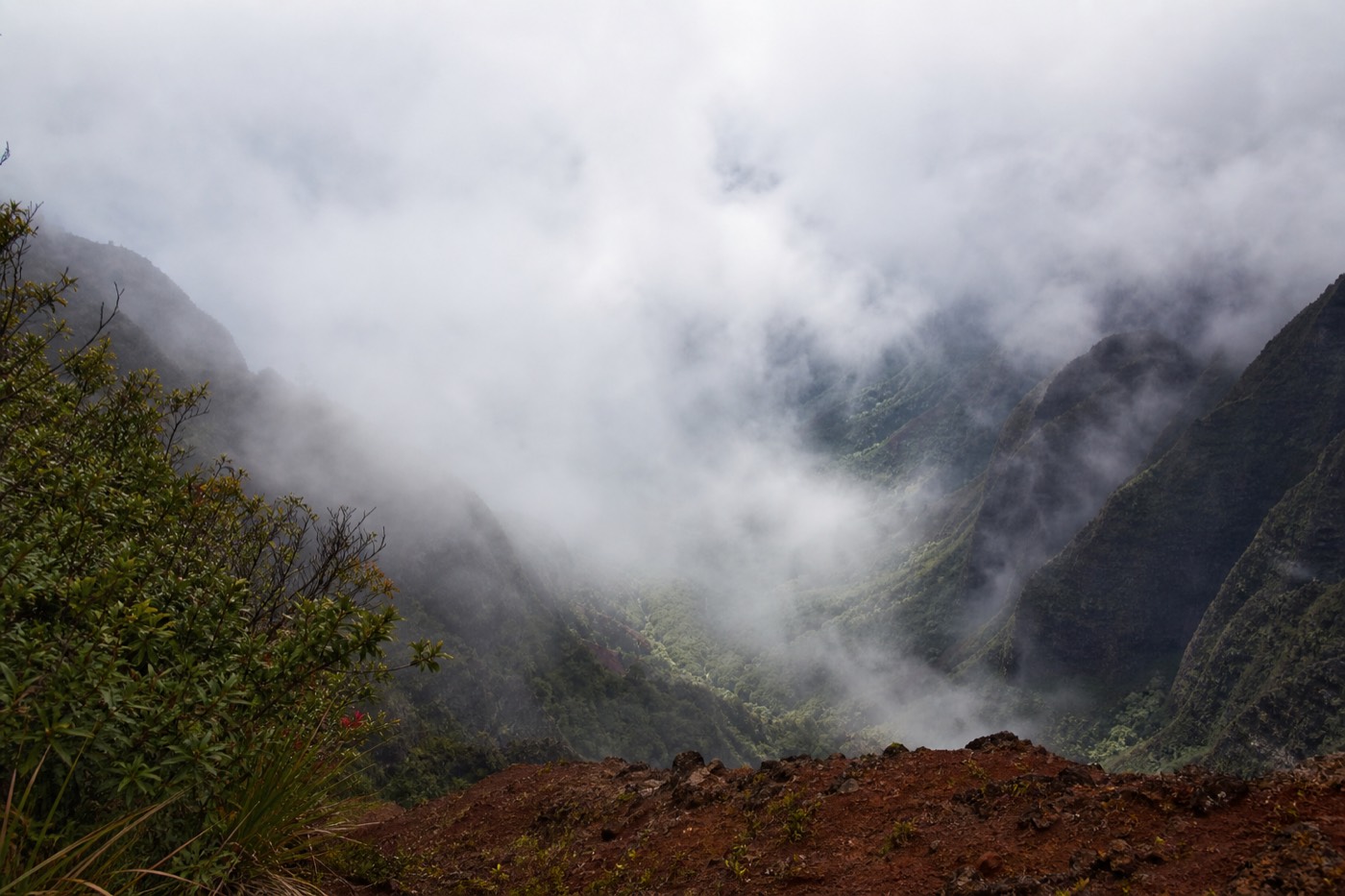
You drove the winding road, climbed to 4,000 feet, walked to the rail, and there is nothing to see but soft grey cloud pouring up out of the valley. Deflating, yes. Fatal to your day, no. This is one of the most common things that happens at Kalalau, and there is a straightforward playbook for it.
Booking choice: Explore canyon lookouts, Kalalau and the south shore with your own driver-guide. Explore Private Canyon & South Side Day
What Should You Do If Kalalau Lookout Is Clouded In?
Wait ten to twenty minutes first, because gaps in the cloud move through fast and can open the whole valley in moments. If it stays socked in, drive back down to the canyon lookouts, which sit lower and usually stay clearer, then try Kalalau again on your way out. Do not build the whole day around one grey rail.
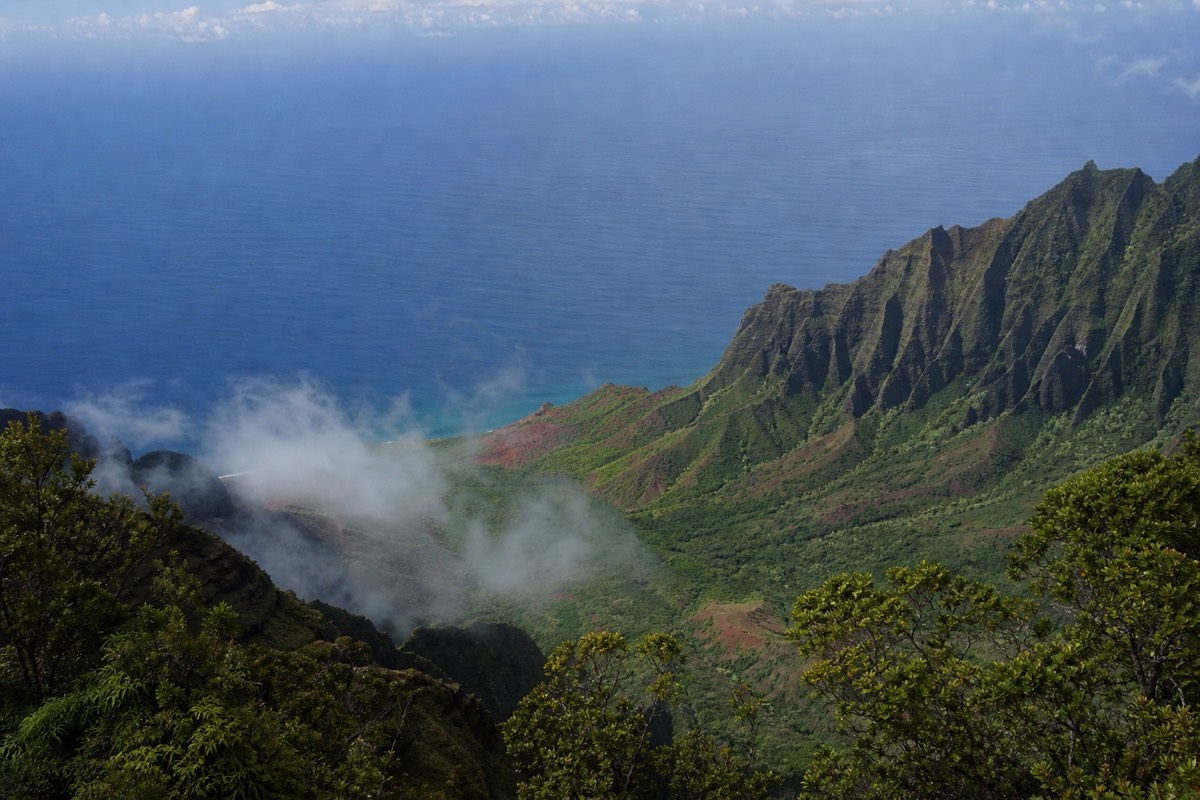
The reason patience works here is that the cloud at Kalalau is rarely a solid, all-day ceiling. It is moving air, and it churns. A valley that looks hopeless can clear in the time it takes to drink a coffee, then close again ten minutes later. So the first move is simply to give it a short window rather than turning straight around.
If the wait does not pay off, the second move is elevation. Drop back down the road toward the canyon overlooks, which sit several hundred to a thousand feet lower and often sit below the cloud that is sitting on the coast lookouts. You trade the Nā Pali valley view for the red-rock canyon view, which is spectacular in its own right and much more reliable.
Why Does Kalalau Cloud Over So Often?
Kalalau Lookout is high, at about 4,000 feet, and it faces the island's wet, windward air. As the day warms, that moist air rises up the slopes and fills the valley with mist, usually building through the late morning and into the afternoon. The lookout is genuinely one of the cloudier spots on Kauai.
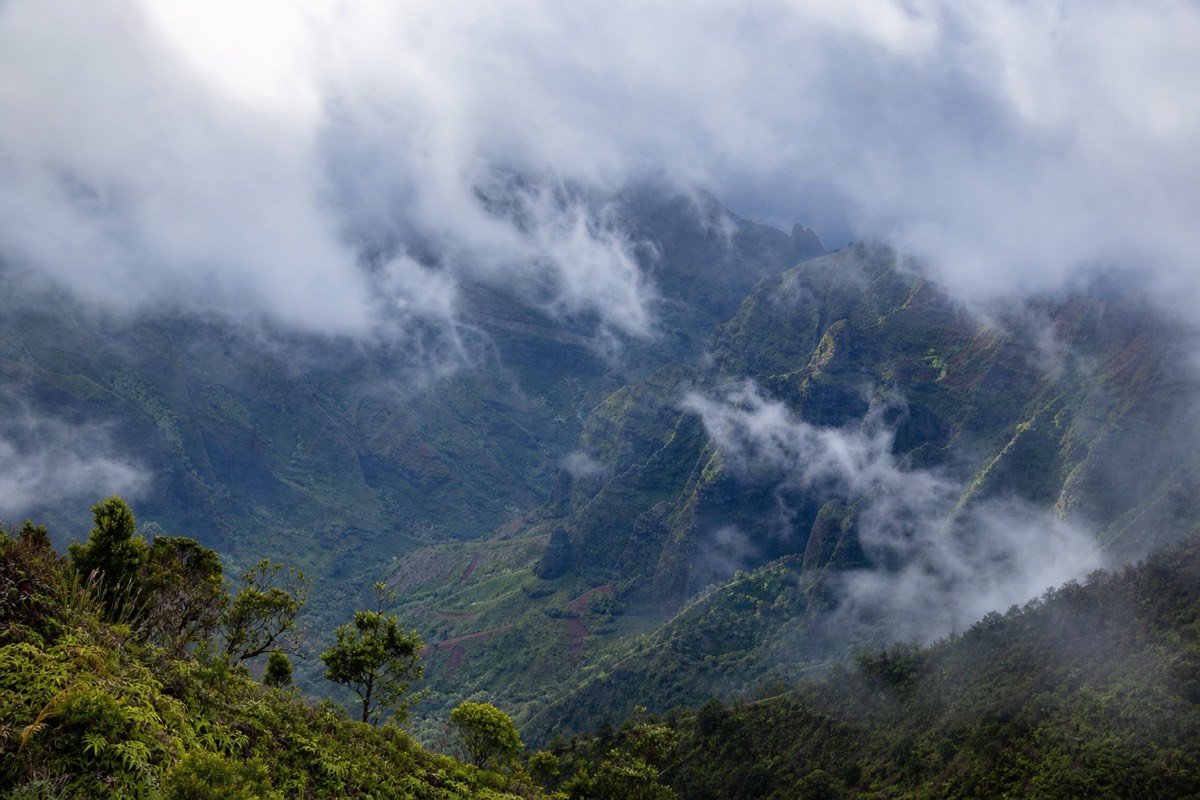
None of this is bad luck. It is the everyday weather of a very green, very wet coastline seen from a high rim. The pattern is consistent enough to plan around: mornings tend to be open, afternoons tend to be closed. That single fact drives almost every piece of advice on this page. For the full breakdown of the view and the timing, see our Kalalau Lookout guide.
Should You Wait It Out, Or Move On?
Wait if you have arrived early and the cloud is moving and patchy, since a clearing is likely. Move on if it is a solid, low ceiling, if it is already afternoon, or if rain is setting in. A good rule: give it one short wait, then go work the lower lookouts and circle back rather than standing at a grey rail for an hour.
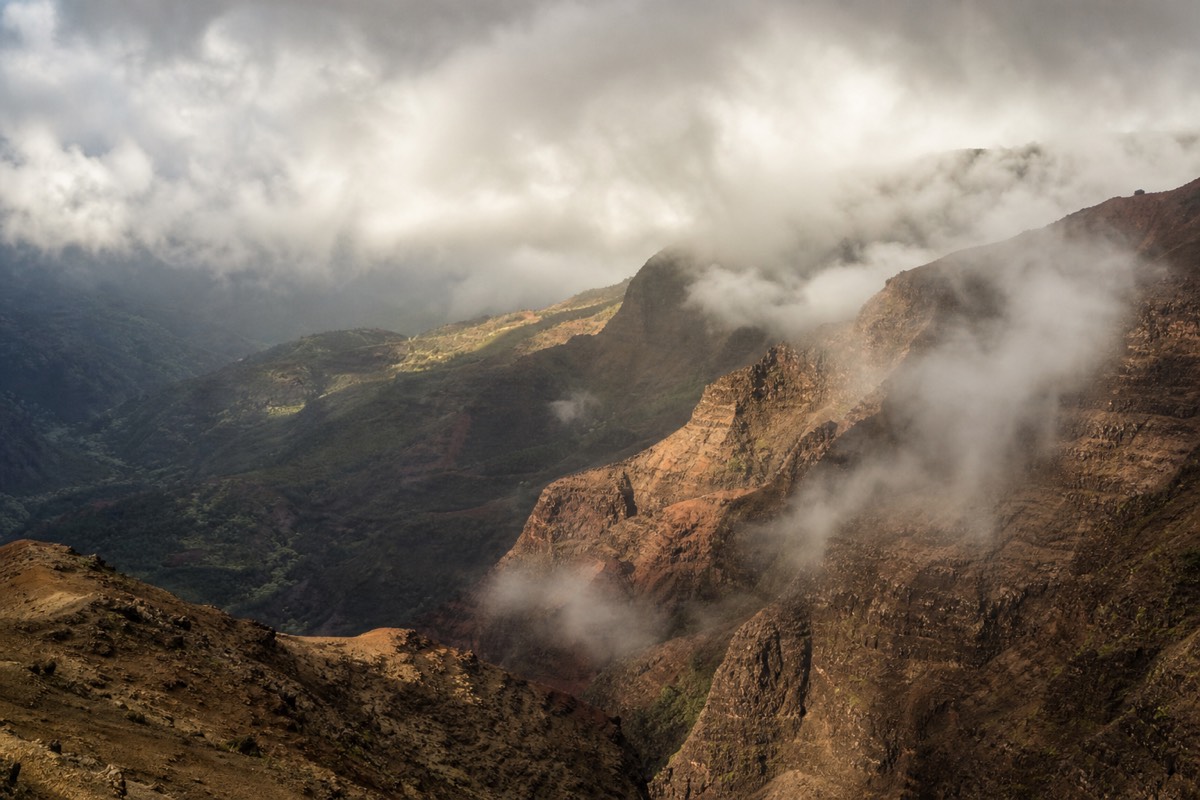
Reading the cloud takes a minute of watching. Broken, drifting mist with brief brightening behind it usually means a gap is coming. A flat, uniform grey that is not shifting usually means it has settled in for a while. The table sums up the call.
| What you see | Best move |
|---|---|
| Patchy, moving mist, morning | Wait, a clearing is likely soon |
| Solid grey, not shifting | Move on, circle back later |
| Afternoon, cloud building | Head down to canyon lookouts |
| Rain starting | Prioritize the lower, drier stops |
Where To Go Instead When The Top Is Socked In
Drop to the lower canyon lookouts, which usually stay clearer: the main Waimea Canyon Lookout and Puʻu Hinahina both give huge red-rock views and sit below the coast cloud. The Kōkeʻe forest, museum, and Puʻu o Kila are close by too, and Puʻu o Kila sometimes catches a clearer window than Kalalau.
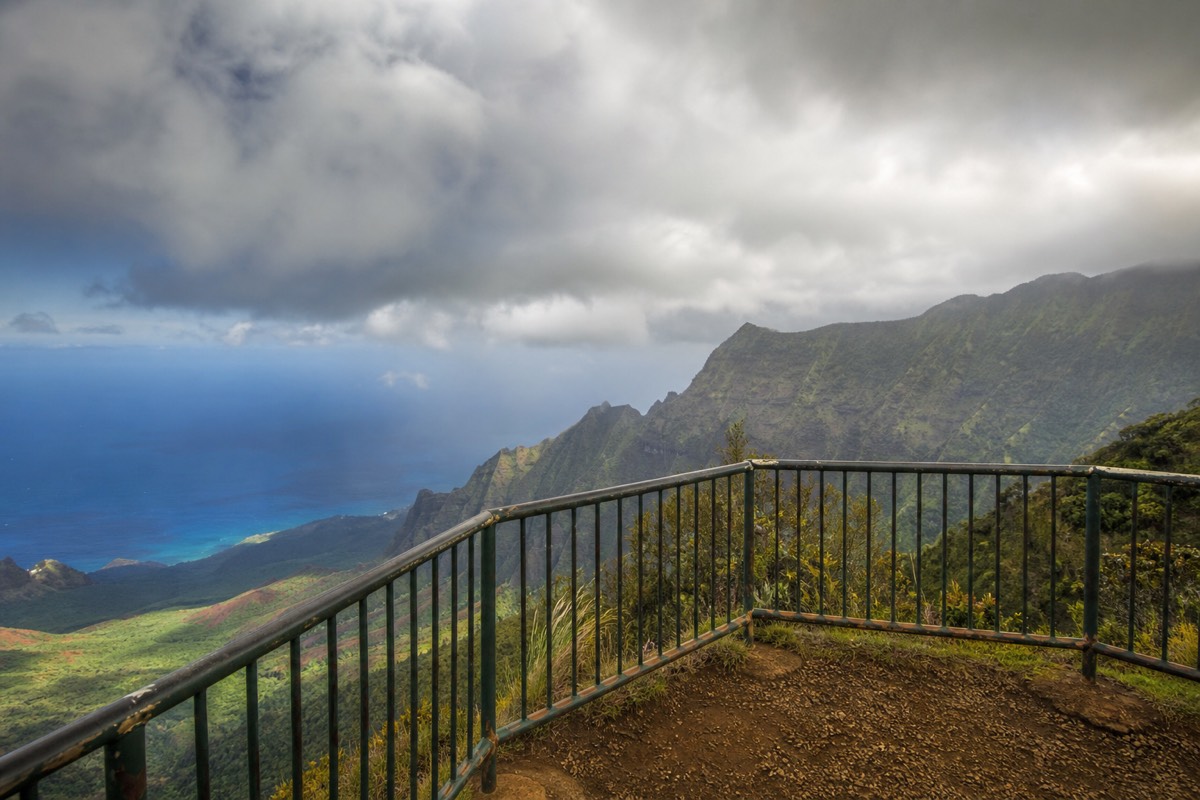
A clouded Kalalau does not mean a wasted trip up the mountain, because the whole road is lined with alternatives. The canyon overlooks are the reliable fallback, since they are lower and drier. Puʻu o Kila, just up the road from Kalalau, occasionally reads clearer thanks to its slightly different angle, so it is worth the two-minute drive to check. And the Kōkeʻe forest gives you cool native woods and a small museum that do not depend on the valley being open at all.
| Backup stop | Why it works when Kalalau is grey |
|---|---|
| Waimea Canyon Lookout | Lower, drier, wide canyon view |
| Puʻu Hinahina Lookout | Deep canyon view, sometimes Niʻihau |
| Puʻu o Kila Lookout | Different angle, may clear separately |
| Kōkeʻe forest and museum | Not dependent on the coast view |
How Do You Avoid A Clouded-in Kalalau Next Time?
Go early. Being at Kalalau within an hour or two of sunrise is the single best defense against cloud, because the valley is usually open before the day warms up. Drive to the top lookouts first, work the canyon overlooks on the way down, and keep your plan flexible enough to re-try the coast view when a gap opens.
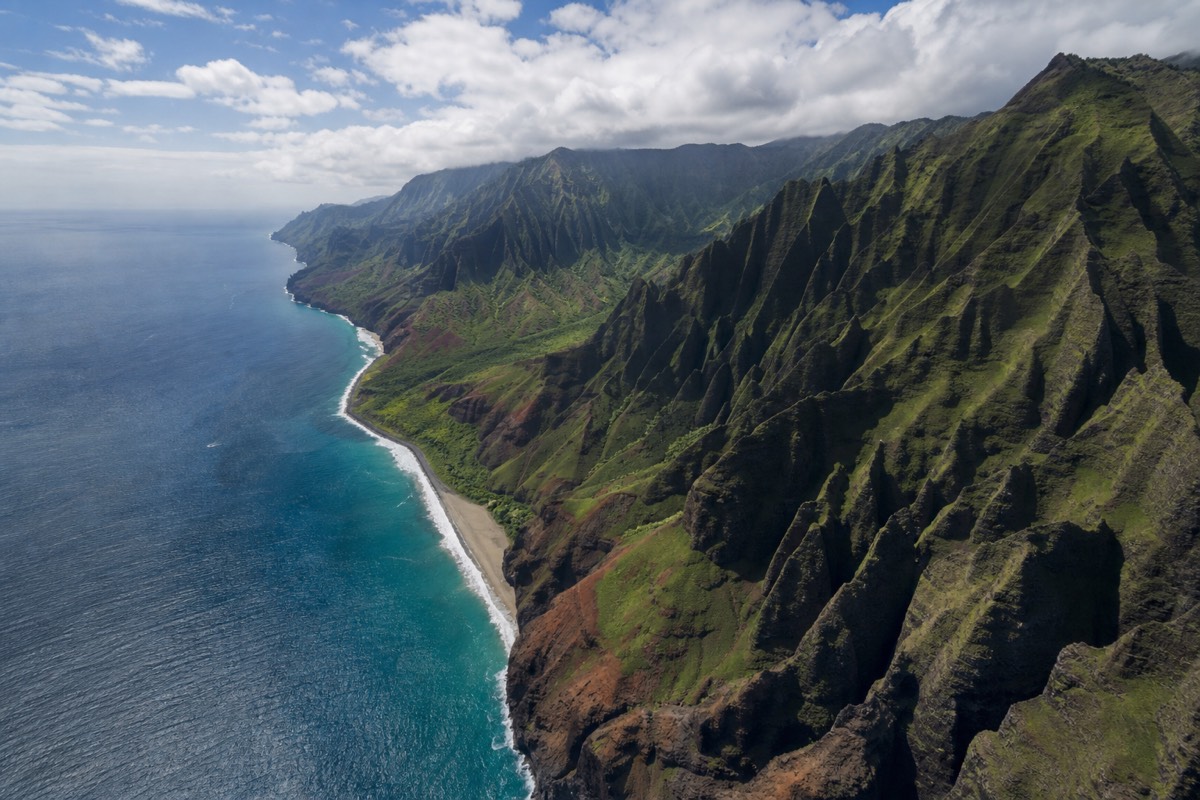
Almost every clouded-in story starts with a late start. Leave the coast mid-morning, stop at every pullout on the climb, and you often reach Kalalau right as the mist arrives. Flip that order and your odds improve dramatically. This is exactly why this guide, and the guided canyon and Kōkeʻe tour we list, run the top of the road first thing and save the reliable canyon lookouts for later.
A guide has one more advantage here: they watch the sky and reorder the day live, skipping a fogged Kalalau, running the clear stops, and swinging back up the moment it opens. That live adjustment is hard to manage on your own schedule, and it is a big reason a guided Waimea Canyon Tour often ends with better views than a rushed self-drive. For the deeper timing logic across the whole canyon, see the best time of day to see Waimea Canyon.